

Maddy summaryThis bill authorizes the presentation of a Congressional Gold Medal to honor Navy pilot Everett Alvarez, Jr., for his service as a Vietnam War POW and subsequent public service. It directs the Speaker of the House and Senate President pro tempore to arrange for the medal's presentation, specifying it must bear his name and image. Bronze duplicates may be sold to cover production costs, with proceeds deposited into the U.S. Mint fund. The bill is purely ceremonial, recognizing Alvarez's 8+ years as a prisoner of war and his post-military career. It does not create new policies or affect any government programs.
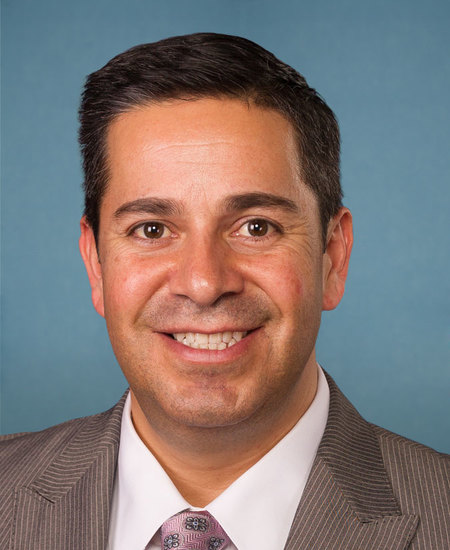
Sen. Ben Ray Luján
Sponsored bills
Maddy summaryThe Hydrogen for Ports Act of 2023 establishes a $100 million annual grant program (2024-2028) to fund port infrastructure using hydrogen or ammonia as clean fuel. It directly affects ports, state/local governments, tribal entities, and port authorities by providing competitive grants for projects like fuel cell cargo handlers, ships, trucks, and fueling infrastructure. Key provisions require grant recipients to monitor fuel leaks, prioritize projects benefiting low-income communities, and focus on reducing port-related emissions and improving air quality. The program mandates training for staff handling these fuels and prioritizes projects that create U.S. jobs and maximize emission reductions.
Maddy summaryThe Hydrogen for Trucks Act of 2023 establishes a federal grant program to support the adoption of hydrogen-powered heavy-duty trucks and related infrastructure. It provides funding for eligible entities - such as truck fleet operators, public agencies, fueling station developers, and partnerships - to purchase at least 7 hydrogen fuel cell trucks or build hydrogen fueling stations, with requirements for public access and regional diversity. Grants cover capital costs (up to $500,000 per truck or station), operational expenses, and safety training, while requiring recipients to report on fuel use, reliability, and emissions data. The program aims to demonstrate vehicle performance across different regions, reduce costs, and accelerate market deployment of hydrogen trucks by 2028, with priority given to projects benefiting disadvantaged communities.
Maddy summaryThe Hydrogen for Industry Act of 2023 establishes a federal grant program to fund demonstration projects using hydrogen in heavy industry to reduce greenhouse gas emissions. It provides grants (up to $400 million per project) for commercial-scale applications in sectors like steel, cement, fertilizer, and chemical manufacturing, requiring at least 50% hydrogen blends by volume. Priority is given to projects that maximize emissions reductions, benefit low-income or disadvantaged communities, create high-quality domestic jobs, and demonstrate safe hydrogen use. The bill authorizes $1.2 billion for fiscal years 2024-2028 and mandates a study on hydrogen safety, cost-effectiveness, and environmental impacts for industrial use.
Maddy summaryThis bill establishes the Hydrogen Infrastructure Finance and Innovation Act (HIFIA) pilot program to fund hydrogen infrastructure projects. It provides grants and low-cost loans (up to 80% of costs) to eligible entities like corporations, governments, and nonprofits building hydrogen pipelines, storage, or delivery systems - especially projects retrofitted for hydrogen blends or new pure-hydrogen lines. Priority is given to projects reducing emissions, minimizing environmental impact, serving disadvantaged communities, and creating U.S. jobs. The program requires mandatory leak monitoring and limits annual federal funding to $100 million for fiscal years 2024-2028.
Maddy summaryThe Child Labor Prevention Act amends the Fair Labor Standards Act to clarify that child labor protections apply to all work arrangements, including those involving independent contractors. It updates definitions by replacing terms like "employee" with "worker" and explicitly stating that "employer" includes anyone engaging a worker (including independent contractors) for remuneration. The bill also increases civil penalties for violations (with annual inflation adjustments) and adds criminal penalties for repeated or willful violations of child labor laws. These changes ensure existing child labor rules cover modern work structures without altering core prohibitions, such as age limits for employment.
Maddy summaryThis bill directs the Secretaries of the Interior and Agriculture to identify at least 10 existing long-distance bike trails (minimum 80 miles on federal lands) and 10 potential development areas for such trails. It requires avoiding conflicts with existing uses like horseback riding, ensuring geographic representation, and creating maps/signage for identified trails. The bill mandates a report listing all identified trails within two years of enactment. It directly affects federal land managers (National Park Service, Forest Service) and bike trail users, focusing on planning and coordination rather than funding or construction.
Maddy summaryThe Digital Equity Foundation Act of 2023 establishes a nonprofit Foundation for Digital Equity to promote digital inclusion, broadband adoption, and digital literacy, particularly for underserved communities including rural populations, Tribal communities, and older individuals. The Foundation will operate through a Board of Directors with government agency representatives and community stakeholders, and can award grants, establish for-profit subsidiaries to attract investment, and collaborate with federal agencies like the FCC and NTIA. It must submit strategic plans and annual reports detailing its activities, funding sources, and progress toward increasing access to affordable broadband, digital literacy training, and technology resources. The bill authorizes funding for the Foundation's establishment and operations beginning in fiscal year 2024.
Maddy summaryThis bill repeals two provisions that reduce Social Security benefits for certain public-sector retirees. It eliminates the government pension offset (GPO), which currently cuts Social Security checks for people with government pensions, and removes the windfall elimination provision (WEP), which reduces benefits for those with pensions from jobs not covered by Social Security. The changes directly affect public employees (like teachers, firefighters, and state/local government workers) who have pensions from jobs that didn't pay into Social Security. The bill takes effect for Social Security benefits paid after December 2023, restoring full benefits for eligible retirees.
Maddy summaryThis is a ceremonial Senate resolution (SRES 85), not a law. It formally congratulates the National Treasury Employees Union (NTEU) on its 85th anniversary and commends the union and its members for their service. The resolution highlights NTEU's history of advocating for federal employees, including securing civil service protections and promoting workplace policies like telework. It does not create new laws, affect any policies, or change government operations - it is solely a symbolic gesture of recognition.