This resolution observes the 10th anniversary of the Syrian uprising wherein hundreds of Syrians assembled to call on their leadership for democratic reforms and respect for their fundamental freedoms. Further, the resolution commends the bravery of Syrian human rights defenders, affirms U.S. policy with respect to Syria, and calls on the United States to reinvigorate diplomatic efforts to resolve the conflict in Syria and to expand humanitarian aid to the Syrian people.
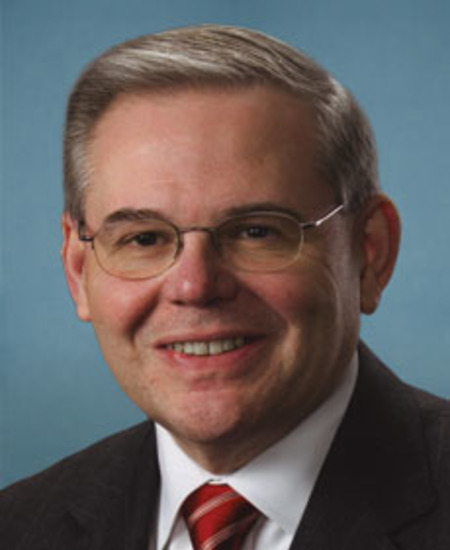
Sen. Robert Menendez
Sponsored bills
This resolution denounces the Nicolás Maduro regime's most recent legislative elections as fraudulent and illegitimate, does not recognize the legitimacy of the new Venezuelan National Assembly, and joins members of the international community in rejecting the elections. Further, it urges that elections in Venezuela be conducted as soon as possible according to international standards for free, fair, and transparent electoral processes. Additionally, the resolution calls on the Maduro regime to cease its persecution of Venezuala's independent political parties and release all political prisoners, and it calls for Nicolás Maduro and senior members of his regime to be held accountable for their actions.
No Junk Plans Act This bill nullifies a rule by the Department of Treasury, the Department of Labor, and the Department of Health and Human Services regarding short-term, limited-duration health insurance plans. Short-term, limited-duration health insurance plans are plans that may only offer coverage for a limited amount of time under law and that are exempt from the market requirements of the Patient Protection and Affordable Care Act (e.g., coverage of individuals with preexisting conditions). The rule increases the maximum authorized duration of such plans from less than 3 months (including renewals) to an initial maximum duration of less than 12 months (with a total duration of up to 36 months, including renewals). The rule took effect October 2, 2018.
Trans-Sahara Counterterrorism Partnership Program Act of 2021 This bill provides statutory authority for the Trans-Sahara Counterterrorism Partnership Program, an interagency program launched in 2005 to partner with countries in the Sahel and Maghreb regions of Africa to counter terrorism and violent extremism. The Department of State, in consultation with the Department of Defense and the U.S. Agency for International Development, shall establish the partnership program, which must coordinate all U.S. programs in North and West Africa related to various counterterrorism activities, such as building foreign-military capacity, enhancing border security, promoting youth employment, and supporting independent media to counter terrorist propaganda. The State Department must submit comprehensive, five-year strategies that include specified activities for the Sahel and Maghreb regions and for program counterterrorism efforts. Further, program activities must, among other things (1) be carried out in countries where there is an adequate level of partner country committment, and (2) have clearly defined outcomes and specific plans with indicators to regularly monitor and evaluate outcomes and impact. Such activities must also take into account the counterterrorism and development strategies of partner countries and align with such strategies to the extent possible. The State Department shall notify Congress before obligating funds for such programs, and must submit annual reports about program activities.

This resolution celebrates the successes of American Indian, Alaska Native, and Native Hawaiian women and the contributions they have made in the United States. The resolution also recognizes the importance of supporting equity, providing safety, and upholding the interests of these women.
This resolution designates March 2021 as National Women's History Month. The resolution also recognizes the celebration of such month as a time to reflect on the contributions that women have made to the United States.
Tech to Save Moms Act This bill supports the use of technology to improve, and address disparities in, maternal health outcomes. Specifically, the Center for Medicare and Medicaid Innovation may test telehealth models to screen and treat common pregnancy-related complications for Medicaid enrollees. In addition, the Department of Health and Human Services must award grants to evaluate and expand the use of technology-enabled collaborative learning models by entities that provide services to pregnant and postpartum individuals in medically underserved areas or from certain populations, and reduce racial and ethnic disparities in maternal health outcomes by increasing access to digital tools. The National Academies of Sciences, Engineering, and Medicine must also study the use of technology in maternal health care.
Creating a Respectful and Open World for Natural Hair Act of 2021 or the CROWN Act of 2021 This bill prohibits discrimination based on a person's hair texture or hairstyle if that style or texture is commonly associated with a particular race or national origin. Specifically, the bill prohibits this type of discrimination against those participating in federally assisted programs, housing programs, public accommodations, and employment. Persons shall not be deprived of equal rights under the law and shall not be subjected to prohibited practices based on their hair texture or style. The bill provides for enforcement procedures under the applicable laws.
Roadless Area Conservation Act of 2021 This bill bars the Department of Agriculture from allowing the construction of roads, the reconstruction of roads, or logging in an inventoried roadless area where those activities are prohibited by the Roadless Rule (i.e., certain federal regulations relating to roadless area management).
Clarifying Law Around Insurance of Marijuana Act or the CLAIM Act This bill generally provides a safe harbor from penalties or other adverse agency action for insurance companies that provide services to cannabis-related legitimate businesses in jurisdictions where such activity is legal. The Government Accountability Office must report on barriers to marketplace entry for minority-owned and women-owned cannabis-related businesses.