

Housing Fairness Act of 2021 This bill reauthorizes through FY2032 the Fair Housing Initiatives Program and revises program reporting requirements and organization eligibility requirements. The bill also allows the Department of Housing and Urban Development (HUD) to enter into agreements with certain organizations to test and investigate differential treatment and discriminatory housing practices based on race, color, sex, religion, national origin, disability, and familial status. The results of these tests and investigations may be used as the basis for an enforcement action under specified fair housing laws. Additionally, HUD must establish a grant program for public and private nonprofit organizations to study housing discrimination and implement pilot projects to test solutions.
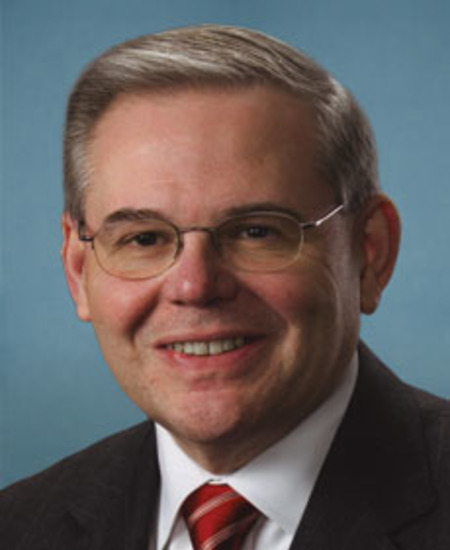
Sen. Robert Menendez
Sponsored bills
This resolution welcomes Japan's Prime Minister Yoshihide Suga to the United States. It also reaffirms the importance of the U.S.-Japan alliance for maintaining peace and stability and fostering a free and open Indo-Pacific region and beyond.
This resolution condemns the acts of gun violence that led to the tragic loss of eight lives in Georgia on March 16, 2021.
This resolution congratulates the people of Greece as they celebrate the 200th anniversary of Greece's independence. The resolution also expresses support for the principles of democratic governance to which the people of Greece are committed.
Korematsu-Takai Civil Liberties Protection Act of 2021 This bill modifies the detention authority of the United States. Specifically, it prohibits detention or imprisonment based solely on an actual or perceived protected characteristic of an individual. A protected characteristic includes each of the following: race, ethnicity, national origin, religion, sex, gender identity, sexual orientation, disability, and any additional characteristic that the Department of Justice determines to be a protected characteristic.
This bill makes changes to facilitate data sharing between the Supplemental Nutrition Assistance Program (SNAP) and programs that subsidize communication services to verify eligibility for applicable programs. Specifically, the Federal Communications Commission (FCC) must award grants to states and tribes for establishing or modifying connections between databases with information regarding benefit programs (e.g., SNAP) and the National Lifeline Eligibility Verifier to verify eligibility for the Lifeline program (which subsidizes telephone and internet services for low-income individuals) and the Emergency Broadband Benefit Program (which subsidizes broadband services for those who suffered income loss during the COVID-19 pandemic and other eligible households). The bill also reauthorizes through FY2026 the fund that supports the Emergency Broadband Benefit Program. In addition, the FCC must establish an automated connection to share data between the National Lifeline Eligibility Verifier and the National Accuracy Clearinghouse for SNAP. The FCC must coordinate with the Department of Agriculture to establish the connection.
Gun Records Restoration and Preservation Act This bill amends several appropriations laws to remove limitations on the authority of the Bureau of Alcohol, Tobacco, Firearms and Explosives to conduct activities related to the administration of federal firearms laws. Specifically, the bill removes provisions that limit the use of firearms tracing data, limit the disclosure of data under the Freedom of Information Act, prohibit imposing a requirement that gun dealers conduct a physical inventory, prohibit consolidating or centralizing records maintained by federal firearm licensees (e.g., gun dealers), and require national instant criminal background check records to be destroyed within 24 hours.
Kira Johnson Act This bill establishes grants to improve maternal health outcomes for racial and ethnic minority groups and other underserved populations. Specifically, the Department of Health and Human Services must award grants for community-based programs to improve maternal health outcomes for Black pregnant and postpartum individuals, as well as individuals in other underserved groups; training for health care providers and others who work in maternity care settings on reducing and preventing racism, bias, and discrimination; and respectful maternity care compliance programs in specified health care facilities. The National Academies of Sciences, Engineering, and Medicine must study issues related to the training programs, and the Government Accountability Office must study issues related to the compliance programs.
This resolution condemns and denounces all forms of anti-Asian sentiment, including those related to COVID-19 (i.e., coronavirus disease 2019), and calls on federal law enforcement officials, working with state and local agencies, to take specified steps. The resolution calls on federal officials to expeditiously investigate and document all credible reports of hate crimes, harassment, bullying, and threats against the Asian American and Pacific Islander communities; the Attorney General to work with state and local agencies and Asian American and Pacific Islander community-based organizations to prevent discrimination and to expand culturally competent and linguistically appropriate education campaigns on public reporting of hate crimes; and the Department of Health and Human Services to issue guidance describing best practices to mitigate racially discriminatory language in describing the pandemic. The resolution recommits the United States to serving as a model for the world in building a more inclusive, diverse, and tolerant society by (1) prioritizing language access and inclusivity in communication practices, and (2) combating misinformation and discrimination that puts Asian Americans and Pacific Islanders at risk.
This resolution celebrates the successes and contributions of Latinas in the United States and recognizes the changes still to be made to ensure that Latinas can realize their full potential as equal members of society.