

Maddy summaryThis bill requires employers in healthcare and social service sectors to develop and implement workplace violence prevention plans for their workers. It applies to a wide range of facilities including hospitals, nursing homes, mental health clinics, and community care settings, affecting healthcare and social service workers who provide care in these environments. The plans must include risk assessments, hazard prevention measures, incident reporting procedures, and annual training for employees. Employers must maintain records of violent incidents, conduct annual evaluations of their prevention plans, and submit annual summaries of workplace violence data to the Secretary of Labor. The bill also prohibits retaliation against workers who report violence or safety concerns and ensures compliance with existing safety standards.
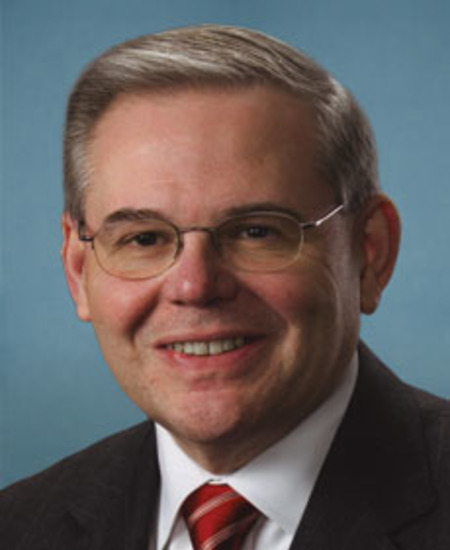
Sen. Robert Menendez
Sponsored bills
Maddy summarySRES 151 is a Senate resolution designating March 31, 2023, as "César Chávez Day" to honor the legacy of César Estrada Chávez, a civil rights leader who co-founded the United Farm Workers and championed nonviolent organizing for farmworkers' rights. This commemorative resolution has no policy impact or direct effect on any individuals or groups; it serves solely as a symbolic recognition. The resolution highlights Chávez's life work advocating for fair wages, safe working conditions, and dignity for agricultural laborers. It follows longstanding tradition of honoring Chávez through official designations, including existing state holidays in California, Colorado, and Texas. The resolution encourages the public to reflect on his legacy of service and nonviolent activism.
Maddy summarySRES 140 is a symbolic Senate resolution commemorating 200 years of official U.S.-Chile relations, marking the anniversary of the U.S. establishing diplomatic ties with Chile on January 27, 1823. It does not create new policies or affect specific groups; instead, it formally recognizes historical milestones like the 2004 U.S.-Chile Free Trade Agreement and Chile's role as a democratic partner. The resolution reaffirms shared values including democracy, human rights, and cooperation on science, environmental issues, and economic ties. It serves as a ceremonial acknowledgment of the bilateral relationship, with no concrete policy changes or funding attached.
Maddy summarySRES 142 is a Senate resolution expressing concern about environmental crimes and attacks on environmental and land defenders in Latin America and the Caribbean. It highlights the disproportionate targeting of Indigenous peoples (40% of fatal attacks in 2021 despite comprising 5% of the global population) and women, noting high murder rates in countries like Mexico, Colombia, and Brazil. The resolution urges governments to protect defenders, comply with international agreements (like the Escazú Agreement), and calls on U.S. agencies to support regional efforts through capacity building and anti-corruption initiatives. It does not create new laws or funding but serves as a formal statement of concern.
Maddy summaryThis bill creates a grant program to fund collaborative PTSD research between U.S. academic institutions and Israeli organizations. It directs the Secretary of Defense (with VA and State Department coordination) to award grants to U.S. nonprofits or universities partnering with Israeli entities on PTSD research projects. The grants require joint research agreements between U.S. and Israeli partners and mandate annual reports to Congress on project outcomes. The program is authorized for seven years from the first grant award and operates under an existing 1972 U.S.-Israel scientific cooperation agreement. It does not fund direct patient treatment or change existing VA services.
Maddy summaryS 1098, the Global Health, Empowerment and Rights Act, changes U.S. aid rules for foreign nongovernmental organizations (NGOs) receiving funding under the Foreign Assistance Act. It removes eligibility barriers for these NGOs if they provide health services (like counseling) using their own funds, as long as those services comply with local laws and would be legal in the U.S. It also eliminates extra restrictions on how foreign NGOs can use non-U.S. government funds for advocacy or lobbying, making these rules the same as those applied to U.S. NGOs receiving similar aid. This directly affects foreign health-focused NGOs working in international development and rights advocacy.
Maddy summaryThis bill removes the requirement that background checks for gun sales must be completed within 10 business days. It directly affects federally licensed gun sellers who conduct these checks, eliminating the specific deadline they previously had to finalize the process. The key provision amends existing law (18 U.S.C. § 922(t)(1)) to eliminate the 10-day timeframe, allowing sellers to complete checks without that strict deadline. The bill also includes minor technical corrections to related laws like the Brady Act and Bipartisan Safer Communities Act.
Maddy summaryThis bill repeals two specific legal authorizations for U.S. military force against Iraq: the 1991 authorization (Public Law 102-1) and the 2002 authorization (Public Law 107-243). If enacted, it would end the legal basis for military operations in Iraq under these two resolutions. The repeal directly affects the executive branch’s authority to use military force against Iraq under these specific laws. It does not create new policy but removes existing legal permissions.
Maddy summaryThe Gun Violence Prevention Research Act of 2023 would authorize $50 million annually for the Centers for Disease Control and Prevention (CDC) to conduct or support research on firearms safety and gun violence prevention for fiscal years 2024 through 2029. This funding would allow the CDC to study the causes and prevention of gun violence, including evaluating safety measures and effective interventions. The research would be conducted under the Public Health Service Act, with the funding added to existing appropriations. The bill does not change current laws but provides dedicated resources for evidence-based research on gun violence as a public health issue.
Maddy summaryThe SAFEGUARD Act of 2023 prohibits U.S. arms sales to countries committing genocide or war crimes, requiring the Secretary of State to certify that such nations have taken steps toward accountability and victim compensation before allowing exports. It mandates that all arms export agreements include commitments from recipient governments to not misuse U.S. weapons for human rights violations, with the U.S. retaining the right to demand return of weapons if misuse occurs. The bill also requires the State Department to consider human rights protections and democratic practices when reviewing arms sales, and enhances congressional oversight for sales to countries with credible reports of military coup attempts or security force abuses. This directly affects U.S. arms export decisions to foreign governments and international organizations, adding human rights safeguards to the existing export control framework.