

Maddy summaryThis bill establishes a formal U.S.-Israel defense partnership focused on joint development of counter-unmanned systems technology, authorizing $150 million annually from 2026-2030 for a dedicated program. It directly affects U.S. and Israeli defense departments, contractors, and military personnel through collaborative research, joint training, and shared procurement of counter-drone systems. Additional provisions include extending existing anti-tunnel and counter-UAS cooperation with increased funding, creating a new emerging tech program for AI/cybersecurity collaboration, and establishing a U.S. Defense Innovation Unit office in Israel. The bill requires annual reports to Congress on program progress and mandates semiannual financial oversight for all joint activities.
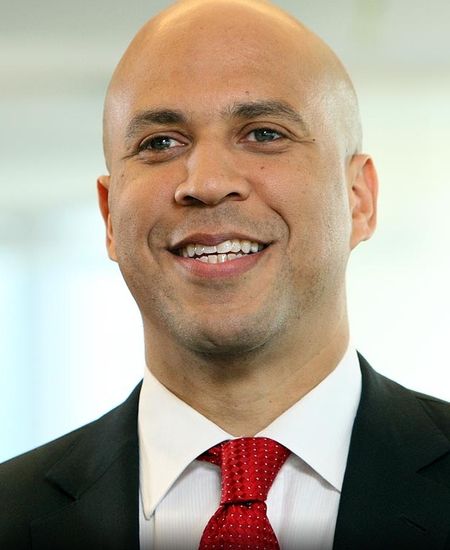
Sen. Cory A. Booker
Sponsored bills
Maddy summaryThis bill imposes new sanctions on foreign entities (including banks, insurers, and logistics companies) that knowingly facilitate Iran's oil, gas, LNG, or petrochemical exports. It blocks U.S. property of sanctioned entities and bars targeted individuals from entering the U.S. via visa restrictions or revocation. Exceptions cover goods imports and certain international obligations, while the President may grant limited 180-day waivers for national security reasons, subject to congressional reporting. The law aims to disrupt Iran's energy revenue streams used for terrorism, weapons programs, and repression, with enforcement coordinated through a new interagency working group.
Maddy summaryS 529, the Capping Prescription Costs Act of 2025, limits how much individuals and families must pay annually out-of-pocket for prescription drugs under most health insurance plans. Starting in 2026, it caps these costs at $2,000 per person or $4,000 per family per year, with automatic annual adjustments using the medical care inflation rate (CPI). This applies to both individual health plans (under the Affordable Care Act) and group health plans (like employer-sponsored coverage), as amended across multiple federal laws. The bill does not change drug prices but directly affects millions of health plan enrollees by setting a maximum annual cost for covered prescriptions.
Maddy summaryThis bill authorizes a Congressional Gold Medal to be awarded posthumously to all African American soldiers and sailors who served with Union forces during the Civil War, specifically recognizing the United States Colored Troops (USCT) and African American Navy personnel. The medal, to be struck by the U.S. Treasury, will be presented collectively to honor their service and bravery, with the original medal then given to the Smithsonian Institution for public display. Duplicate bronze medals may be sold to cover costs, and all medals are designated as national medals under federal law. The bill directly affects historical recognition of approximately 200,000 USCT soldiers and 19,000 African American Navy personnel who served despite systemic discrimination.
This resolution supports the designation of Career and Technical Education Month to celebrate career and technical education across the United States.
Maddy summarySRES 67 is a Senate resolution declaring racism a public health crisis in the United States. It cites documented racial health disparities - including lower life expectancy, higher maternal mortality, and disproportionate disease burdens among Black, American Indian, Alaska Native, and other minority communities - as meeting public health crisis criteria (affecting many, unfairly distributed, preventable, and lacking current solutions). The resolution calls for a nationwide strategy to dismantle systemic racism and address social determinants of health (like housing, education, and healthcare access), but it does not create new laws or funding. As a symbolic resolution, it aims to prompt government action rather than impose policy changes.
Maddy summaryThe Carried Interest Fairness Act of 2025 would change how investment fund managers are taxed on their "carried interest" - the share of profits they earn for managing investment funds. Currently, this is often taxed at lower capital gains rates, but the bill would require it to be taxed as ordinary income instead. It creates new rules for "investment services partnership interests" and specifies that gains and losses from these interests must be treated as ordinary income or loss. The bill directly affects investment fund managers and aims to align their tax treatment more closely with how other business income is taxed.
Protecting Sensitive Locations Act This bill prohibits immigration enforcement actions within 1,000 feet of a sensitive location except in exigent circumstances, such as the imminent risk of death, violence, or physical harm to any person. Sensitive locations include health care facilities; schools and school bus stops; places that provide assistance for people such as children, pregnant women, and abuse victims; child care facilities; places that provide disaster or emergency services; places of worship; courthouses and lawyers’ offices; facilities used as polling places; certain labor union facilities; and public assistance offices. The prohibition shall apply to Department of Homeland Security officers and agents, as well as state employees pursuing immigration enforcement actions. If an enforcement action is carried out in violation of this prohibition (1) no information resulting from the action may be entered into the record in a resulting removal proceeding, and (2) the affected individual may move to immediately terminate such a proceeding. U.S. Immigration and Customs Enforcement and U.S. Customs and Border Protection shall annually report to Congress about enforcement actions taken at sensitive locations in the preceding year.
Filipino Veterans Family Reunification Act of 2025 This bill exempts from immigrant visa limitations the children of certain individuals who were naturalized due to their military service during World War II. Specifically, this applies to the children of veterans who served honorably during World War II in the U.S. Armed Forces or in Filipino military units such as the Philippine Army, Philippine Scouts, or recognized guerilla units.
Maddy summaryThis bill creates a tax deduction for attorney fees paid in consumer protection lawsuits where a defendant is found liable for violating specific federal or state consumer laws. It directly affects consumers who win such cases and their attorneys, by allowing them to deduct these fees from taxable income instead of paying tax on them. The key provision amends the tax code to add an "above-the-line" deduction for fees related to violations of laws like the Truth in Lending Act, Fair Debt Collection Practices Act, and Fair Credit Reporting Act. This change removes a tax burden on the portion of settlement awards covering legal costs, ensuring consumers keep more of their recovery.