

Maddy summaryThis bill would substantially expand the Low-Income Home Energy Assistance Program (LIHEAP) to help low-income households afford heating and cooling costs. It increases funding for the program, sets new eligibility criteria (250% of poverty level or 80% of state median income), and requires states to implement year-round assistance programs. Key provisions include protections against utility shutoffs and late fees for eligible households, mandates for data collection on energy arrears, and requirements for weatherization using renewable energy solutions. The bill directly affects over 21 million households behind on utility payments, aiming to reduce energy burdens for families spending more than 3% of their income on home energy costs.
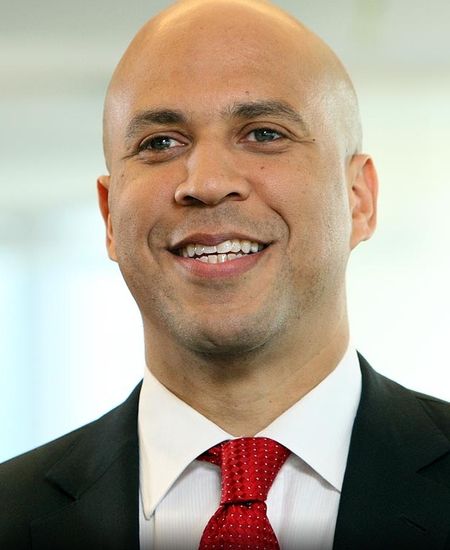
Sen. Cory A. Booker
Sponsored bills
Maddy summarySJRES 43 proposes a constitutional amendment allowing Congress and state governments to set reasonable limits on campaign contributions and expenditures intended to influence elections. It would permit distinctions between individuals and corporations, including the potential prohibition of corporate spending in political campaigns. The amendment explicitly protects the freedom of the press from being restricted by these regulations. If ratified by three-fourths of state legislatures, this change would directly affect candidates, political committees, and organizations that spend money to influence elections.
Maddy summarySRES 145 is a non-binding Senate resolution expressing support for Iranian political refugees residing in Ashraf-3, Albania. It calls on the U.S. government to condemn Iran’s threats (including cyberattacks and sham legal proceedings) against these refugees and to urge Albania to uphold their rights under international law, including freedom of expression and protection from extradition. The resolution specifically highlights the community’s status as former political prisoners and witnesses to Iran’s human rights abuses, such as the 1988 massacre. It does not create new laws but formally advocates for diplomatic action to safeguard this group.
Maddy summarySRES 144 is a non-binding Senate resolution recognizing the heritage, culture, and contributions of Latinas in the United States. It highlights their impact across diverse fields - including science, arts, military service, and the economy - while noting ongoing challenges like the 58-cent pay gap for Latinas compared to White, non-Hispanic men. The resolution honors their historical and contemporary achievements without creating new policies or funding. It was introduced by 28 Senators and serves as a symbolic acknowledgment of Latinas' role in shaping U.S. society.
Maddy summaryS 1166, the Excess Urban Heat Mitigation Act of 2025, creates a federal grant program to fund heat-mitigation projects in high-risk urban areas. It directs at least 75% of annual $30 million funding toward "covered census tracts" (areas with poverty rates ≥20%) and prioritizes projects like tree planting, cool roofs, and community cooling centers. Eligible entities must include community engagement plans and address health/environmental connections in their proposals. The program requires annual reporting on grant recipients and sets a federal cost-share cap of 80% (with 100% possible for economic hardship cases).
Maddy summaryS 1172, the Honor Farmer Contracts Act of 2025, requires the Department of Agriculture to immediately reinstate funding for all pre-enactment contracts with farmers and agricultural service providers. It mandates rapid payment of all overdue amounts owed under these agreements and prohibits canceling signed contracts unless a farmer or provider violates terms. The bill also prevents the closure of key local offices (like Farm Service Agency or NRCS offices) without 60 days' written notice to Congress. This directly affects farmers, agricultural businesses, and rural service offices by securing existing financial commitments and operational access.
Maddy summaryThis bill amends Medicare rules to prevent private health insurance plans from discriminating against patients with end-stage renal disease (ESRD) who need dialysis. It specifically prohibits plans from: (1) treating dialysis differently than other medical services in coverage or benefits, and (2) shifting the primary responsibility for covering dialysis costs to Medicare. The law clarifies that plans cannot limit dialysis coverage or network access based on ESRD diagnosis, while still allowing plans to choose which dialysis providers they include in their networks. It directly affects ESRD patients and private health insurance plans, ensuring dialysis is covered comparably to other essential medical services under the plan.
Maddy summaryThis bill prohibits state and local governments from using tax-exempt bonds to fund new professional sports stadiums. It defines a "professional stadium bond" as any bond financing a facility hosting professional sports events for at least 5 days yearly, blocking tax-exempt status for such bonds issued after enactment. The law directly affects municipalities, sports teams, and developers seeking tax-free financing for stadium construction or major renovations. It changes the tax code to eliminate a common subsidy method for new sports venues, applying only to future projects.
Maddy summaryThe America's Red Rock Wilderness Act (S 1193) would designate approximately 3.3 million acres across nine distinct wilderness areas in Utah as protected wilderness. These areas include the Great Basin, Grand Staircase-Escalante, Moab-La Sal Canyons, Henry Mountains, Glen Canyon, San Juan, Canyonlands Basin, San Rafael Swell, and Book Cliffs-Greater Dinosaur regions. The bill would manage these areas under the Wilderness Act, preserving them for recreation, wildlife habitat, and cultural values while allowing continued livestock grazing under existing regulations. It also includes provisions to protect Tribal rights and water rights within the designated wilderness areas, with specific administrative guidelines for roads, land management, and Tribal consultation.
Maddy summary# Summary of the Northern Rockies Ecosystem Protection Act (NREPA) The Northern Rockies Ecosystem Protection Act is a comprehensive environmental legislation designed to protect and restore the natural ecosystems of the Northern Rockies bioregion (Idaho, Montana, Wyoming, Oregon, and Washington). The bill consists of seven main titles with the following key components: **Title I: Wilderness Designations** - Designates over 200 new wilderness areas totaling approximately 13 million acres - Includes specific areas like the Greater Yellowstone, Greater Glacier/Northern Continental Divide, Greater Hells Canyon, Greater Salmon/Selway, and Greater Cabinet-Yaak-Selkirk ecosystems - Specifies exact boundaries, acreage, and administration for each wilderness area **Title II: Biological Connecting Corridors** - Designates approximately 2.9 million acres of Federal land as biological connecting corridors - Requires special management to maintain wildlife connectivity between major ecosystem areas - Prohibits even-aged timber harvesting, mining, oil/gas development, and new road construction **Title III: Wild and Scenic Rivers Designations** - Adds numerous rivers to the Wild and Scenic Rivers System, including: - The South Fork Payette, Middle Fork Payette, and Deadwood rivers in Idaho - The Yaak River and Kootenai River in Montana - The Yellowstone River and Thorofare River in Wyoming **Title IV: Wildland Restoration and Recovery** - Designates 1,023,000 acres as wildland recovery areas (including Skyland, Hungry Horse, Lolo Creek, Yellowstone West, Mt. Leidy, and others) - Requires restoration of natural conditions, invasive species reduction, and water quality improvement **Title V: Implementation and Monitoring** - Requires implementation reports from the Secretaries of Agriculture and Interior - Establishes an interagency team to monitor ecosystem health - Includes roadless land evaluation to protect remaining roadless areas **Title VI: Effect on Indian Tribes** - Protects tribal treaty rights and cultural practices - Ensures nonexclusive access to protected areas for traditional cultural and religious purposes - Requires consultation with tribal governments **Title VII: Water Rights** - Explicitly states that the Act does not affect or reduce existing U.S. water rights The legislation represents a comprehensive approach to ecosystem protection, focusing on preserving wilderness, maintaining wildlife corridors, protecting rivers, restoring damaged lands, and respecting tribal rights while maintaining the natural integrity of the Northern Rockies bioregion.