

Maddy summaryThe BUMP Act (S 1374) bans devices that increase the firing rate of semiautomatic firearms to mimic machineguns, directly affecting owners of modified firearms. It prohibits importing, selling, or possessing devices (like "bump stocks") that speed up firing or eliminate the need for separate trigger pulls, and requires registration of existing modified semiautomatics within 120 days. The law exempts government agencies and pre-enactment modifications that are registered. This targets specific firearm modifications, not all semiautomatic weapons.
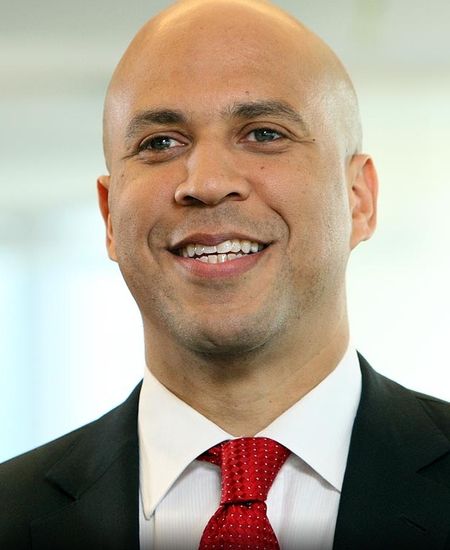
Sen. Cory A. Booker
Sponsored bills
Maddy summaryThis bill, the Tax Cut for Workers Act of 2025, expands the Earned Income Credit (EIC) to make it more accessible and generous for low-income workers without children. It lowers the minimum age for the credit from 25 to 19 (with exceptions for students, former foster youth, and homeless youth), removes the maximum age limit, and increases the credit amount and income thresholds. The bill also adjusts these amounts for inflation and allows taxpayers to use their prior year’s earned income if it was higher, applying to taxable years starting after 2025. These changes extend the credit to U.S. territories like Puerto Rico and American Samoa without prior time limits.
Maddy summaryThe REPAIR Act requires motor vehicle manufacturers to provide consumers and repair facilities with access to vehicle data, repair information, tools, and parts necessary for maintenance and repairs. It prohibits manufacturers from using technological or contractual barriers that restrict consumers' ability to choose repair facilities or use alternative parts, including aftermarket, recycled, or remanufactured components. The law mandates that manufacturers make critical repair information available to repair shops and alternative parts manufacturers at fair, reasonable costs, and ensures owners can access vehicle data without restrictions. The Federal Trade Commission will enforce these requirements, with penalties for violations, and an advisory committee will monitor implementation and identify barriers to competition. This legislation directly affects car owners, independent repair shops, parts manufacturers, and vehicle manufacturers by promoting competition and consumer choice in vehicle repair.
Maddy summaryThe Organic Science and Research Investment Act of 2025 establishes a new USDA initiative to coordinate and expand research on organic agriculture across multiple agencies, including the Agricultural Research Service and National Institute of Food and Agriculture. The bill requires the initiative to review existing research, develop strategic plans, and submit reports every 5 years with recommendations to improve organic farming practices, climate resilience, and ecosystem services. It increases annual funding for organic research from $60 million to $100 million by 2030, with specific provisions for traditional ecological knowledge and research on transitioning to organic production. The bill directly affects USDA research agencies, organic farmers, and researchers conducting organic agriculture studies. It also mandates an economic impact analysis of organic farming's effects on rural communities and the environment.
Maddy summaryThe American Family Act creates a new monthly child tax credit that would provide $300 per month for each child under age 6 and $300 per month for each child age 6 and older, with income-based eligibility limits. The credit would be refundable, meaning it could be paid even if a family owes no income tax, and would replace the current annual child tax credit. The bill establishes income thresholds ($150,000 for joint filers) above which the credit begins to phase out, with full phase-out at $400,000 for joint filers. It also includes provisions for "presumptive eligibility" to allow for advance payments based on previous tax returns or government program data. The bill would terminate the existing annual child tax credit after 2024, replacing it with this monthly payment system.
Maddy summaryThe Raise the Wage Act of 2025 gradually increases the federal minimum wage from $9.50 to $17.00 per hour over six years, with future annual increases tied to median wage growth. It eliminates the separate lower minimum wage for tipped workers (currently $2.13/hour base), requiring employers to pay the full minimum wage to all tipped employees starting in 2031. The bill also ends the special $4.25/hour starting wage for workers under 20, phasing it out by 2030. Additionally, it prohibits new special wage certificates for disabled workers under Section 14(c) and requires their phaseout by 2030, while providing transition support for affected employers and workers.
Maddy summaryThe Ending PUSHOUT Act of 2025 aims to reduce discriminatory school discipline practices that disproportionately affect students of color, particularly girls of color, students with disabilities, and LGBTQI+ students. It requires schools to collect and report detailed demographic data on discipline actions like suspensions, expulsions, and law enforcement referrals, with specific breakdowns by race, gender, disability status, and other protected characteristics. The bill provides federal grants to schools to implement trauma-informed alternatives to suspension, prohibits out-of-school suspensions for young children for minor offenses like dress code violations, and establishes a task force focused on addressing the school pushout of girls of color. Schools receiving grants must train staff on implicit bias, cultural responsiveness, and restorative practices while improving access to mental health services. The legislation also restricts the use of corporal punishment, seclusion, and certain restraints, and prevents schools from using disciplinary policies that criminalize student behavior.
Maddy summaryThe Public Service Freedom to Negotiate Act of 2025 establishes federal minimum standards for collective bargaining rights for public employees and supervisory employees. The Federal Labor Relations Authority will determine if states' laws "substantially provide" these rights, and if not, the federal standards will apply to affected workers. The bill guarantees rights like forming labor organizations, negotiating wages and working conditions, and resolving disputes through mediation or arbitration, while prohibiting strikes that would disrupt emergency services. Existing collective bargaining agreements and units are protected from the bill's implementation.
Maddy summaryThis resolution (SRES 159) is a ceremonial Senate measure honoring the late Senator John Bennett Johnston, Jr. (1932-2024), who represented Louisiana in the U.S. Senate from 1972 to 1997. It commemorates his career, including his work on energy policy, flood control, and Louisiana conservation efforts, and requests the Senate adjourn in his memory while sending condolences to his family. As a non-binding resolution, it has no policy impact or direct effect on any individuals or laws.
Maddy summarySRES 158 is a non-binding Senate resolution expressing the chamber's view that paraprofessionals (like paraeducators) and education support staff (including clerical, custodial, and food service workers in schools) deserve fair treatment. It outlines specific expectations for their workplaces, such as livable wages, affordable healthcare, job security, paid leave, and meaningful input in school policies - directly affecting over 3 million frontline workers supporting 49 million students. The resolution does not create new laws but urges federal and state action to address current gaps, including ending seasonal layoffs and ensuring access to benefits. It emphasizes these staff’s critical role in school environments while clarifying that it does not override existing collective bargaining agreements.