

Maddy summaryThis bill expands Medicare coverage for diabetes self-management training for beneficiaries with diabetes. It requires 100% coverage with no cost-sharing for these services, including an initial 10 hours plus 2 additional hours annually, and allows physicians or qualified non-physician practitioners to authorize them. The bill also establishes a pilot program to test virtual training services starting in 2026, evaluating health outcomes and cost impacts. These changes apply to Medicare beneficiaries with diabetes beginning January 1, 2027.
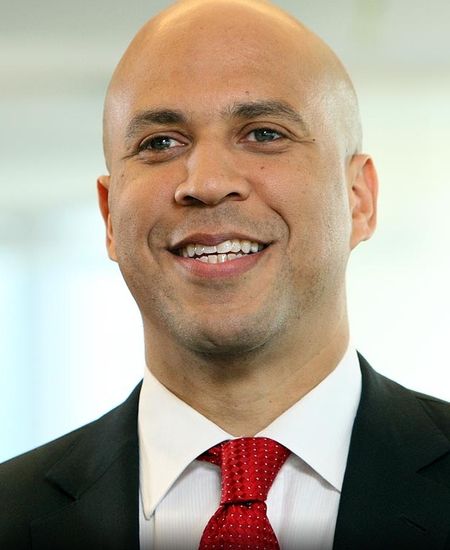
Sen. Cory A. Booker
Sponsored bills
Maddy summaryThis resolution (SRES 255) is a ceremonial Senate measure honoring former U.S. Senator Christopher "Kit" Bond of Missouri, who died on May 13, 2025. It recognizes his 40+ years of public service, including his roles as Missouri Governor (1973-1977, 1981-1985) and U.S. Senator (1987-2011). The resolution directs the Senate to adjourn briefly as a mark of respect and transmit a copy to his family. It has no policy impact or direct effect on constituents, as it is purely commemorative.
Maddy summarySRES 214 is a non-binding Senate resolution recognizing May as Asian American, Native Hawaiian, and Pacific Islander Heritage Month. It celebrates the historical contributions of these communities to U.S. history and acknowledges their diverse populations, which together represent over 10% of the U.S. population. The resolution references key milestones like the 1965 Immigration Act and the 60th anniversary of the Space Shuttle Discovery mission, while noting ongoing challenges such as hate crimes. As a ceremonial resolution, it does not create new laws or policies but formally honors these communities' achievements and cultural significance.
Maddy summaryThe Ban Congressional Stock Trading Act (S 1879) requires current and new Members of Congress, along with their spouses and dependent children, to divest or place certain investments in qualified blind trusts. It defines "covered investments" broadly to include stocks, bonds, commodities, and derivatives, while excluding diversified mutual funds, Treasury securities, and retirement plan investments. Members must complete this process within 120 days of enacting the law (with possible 180-day extensions), and new members have 120 days after taking office to comply. The law mandates public reporting of assets placed in blind trusts and imposes civil penalties for non-compliance, equal to a monthly portion of the member's salary. This legislation directly affects congressional staff members and their immediate families who hold financial interests that could create conflicts of interest.
Maddy summaryThis bill restructures the United States Marshals Service by moving it from the Department of Justice to the judicial branch. It establishes the Director of the Marshals Service as appointed by the Chief Justice (with Board consultation), replaces the Attorney General's authority with the Chief Justice for marshal appointments, and clarifies the Service's duties. Key provisions include authorizing the Service to provide personal protection for federal jurists and witnesses under specific conditions (Section 565(e)), assisting with fugitive investigations and sex offender matters at the Attorney General's request, and requiring Board oversight. The bill primarily affects the internal governance and operational scope of the Marshals Service, not creating new law enforcement powers.
Maddy summaryThis bill would establish federal grants to support comprehensive sex education and sexual health services for young people ages 10-29, with specific emphasis on making these programs evidence-informed, medically accurate, culturally responsive, trauma-informed, and inclusive of diverse identities. The bill authorizes $100 million annually for five years to fund programs in schools, colleges, and youth organizations that provide age-appropriate education on topics like anatomy, contraception, consent, healthy relationships, and STI prevention. It specifically requires programs to address racial and gender equity, serve underserved youth (including Black, Indigenous, Latine, LGBTQ+, and low-income youth), and avoid harmful practices like abstinence-only education. The bill repeals the "abstinence-only-until-marriage" program and redirects those funds to support the new comprehensive approach, requiring grantees to report on program impact including how many young people were served and how programs address racial and gender equity.
Maddy summaryThe Investing in All of America Act of 2025 modifies the Small Business Investment Act of 1958 to adjust leverage limits for Small Business Investment Companies (SBICs). It reduces the maximum leverage ratio from 300% to 200% and sets new dollar caps ($175 million for most SBICs, $350 million for commonly controlled groups), adjusted annually for inflation. The bill expands eligibility for favorable leverage treatment to include investments in rural areas, critical technology sectors, and small manufacturers. These changes directly affect SBICs that provide financing to small businesses, altering how they structure debt and private capital.
Maddy summaryThis bill amends the CDFI Bond Guarantee Program to improve its operation. It raises the minimum guarantee amount to $25 million per bond issue, sets an annual cap of $1 billion for all guarantees, and extends the program's deadline by four years from enactment. The changes aim to provide more predictable access to long-term capital for Community Development Financial Institutions (CDFIs) serving underserved communities. The bill also requires the Treasury Secretary to submit two reports on the program's effectiveness to Congress within one and three years of enactment.
Maddy summaryThe Vote at Home Act of 2025 would require all states to mail ballots to registered voters at least two weeks before federal elections, making voting by mail the default option for all eligible voters. It eliminates unnecessary barriers like notary requirements and excuse documentation for mail-in voting while ensuring ballots are accessible for people with disabilities. The bill also mandates free postage for election mail and expands automatic voter registration through motor vehicle departments. These changes would directly affect all voters participating in federal elections across the United States, aiming to increase accessibility and participation.
Maddy summaryThis resolution (SRES 240) affirms that diversity, equity, inclusion, and accessibility are core U.S. values and emphasizes the need to address ongoing discrimination across multiple sectors. It directly affects workplaces, K-12 and higher education systems, healthcare, housing, government programs, and the military by citing data on persistent inequities - such as racial disparities in housing discrimination, wage gaps, and underrepresentation in leadership. The resolution does not create new laws but encourages federal, state, and local entities to adopt inclusive policies and remove barriers to opportunity. It references evidence from agencies like the Department of Housing and Urban Development and the Equal Employment Opportunity Commission to support its focus on systemic discrimination. The Senate calls for promoting environments where all individuals can achieve their full potential.