

Maddy summaryS 2006, the Fit to Serve Act, prohibits the U.S. military from discriminating against service members or applicants based on gender identity. It directly affects all current and prospective members of the Armed Forces by banning specific discriminatory actions, including denying medically necessary health care, requiring service in a sex assigned at birth, or separating members due to gender identity (including gender dysphoria diagnosis). The bill amends Title 10 of the U.S. Code to add new protections, explicitly stating that the military cannot deny service, reenlistment, or health coverage based on gender identity. These changes apply uniformly across all branches and service statuses, ensuring equal treatment under military policy.
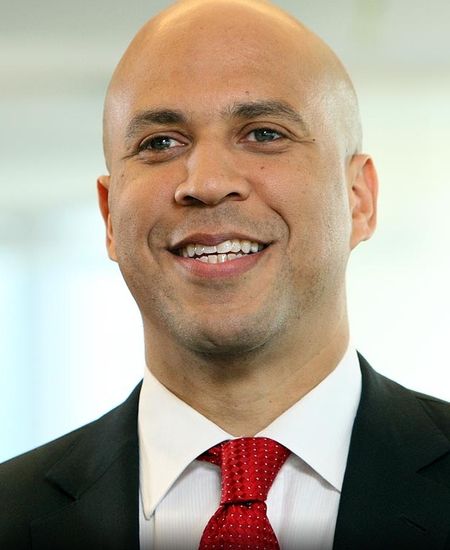
Sen. Cory A. Booker
Sponsored bills
Maddy summaryThis bill expands Medicare coverage to include audiology services (hearing and balance assessments, and treatment starting in 2027) for beneficiaries. It allows qualified audiologists to provide these services directly without requiring a physician referral or supervision, beginning January 1, 2027. Medicare will pay 80% of the lesser of the actual charge or the fee schedule amount for these services, and audiologists will be recognized as eligible providers in certain clinics. The changes apply to services furnished on or after January 1, 2027.
Maddy summaryThis bill amends the Communications Act to clarify that "franchise fee" means only monetary assessments paid to local authorities for cable or community television services. It removes the word "includes" and adds "other monetary" before "assessment" in the definition. This technical change ensures franchise fees are strictly defined as cash payments, not other types of fees or non-monetary obligations. It directly affects cable operators and local governments that collect these fees under existing law. The bill makes no new policy changes but refines the legal definition for clarity.
Maddy summaryThis bill prevents employers from dropping health insurance coverage for workers during strikes or lockouts. It amends the National Labor Relations Act to prohibit employers from terminating group health plan coverage for employees who are either locked out (during bargaining disputes) or participating in a lawful strike. Employers who violate this rule face civil penalties of up to $75,000 per violation for lockout-related actions (doubling to $150,000 for repeat offenses) or $50,000 for strike-related actions (doubling to $100,000 for repeat offenses). The law directly affects workers engaged in strikes or locked out by employers, ensuring their healthcare coverage continues during these labor disputes.
Treat and Reduce Obesity Act of 2025 This bill expands Medicare coverage of intensive behavioral therapy for obesity. Specifically, the bill allows coverage for therapy that is provided by (1) a physician who is not a primary care physician; or (2) other health care providers (e.g., physician assistants and nurse practitioners) and approved counseling programs, if provided upon a referral from, and in coordination with, a physician or primary care practitioner. Currently, such therapy is covered only if provided by a primary care practitioner. The bill also allows coverage under Medicare's prescription drug benefit of drugs used for the treatment of obesity or for weight loss management for individuals who are overweight.
Maddy summaryThis bill repeals key protections in the Protection of Lawful Commerce in Arms Act that shielded gun manufacturers from civil lawsuits. It allows victims of gun violence to use federal gun trace data (from the Firearms Trace System database) as evidence in civil court cases against gun sellers or manufacturers. The law makes this trace information discoverable, admissible, and usable in any civil action in state or federal courts, including the District of Columbia. This change directly affects victims seeking legal recourse and gun industry entities previously protected by the repealed law.
Maddy summaryThis bill temporarily restores federal student loans (Federal Direct Stafford Loans) for graduate and professional students, directly affecting those pursuing advanced degrees. It reinstates a provision that had expired after 2012, allowing these loans to be offered again through June 30, 2023. The bill specifically amends the Higher Education Act to clarify this temporary reinstatement and exempts it from certain administrative rulemaking requirements. It does not create new loan programs but reestablishes a prior eligibility period for graduate students. The change is limited to a specific timeframe and applies only to federal student loan programs.
Maddy summaryS 1957, the "No Place for LGBTQ+ Hate Act," repeals five specific executive orders that the bill identifies as harming LGBTQI+ rights. It prohibits federal funding for implementing or enforcing those orders, which include policies restricting transgender healthcare, military service, school sports participation, and requiring schools to deny transgender identities. The bill directly affects LGBTQI+ individuals by reversing discriminatory executive actions in key areas like employment, education, healthcare, and military service. It does not create new policies but formally nullifies existing executive actions through legislative repeal and funding restrictions.
Maddy summarySRES 260 is a symbolic Senate resolution expressing support for designating June 6, 2025, as "National Gun Violence Awareness Day" and June 2025 as "National Gun Violence Awareness Month." It calls on U.S. citizens to wear orange on June 6, 2025, promote gun safety awareness, and focus on community safety efforts during summer months when gun violence typically rises. The resolution does not create new laws or policies but aims to raise public awareness about gun violence, referencing statistics on annual gun-related deaths and honoring victims like Hadiya Pendleton. It is a non-binding expression of support, not a legislative action.
Maddy summaryS 1924, the Improving Mental Health Access for Students Act, requires colleges and universities covered by the Higher Education Act to include suicide prevention contact information on student identification cards or their websites. Specifically, it mandates that institutions include the 988 Suicide and Crisis Lifeline, Crisis Text Line, and their campus mental health center contact details on student IDs (or publish this information online if IDs aren't issued). The bill applies to all affected institutions and takes effect one year after enactment. It directly impacts students by making critical mental health resources more visible and accessible during emergencies. The law focuses on standardizing access to existing support services, not creating new programs.