

Maddy summaryThe PATHS to Tutor Act of 2025 establishes a federal grant program to fund high-quality tutoring in high-need schools, directly affecting students in schools with high teacher turnover or many novice teachers. It requires local consortia (combining schools, universities, and community partners) to apply for competitive grants, mandating tutoring that uses a 1:4 tutor-to-student ratio, aligns with school curriculum, includes tutor training, and avoids replacing teachers. Grant funds must cover tutor stipends, materials, transportation, and meals for students (with 85% allocated directly to student support), while prohibiting the use of funds to supplant existing teaching staff. Priority is given to consortia using tutors from educator preparation programs or minority-serving institutions.
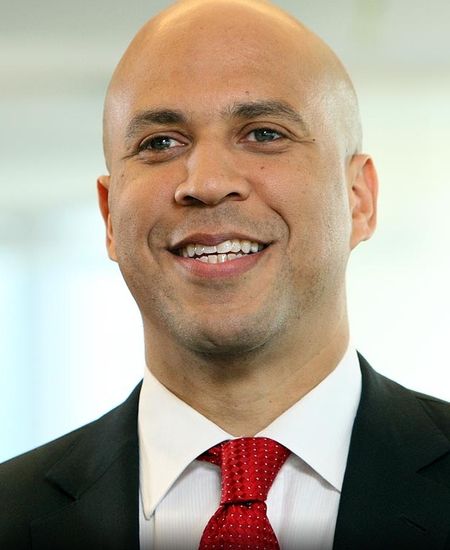
Sen. Cory A. Booker
Sponsored bills
Maddy summaryThis bill establishes comprehensive labor protections for domestic workers, including house cleaners, nannies, personal care aides, and other employees working in private homes. It directly affects approximately 2.2 million domestic workers, predominantly women of color and immigrants who have historically been excluded from key labor protections. Key provisions include requiring written employment agreements outlining wages and hours, providing earned sick days for health and safety needs, establishing fair scheduling practices with advance notice requirements, protecting privacy rights, and prohibiting unfair wage deductions. The bill also extends civil rights protections under Title VII of the Civil Rights Act to domestic workers and creates a Domestic Employee Standards Board to recommend workplace standards.
Maddy summaryS 3400, the Ally’s Act, requires most private health insurance plans and group health plans to cover hearing implants and related services for eligible individuals. It mandates coverage for cochlear implants, bone conduction devices, maintenance, repairs, upgrades every five years, hearing assessments, pre- and post-surgery care, and aural rehabilitation. Insurers cannot impose stricter cost-sharing or treatment limits for these services than for other medical care, and cannot deny coverage based on medical necessity determinations by a physician or audiologist. The law applies to plans covering individuals with hearing loss (including unilateral or bilateral) who meet medical criteria, effective for plan years starting January 1, 2026.
Maddy summaryThis bill authorizes $74 million annually for fiscal years 2026 and 2027 to restore U.S. funding for the United Nations Population Fund (UNFPA), directly supporting its global reproductive health programs. It specifically funds UNFPA's work to end preventable maternal deaths, address unmet contraceptive needs, prevent gender-based violence, and combat harmful practices like female genital mutilation and child marriage across 150+ countries. The funding applies to UNFPA's core operations in humanitarian crises (e.g., Yemen, Afghanistan, Sudan) and excludes programs in China. This would reverse the 2025 funding halt that already caused health center closures and service disruptions for millions of women and girls.
Maddy summarySRES 536 is a non-binding Senate resolution designating December 2, 2025, as "World Nuclear Energy Day." It commemorates nuclear energy's role in clean power generation, highlighting historical milestones like the first nuclear chain reaction (1942) and the first commercial nuclear plant (1957). The resolution celebrates nuclear energy's contributions to U.S. electricity (18% of generation, 43% carbon-free), job creation (over 70,000 direct jobs), and national security, without creating new laws or affecting any group. It serves as a symbolic recognition of the industry's achievements.
Maddy summarySRES 533 is a non-binding Senate resolution condemning white supremacy, hate, and antisemitism, with specific focus on the promotion of these ideologies by white supremacist Nick Fuentes and his platforming by Tucker Carlson. It highlights Fuentes' Holocaust denial, antisemitic conspiracy theories (like the "Great Replacement" myth), and use of dog whistles, while criticizing Carlson for hosting Fuentes without challenge and Heritage Foundation's Kevin Roberts for defending such views. The resolution urges all elected officials and leaders to reject these ideologies whenever they occur, and affirms condemnation of Nazism and the Holocaust. As a formal expression of Senate opinion, it does not create new laws but serves as a public stance against harmful rhetoric.
Maddy summaryThe One Fair Price Act of 2025 prohibits businesses from charging different prices for the same product or service based on surveillance data (such as tracking online behavior or personal information). It specifically bans price discrimination using this data, while allowing price differences for legitimate reasons like cost-based pricing, broad group discounts (e.g., for teachers or veterans), or loyalty programs with clear disclosure. The Federal Trade Commission enforces the law, and states or individuals can sue for violations, seeking damages or injunctions. The bill also requires a joint study on its impact on small businesses within one year of enactment.
Maddy summarySRES 531 is a non-binding Senate resolution celebrating the 50th anniversary of the Individuals with Disabilities Education Act (IDEA) on November 29, 2025. It recognizes IDEA's historical role in guaranteeing children with disabilities access to free appropriate public education in inclusive settings, transforming educational opportunities for millions. The resolution honors students, families, educators, and advocates who advanced IDEA's principles since its 1975 enactment. It does not create new policy but formally acknowledges the law's enduring impact on educational equity.
Maddy summaryThe Restoring Patient Protections and Affordability Act of 2025 extends enhanced premium tax credits through 2028, making health insurance more affordable for lower- and middle-income individuals. It extends the 2026 open enrollment period through May 1, 2026, and restores funding for navigator programs that help people enroll in health insurance plans. The bill requires health insurance issuers to notify enrollees about changes to premium assistance and establishes $1,000 daily penalties for failing to comply with these notification requirements. Additionally, it limits surprise premium increases for people with household incomes below 400% of the poverty line and prevents premium spikes for those with ACA or employer coverage. These changes directly affect millions of people enrolled in health insurance plans through the Affordable Care Act marketplaces.
Maddy summaryThe Medicare-X Choice Act of 2025 would establish a new public health insurance option called the "Medicare Exchange health plan" available through health insurance exchanges starting in 2028 for eligible individuals who are not enrolled in traditional Medicare. The plan would offer silver and gold coverage levels with no cost-sharing for primary care services, and would reimburse healthcare providers at Medicare rates. Healthcare providers enrolled in Medicare or Medicaid would be required to participate in this public plan, and the bill includes provisions to collect data addressing health disparities and improve care coordination. The plan would be funded through $1 billion in appropriations for each of two funds to establish and administer the program, while maintaining existing Medicare benefits and trust funds.