

Institutional Grants for New Infrastructure, Technology, and Education for HBCU Excellence Act or the IGNITE HBCU Excellence Act This bill establishes a grant program to support long-term improvements of historically Black colleges and universities (HBCUs) and graduate programs at HBCUs. Specifically, the bill requires the Department of Education (ED) to award grants to HBCUs to improve campus facilities. A recipient must use grant funds for certain activities, such as constructing or renovating facilities, carrying out major repairs, and strengthening the safety and security of a campus. Any new construction, modernization, or renovation projects must meet building code and energy and water conservation requirements. Further, HBCUs must seek to procure contracts from certain small businesses, including those owned and controlled by veterans and service-disabled veterans. The bill prohibits the use of grant funds for specified activities, including for the payment of routine and predictable maintenance costs, minor repairs, and utility bills. The Government Accountability Office must study the implementation of the grant program. The bill also requires ED to repay the outstanding balance of principal, interest, fees, and costs and any related reimbursements for certain capital financing loans.
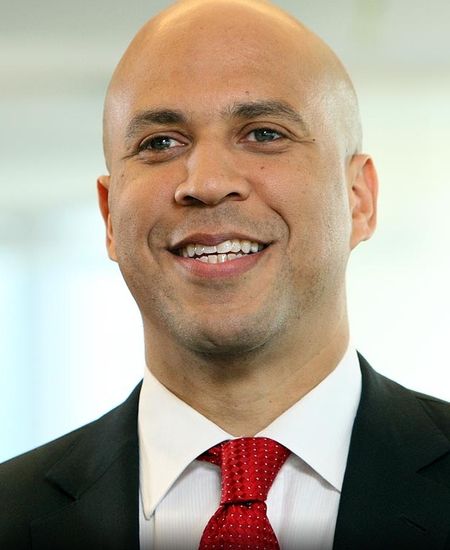
Sen. Cory A. Booker
Sponsored bills
Medicare Multi-Cancer Early Detection Screening Coverage Act of 2021 This bill provides for Medicare coverage and payment for multi-cancer early detection screening tests that are approved by the Food and Drug Administration and that are used to screen for cancer across many cancer types. The Government Accountability Office must report on the resulting utilization and effectiveness of such tests.
Climate Change Financial Risk Act of 2021 This bill addresses climate change risk and its potential impact on the financial system. The Federal Reserve Board must develop financial risk analyses relating to climate change for specified large nonbank financial companies and bank holding companies. Specifically, these entities will be evaluated every two years on whether they have the capital necessary to absorb financial losses that would arise under several different climate change risk scenarios. The bill also establishes the Climate Risk Scenario Technical Development Group to provide recommendations to the board regarding such climate change risk scenarios, and determine the financial and economic risks of these scenarios. The Financial Stability Oversight Council of the Department of the Treasury must establish a committee to assist it in identifying risks and responding to threats to the financial system as a result of climate change.
Gold Star Mothers Family Monument Extension Act This bill extends through January 2, 2027, the authority of the Gold Star Mothers National Monument Foundation to establish a commemorative work in honor of Gold Star families.
Access to Counsel Act of 2021 This bill provides various protections for covered individuals subject to secondary or deferred inspections when seeking admission into the United States. Covered individuals include U.S. nationals, lawful permanent residents, aliens in possession of a visa, returning asylees, and refugees. The Department of Homeland Security shall ensure that a covered individual subject to secondary or deferred inspection has a meaningful opportunity to consult with counsel and certain related parties, such as a relative, within an hour of the start of the secondary inspection and as necessary during the inspection process. The counsel and related party shall be allowed to advocate on behalf of the covered individual, including by providing evidence and information to the examining immigration officer. A lawful permanent resident subject to secondary or deferred inspection may not abandon lawful permanent resident status until the individual has had a meaningful opportunity to seek advice from counsel, unless the individual voluntarily and knowingly waives in writing this opportunity to seek counsel's advice.
Affordable Medications Act This bill revises and expands various requirements relating to prescription drug pricing and affordability. Specifically, the bill expands financial reporting requirements for drug manufacturers and establishes corresponding civil penalties for noncompliance; it also adds reporting requirements for certain nonprofit patient-assistance programs. Further, the bill requires the Centers for Medicare & Medicaid Services (CMS) to negotiate prices for certain prescription drugs under Medicare and requires the Centers for Medicare and Medicaid Innovation within the CMS to test specified models for negotiating drug prices. It also establishes reporting requirements, and corresponding civil penalties for noncompliance, for pharmaceutical companies with respect to spikes in prescription drug prices. The bill establishes an excise tax on prescription drugs subject to price spikes, lessens prescription drug cost-sharing requirements under qualified health plans and group health plans, and modifies requirements for the importation of prescription drugs. It also requires drug manufacturers to provide rebates for drugs dispensed to certain low-income individuals under the Medicare program and limits the time frame that trade agreements are required to provide market exclusivity for biological products. Additionally, the bill (1) requires the Food and Drug Administration to establish a database of generic drugs; (2) modifies other provisions related to generic drugs, prescription drug advertising, disclosure of wholesale acquisition prices, and patent-infringement proceedings; and (3) revises certain time frames and conditions related to drug exclusivity. Finally, it establishes an innovation incentive fund for new or more effective treatments of bacterial infections and establishes the Center for Clinical Research within the National Institutes of Health.
Law Enforcement Officers Equity Act This bill expands the definition of law enforcement officer under provisions of the Federal Employees Retirement System (FERS) and the Civil Service Retirement System (CSRS). Specifically, the bill expands the definition to include (1) federal employees whose duties encompass the investigation or apprehension of suspected or convicted criminals and who are authorized to carry a firearm; (2) Internal Revenue Service employees whose duties are primarily the collection of delinquent taxes and the securing of delinquent returns; (3) U.S. Postal Inspection Service employees; (4) Department of Veterans Affairs police officers; and (5) certain U.S. Customs and Border Protection employees who are seized-property specialists with duties relating to custody, management, and disposition of seized and forfeited property. The bill deems service performed by an incumbent law enforcement officer on or after the enactment date of this bill to be service performed as a law enforcement officer for retirement purposes. The past service of such incumbents shall be treated as service performed by a law enforcement officer for retirement purposes only if a written election is submitted to the Office of Personnel Management within five years after the enactment of this bill or before separation from government service, whichever is earlier. An incumbent who makes an election before the enactment of this bill may pay a deposit into the Civil Service Retirement and Disability Fund to cover prior service. A law enforcement officer shall not be subject to mandatory separation during the three-year period beginning on the enactment of this bill.
Providing Urgent Maternal Protections for Nursing Mothers Act or the PUMP for Nursing Mothers Act This bill expands workplace protections for employees with a need to express breast milk. Specifically, it expands the requirement that employers provide certain accommodations for such an employee to cover salaried employees and other types of workers not covered under existing law. Further, time spent to express breast milk must be considered hours worked if the employee is also working.
This resolution supports the vision, mission, and goals of the Global Partnership for Education, and it affirms the role of the United States in improving access to quality public education and improved learning outcomes for children and adolescents (particularly for girls) in the poorest countries.
This resolution offers the condolences of the Senate regarding the death of Senator David Henry Gambrell and honors his life and legacy.