

Better Care Better Jobs Act This bill establishes programs and provides funds for state Medicaid programs to improve home- and community-based services (HCBS), such as home health care, personal care, case management, and rehabilitative services. Specifically, the bill provides funds for the Centers for Medicare & Medicaid Services to award planning grants, develop quality measures, and provide technical assistance to states regarding specified HCBS improvements, particularly with respect to access, utilization, and the associated workforce. The bill also increases the Federal Medical Assistance Percentage (i.e., federal matching rate) for HCBS in states that develop plans and meet specified benchmarks for improvements. The bill also makes permanent (1) the Money Follows the Person Rebalancing Demonstration Program (a grant program to help states increase the use of HCBS for long-term care and decrease the use of institutional care), and (2) certain provisions regarding Medicaid eligibility that protect against spousal impoverishment for recipients of HCBS.
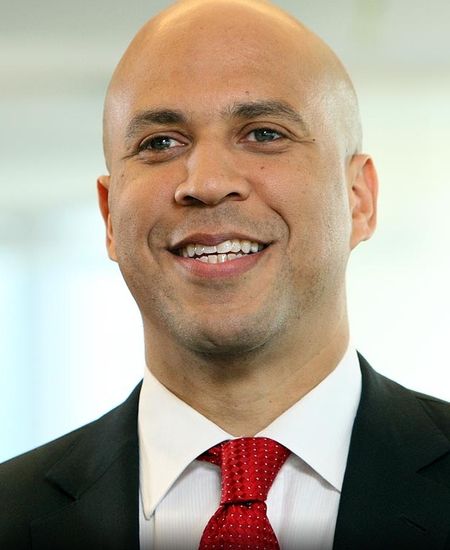
Sen. Cory A. Booker
Sponsored bills
U.S.-Greece Defense and Interparliamentary Partnership Act of 2021 This bill authorizes programs to provide defense-related assistance to Greece and addresses related issues. The bill authorizes providing to Greece from FY2022-FY2026 (1) assistance through the European Recapitalization Incentive Program to help Greece meet its defense needs and transition away from Russian-produced military equipment; and (2) International Military Education and Training assistance for various purposes, including to train future leaders and to establish rapport between the U.S. Armed Forces and Greece's military. The President may expedite the delivery of future purchases of F-35 aircraft by Greece. The bill also establishes a group of Senators to meet annually with representatives from Cyprus, Greece, and Israel to discuss various issues such as maritime security, defense cooperation, and energy.
Israel Relations Normalization Act of 2021 This bill requires the Department of State to take certain actions promoting the normalization of relations between Israel, Arab states, and other relevant countries and regions. Specifically, the State Department must develop a strategy on expanding and strengthening the Abraham Accords (the term used to refer collectively to agreements between Israel and the United Arab Emirates and between Israel and Bahrain marking the public normalization of relations between the two Arab countries and Israel). The strategy must include a description of how the U.S. government will encourage further normalization of relations with Israel. The State Department must report on the status of efforts to promote normalization of relations with Israel and other countries, including information on (1) laws that punish individuals for people-to-people relations with Israelis (i.e., anti-normalization laws), and (2) instances of the use of state-owned or state-operated media outlets to promote the prosecution of citizens or residents of Arab countries calling for peace with Israel.
Public Housing Emergency Response Act This bill authorizes additional assistance from the Public Housing Capital Fund to public housing agencies based upon capital need as determined by the agencies' most recent Physical Needs Assessment.
This resolution reaffirms the goals of World Refugee Day and the commitment of the United States to promote the safety and well-being of refugees.
Mentoring to Succeed Act of 2021 This bill requires the Department of Education to award grants to entities such as educational agencies, schools, and local governments to establish, expand, or support school-based mentoring programs that assist at-risk students in developing cognitive skills and promoting social-emotional learning to prepare them for success in high school, postsecondary education, and the workforce.
National Biomedical Research Act This bill establishes and makes deposits through FY2030 into the Biomedical Innovation Fund for initiatives at the National Institutes of Health and the Food and Drug Administration. The fund supports (1) research for disease prevention, diagnosis, and treatment; (2) research for diseases that disproportionally account for federal health care spending; (3) the development, review, and post-market surveillance of medical products; and (4) other innovative medical research.
Commission to Study the Stigmatization, Criminalization, and Ongoing Exclusion and Inequity for LGBTQ Servicemembers and Veterans Act This bill establishes the Commission to Study the Stigmatization, Criminalization, and Ongoing Exclusion and Inequity for LGBTQ Servicemembers and Veterans. The Commission must identify and compile information about the history of military policy regarding homosexuality from 1778 onward, including regarding lesbian, gay, bisexual, transgender, and queer (LGBTQ) sexual orientation and gender identity. The Commission must hold public hearings, gather public testimony, examine lasting and disparate impacts of the discriminatory policies on the physical and mental well-being of members of the Armed Forces, and make recommendations on appropriate remedies.
Closing the Meal Gap Act of 202 1 This bill revises the requirements for calculating Supplemental Nutrition Assistance Program (SNAP) benefits. The bill increases the minimum SNAP benefit and requires benefits to be calculated using the value of a low-cost food plan. The Department of Agriculture (USDA) must determine the requirements for the low-cost food plan, which is the diet required to feed a family of four, consisting of a man and a woman 19-50 years of age, a child 6-8 years of age, and a child 9-11 years of age. USDA must (1) reevaluate and publish the market baskets of the plan by December 31, 2027, and every five years thereafter, based on current food prices, food composition data, consumption patterns, and dietary guidance; and (2) make adjustments to the plan to account for household size, changes in the cost of the diet, and the costs of food in specified areas. The bill modifies the requirements for calculating household income to determine SNAP eligibility by (1) authorizing a standard medical expense deduction for households containing an elderly or disabled member, and (2) eliminating the cap on the excess shelter expense deduction. The bill eliminates certain work requirements for SNAP. The requirements apply to able-bodied adults who are ages 18-49 and have no dependent children. The bill allows Puerto Rico, American Samoa, and the Northern Mariana Islands to participate in SNAP. Currently, the three territories receive block grants instead of participating in SNAP.
Puppies Assisting Wounded Servicemembers Act of 2021 or the PAWS Act of 2021 This bill requires the Department of Veterans Affairs (VA) to implement a grant program for the purpose of pairing service dogs with eligible veterans. Organizations that receive grants shall provide veterinary health insurance coverage, hardware, and travel expenses for each service dog and veteran participating in the program. Eligible veterans are those who (1) are enrolled in the VA health care system, (2) have been evaluated and treated for post-traumatic stress disorder (PTSD) but remain diagnosed with PTSD, (3) may benefit from a service dog, and (4) agree to successfully complete training provided by an eligible organization. Veterans are required to see a VA health care provider at least once every 180 days to determine whether the veteran continues to benefit from a service dog. Eligible organizations are nonprofit organizations that are accredited by a widely recognized accreditation organization, meet publicly available standards set forth by the Association of Service Dog Providers for Military Veterans, have expertise in the needs of veterans with PTSD, agree to cover all costs in excess of the grant amount to guarantee the benefits of the program, agree to reaccept or replace a service dog provided to a veteran, and submit an application to the VA. Any improvement in PTSD symptoms as a result of the provision of a service dog shall not affect the veteran's eligibility for any other VA benefits. The Government Accountability Office must report on the grant program.