

This resolution remembers Her Majesty Queen Elizabeth II and her more than 70 years of service in support of the British people and the Commonwealth of Nations. The resolution also expresses gratitude to Queen Elizabeth II for her efforts to maintain strong bilateral relations between the United Kingdom and the United States. Finally, the resolution extends condolences to the family of Queen Elizabeth II, to the people of the United Kingdom of Great Britain and Northern Ireland, and to the peoples of the Commonwealth of Nations.
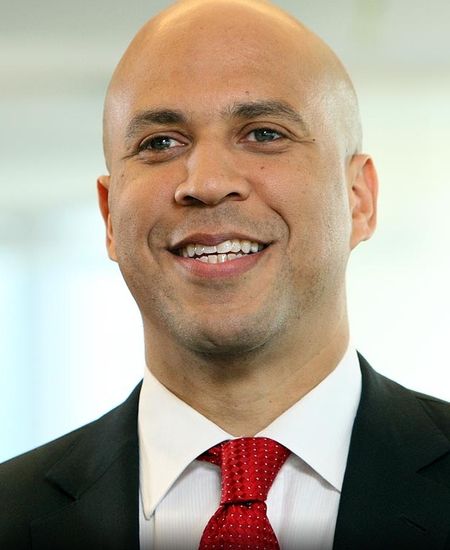
Sen. Cory A. Booker
Sponsored bills
Targeting Resources to Communities in Need Act of 2022 This bill addresses funding for areas of persistent poverty. Specifically, the bill requires the Bureau of the Census to publish a list of all areas of persistent poverty and annually update the list; the Office of Management and Budget (OMB) to develop and implement guidance and measures to increase the share of federal investments targeted to areas of persistent poverty and to report annually to Congress; the Government Accountability Office (GAO) to report on the measures implemented by the OMB under this bill, including an assessment regarding the impact of increasing federal investments spent in areas of persistent poverty; and GAO to submit at least two subsequent reports within 10 years of this bill's enactment.
Veterans and Consumers Fair Credit Act This bill applies certain military consumer credit protections to all consumers. Specifically, the bill caps the interest rate on extensions of consumer credit at 36%.
Fire Sale Loophole Closing Act This bill imposes restrictions on the transfer of business inventory firearms by a firearms importer, manufacturer, or dealer whose license is revoked or denied. An individual who violates the restrictions is subject to criminal penalties—a fine, prison term of up to one year (or five years if the violation was willful), or both.
Nationwide Right To Unionize Act This bill provides authorization for labor agreements to require membership in a labor organization as a condition of employment regardless of state law (thus preempting state laws that prohibit such agreements).
This resolution expresses that the Senate has heard the announcement of the death of the Honorable Jacqueline R. Walorski, Congresswoman for the Second Congressional District of Indiana. The resolution also honors Representative Walorski for her service to Indiana and the United States. The resolution expresses that when the Senate adjourns today, it stands adjourned as a further mark of respect to the memory of Representative Walorski.
Taxing Big Oil Profiteers Act This bill imposes an additional 21% tax through 2025 on the excess profits (i.e., current profits over normal return) of oil and natural gas companies that have average annual gross receipts during a three-year period of over $1 billion. The bill imposes on publicly-traded domestic corporations a tax equal to 25% of the fair market value of the stock of the corporation repurchased during the taxable year. The tax does not apply to a repurchase made after 2025 or that is treated as dividend. It also does not apply if the total value of the stock repurchased during a taxable year does not exceed $1 million. The bill disqualifies certain large oil and natural gas companies from the use of the LIFO (last-in first-out) inventory accounting method.
National Flood Insurance Program Reauthorization and Reform Act of 2021 This bill generally revises the National Flood Insurance Program (NFIP) and reauthorizes the program through FY2026. The bill addresses NFIP coverage, cost, and availability, including by generally prohibiting the Federal Emergency Management Agency (FEMA) from raising certain premiums, surcharges, and fees more than 9% a year for five years; revising flood insurance coverage limits; establishing a means-tested program to provide financial assistance to low income households through policy discounts; and revising standards and certification requirements for flood insurance rate maps. The bill also revises administrative provisions of the NFIP, including by allowing for the continuous operation of the NFIP during a lapse in appropriations, and prohibiting the Department of the Treasury from charging FEMA interest for NFIP debt for five years. The bill sets forth requirements for Write Your Own companies related to reimbursements, agent commissions, and penalties for underpayment of claims. (A Write Your Own company writes and services federal standard flood insurance policies in its own name.) The bill establishes state or tribal government revolving funds for flood mitigation activities and also provides for loans, grants, and other incentives regarding mitigation.
Better Utilizing Investments to Leverage Development and Generating Renewable Energy to Electrify the Nation's Infrastructure and Jobs Act or the BUILD GREEN Infrastructure and Jobs Act This bill directs the Department of Transportation (DOT) to establish a green transportation infrastructure program to provide competitive grants to states, local governments, and other entities for capital investments in electrified surface transportation infrastructure projects. DOT must select projects that maximize sustainability, including projects that (1) promote the electrification of all public transportation, (2) contribute to climate resilience and mitigation, (3) reduce air pollution and greenhouse gas emissions, and (4) achieve energy savings and reduce energy usage compared to other eligible projects. Additionally, DOT must prioritize projects that (1) serve a frontline, vulnerable, or disadvantaged community; (2) are located in an area that has experienced high adverse health and environmental impacts on minority and low-income populations; (3) require federal funds in order to complete an overall financing package; or (4) add a new green space or new state or local park units and outdoor recreational areas. Grants issued under the program may not be less than $2 million, with the exception of grants for project planning, preparation, or design, which are not subject to a minimum amount. The federal share of the cost of a project may not exceed 85% for planning, design, and construction purposes and 50% of the operation and maintenance costs of the project for its first 10 years.
Reproductive Health Care Accessibility Act This bill establishes various grants and related programs that address sexual and reproductive health care for individuals with disabilities. Specifically, the Health Resources and Services Administration must support training for health care providers who offer sexual and reproductive health care to individuals with disabilities, and educating individuals with disabilities about sexual and reproductive health care. The Administration for Community Living must establish a national center to provide recommendations, technical assistance, and other resources related to the provision of sexual and reproductive health care for individuals with disabilities. The bill also authorizes support for medical schools, nursing schools, and other educational institutions that offer obstetrics and gynecology training programs to expand the number of individuals with disabilities entering the reproductive health care workforce. Additionally, the Department of Health and Human Services must study the effectiveness and other aspects of reproductive health care services and programs for individuals with disabilities.