

Stop Automatically Voiding Eligible Voters Off Their Enlisted Rolls in States Act or the Save Voters Act This bill prohibits a state from removing registrants from the official list of eligible voters unless it meets certain verification and notice requirements. Specifically, the bill prohibits a state from removing a registrant from the official list of eligible voters unless it verifies, on the basis of objective and reliable evidence, that the registrant is ineligible to vote in federal elections. Further, a state is prohibited from considering failure to vote in an election or failure to respond to any election mail as evidence of ineligibility to vote. Additionally, the bill requires a state to provide individual registrants who are removed with a notice, which must include the grounds for the removal and information on contesting the removal. Public notice must be provided after conducting any general program to remove the names of ineligible voters.
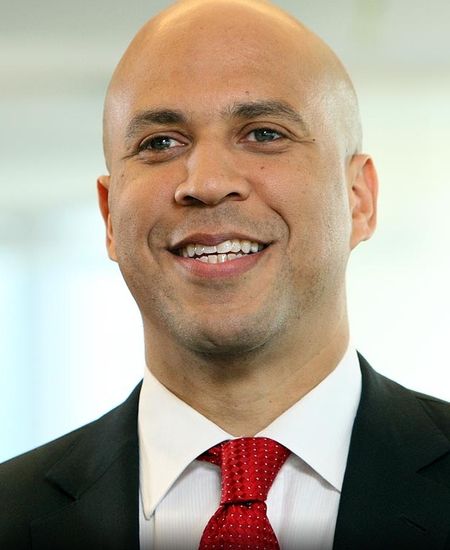
Sen. Cory A. Booker
Sponsored bills
Same Day Registration Act This bill requires states with a voter registration requirement to make same-day voter registration available at the polling place on any day voting is permitted.
This resolution commemorates the second anniversary of the signing of the Abraham Accords, which created formal diplomatic ties between Israel and the United Arab Emirates, Bahrain, Sudan, and Morocco.
Maddy summarySRES 771 is a symbolic Senate resolution designating September 19, 2022, as "National Stillbirth Prevention Day." It highlights that approximately 23,000 stillbirths occur annually in the U.S., with significant racial disparities affecting Black, Hispanic, and Indigenous families. The resolution calls for increased awareness, evidence-based prevention efforts, and better data collection to address this crisis. It requests the President issue a proclamation encouraging public awareness activities and supports efforts to reduce stillbirths by 33% (though it does not create new laws or funding).
Loan Forgiveness for Educators Act of 2022 This bill expands the Teacher Loan Forgiveness program. Among other provisions, the bill (1) renames the program the Educator Loan Forgiveness program, (2) expands program eligibility to early childhood educators and program directors serving in early childhood education programs and school leaders serving in public high-need schools, and (3) establishes a program in which the Department of Education cancels monthly student loan payments during qualifying service and provides complete loan forgiveness after five years of service.
Sickle Cell Disease Treatment Centers Act of 2022 This bill directs the Department of Health and Human Services to award grants for establishing sickle cell disease treatment centers that operate using a hub-and-spoke framework to provide integrated, longitudinal health care for patients with the disease and individuals with sickle cell trait. Grant recipients must be networks comprised of (1) a hospital, clinic, or university health center; (2) at least one federally qualified health center or other health care organization that incorporates community health workers into the care team; and (3) at least one community-based organization. Sickle cell disease is an inherited blood disorder that can lead to pain, anemia, infections, and stroke.
Digital Commodities Consumer Protection Act of 2022 This bill grants exclusive jurisdiction to the Commodity Futures Trading Commission over activity involving digital commodities as specified by the bill. The bill defines digital commodities as fungible digital forms of personal property that can be transferred person-to-person without an intermediary. Excluded from this definition are securities, interests in physical commodities, and U.S.-backed digital currencies. The commission does not have jurisdiction over digital commodities used solely for the purchase or sale of a good or service. Digital commodity platforms (including brokers, custodians, dealers, and trading facilities) must register with the commission and comply with risk management and good governance procedures. The bill also sets forth recordkeeping requirements, conflict of interest standards, and other consumer protections.
Improving Corporate Governance Through Diversity Act of 2021 This bill requires certain issuers of securities to disclose the racial, ethnic, and gender composition of their boards of directors and executive officers, as well as the status of any of those directors and officers as a veteran. It also requires the disclosure of any plan to promote racial, ethnic, and gender diversity among these groups. The Securities and Exchange Commission must establish a Diversity Advisory Group to report on strategies to increase gender, racial, and ethnic diversity among board members.
National Plan to End Parkinson's Act This bill requires the Department of Health and Human Services (HHS) to carry out a project to prevent and cure Parkinson's disease (a progressive brain disorder that causes unintended or uncontrollable movements) and related conditions. Among other components of the project, HHS must (1) implement and periodically update a national plan to coordinate and guide efforts to prevent and cure the disease; (2) improve diagnosis, treatment, and care of those with the disease; and (3) address health and other disparities related to the disease. HHS must also conduct annual assessments on the preparation for and response to the increased burden of Parkinson's disease. In addition, the bill establishes a council, comprised of federal and nonfederal stakeholders, to advise HHS on and make recommendations concerning the prevention and cure of Parkinson's disease. The bill's provisions terminate at the end of calendar year 2035.
This resolution supports the peaceful democratic and economic aspirations of the people of Sri Lanka, urges Sri Lankan security forces to respect the rights of Sri Lankans, and supports the implementation of recommendations in a report issued by the United Nations High Commissioner for Human Rights.