

Maddy summaryThis bill prohibits federal correctional facilities from requiring incarcerated workers to participate in mandatory work programs (Section 2). It removes the requirement for inmates to first exhaust internal complaint processes before filing lawsuits about prison conditions (Section 3) and bans retaliation or disciplinary action against incarcerated workers who refuse to work (Sections 4a-b). The bill also expands anti-discrimination protections under the Civil Rights Act and ADA to explicitly cover incarcerated workers in correctional facilities, including requiring agencies to provide disability rights notices and annual compliance reports (Section 5). These changes directly affect individuals incarcerated in federal facilities who perform labor as part of prison work programs.
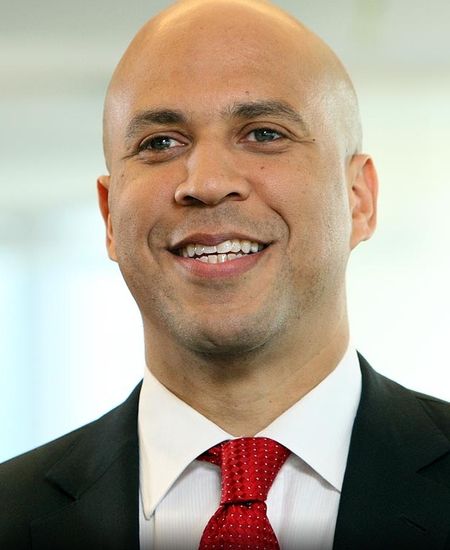
Sen. Cory A. Booker
Sponsored bills
Maddy summaryThis bill would extend federal minimum wage protections under the Fair Labor Standards Act to incarcerated workers in both public and private correctional facilities. It defines "incarcerated worker" broadly to include people working in prison programs, work release, maintenance, or state industry operations. The key provision requires that wages paid to incarcerated workers must include all pay before deductions for court-imposed fees (like fines or fees from conviction), while excluding costs like housing from wage calculations. This directly affects individuals working in U.S. prisons who currently receive minimal or no pay for their labor.
Maddy summaryThis bill requires background checks for most private firearm transfers between unlicensed individuals by mandating that such transfers occur through a licensed dealer. It directly affects unlicensed buyers and sellers of firearms who would otherwise transfer guns without checks, except for specific exceptions like family gifts, law enforcement transfers, temporary safety-related transfers, or transfers for hunting/shooting at designated locations. Key provisions include requiring licensed dealers to conduct background checks as if they were transferring the firearm themselves and adding a new requirement for written certification from the unlicensed transferee. The bill does not create a national gun registry and leaves state laws intact.
Maddy summaryThe DISCLOSE Act of 2023 requires organizations making campaign-related disbursements over $10,000 to disclose detailed information about their funding sources, including the names and addresses of major donors and the top 5 or 2 funders for political communications. It closes loopholes allowing foreign nationals to influence U.S. elections by prohibiting foreign contributions to ballot initiatives and requiring disclosure of foreign money in campaigns. The bill also mandates "stand by every ad" requirements, requiring political communications to include disclaimers identifying who paid for them and listing major funders. These provisions apply to corporations, labor organizations, and other groups making political expenditures, with the goal of increasing transparency in campaign finance.
Maddy summaryThis bill (S 496) amends the Federal Reserve Act to require that at least one member of the Federal Reserve Board of Governors appointed after the bill's enactment must have "demonstrated primary experience in supporting or protecting the rights of workers." The provision designates this member as the lead for promoting maximum employment policy. It does not create new worker protections or alter workplace regulations; it only changes the qualifications for Federal Reserve Board appointments. The bill is procedural, focusing solely on the composition of the Federal Reserve Board.
Maddy summaryThis bill amends the Food and Nutrition Act to exclude basic allowance for housing (BAH) paid to military members from income calculations for food assistance programs. It directly affects military families who receive housing allowances and apply for benefits like SNAP (Supplemental Nutrition Assistance Program). The key change adds a specific provision (paragraph 20) to the Act, ensuring BAH is not counted as income when determining eligibility. This adjustment makes it easier for military families to qualify for nutrition assistance by removing their housing allowance from income calculations.
Maddy summaryThis bill authorizes Congress to award a gold medal in honor of Constance Baker Motley, a pioneering civil rights lawyer and the first African-American woman appointed to a federal judgeship. The medal will be presented posthumously to her son, Joel Motley III, and niece, Constance Royster, by congressional leaders. The bill directs the U.S. Treasury to design and strike the medal (featuring Motley's image and name) and permits the sale of bronze duplicates to cover production costs, with proceeds going to the U.S. Mint. This is a commemorative measure recognizing Motley's legacy, not a policy change affecting public programs or regulations.
Maddy summaryThe EQUAL Act (S 524) eliminates the federal sentencing disparity between crack cocaine and powder cocaine offenses by repealing specific provisions in the Controlled Substances Act and Import/Export Act that created a 100:1 sentencing ratio. It directly affects individuals convicted of federal cocaine base offenses, both currently serving sentences and those previously convicted. The bill removes the harsher penalties for crack cocaine by repealing clauses in 21 U.S.C. § 841(b)(1)(A)(iii) and § 841(b)(1)(B)(iii), as well as corresponding provisions in the Import/Export Act. Sentencing courts may now consider resentencing for past cases involving cocaine base convictions, applying the same factors used in standard sentencing under 18 U.S.C. § 3553(a). This change applies to all future sentences and allows retroactive review of prior cases.
Maddy summarySRES 67 is a symbolic Senate resolution designating February 2023 as "Career and Technical Education (CTE) Month" to recognize CTE's role in preparing students for high-demand careers. It does not create new policies or funding but expresses Senate support for CTE programs that connect students with workforce skills in fields like healthcare, technology, and construction. The resolution encourages educators and parents to promote CTE as a valuable educational pathway, referencing the 106th anniversary of the foundational Smith-Hughes Vocational Education Act. As a procedural resolution, it has no direct impact on legislation or affected individuals.
Maddy summaryThis symbolic Senate resolution (SRES 69) designates February 18-25, 2023, as "National FFA Week" to celebrate the 95th anniversary of the National FFA Organization. It recognizes FFA’s role in developing future agricultural leaders through its educational programs, which serve over 850,000 students across all 50 states and territories. The resolution has no legal effect - it is a ceremonial expression of support, not a policy change. It directly affects the FFA organization and its members by highlighting their educational mission during a designated week.