

Maddy summaryThe Real Education and Access for Healthy Youth Act of 2023 would establish federal grant programs to fund comprehensive sex education and sexual health services for young people aged 10-29. It authorizes $100 million annually to support evidence-based sex education in schools and colleges, educator training, and youth-friendly sexual health services specifically designed for marginalized young people including Black, Indigenous, Latine, Asian American, Native Hawaiian, Pacific Islander, and LGBTQ+ youth. The bill prohibits funding for abstinence-only education and requires programs to be medically accurate, culturally responsive, trauma-informed, and inclusive of diverse gender identities and sexual orientations. Grants would require reporting on how services reach diverse youth populations, including disaggregation by race, ethnicity, sexual orientation, and gender identity. This legislation aims to address current gaps in sex education that disproportionately affect marginalized young people.
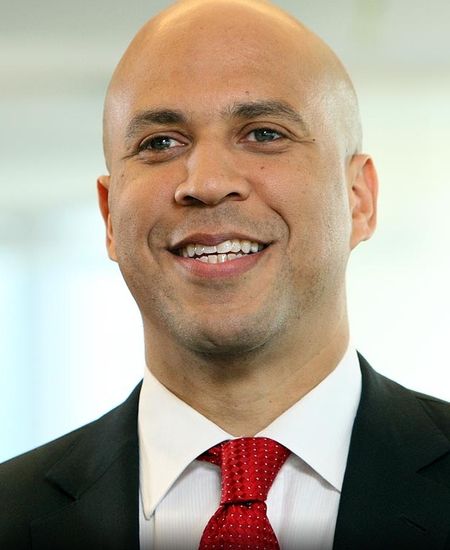
Sen. Cory A. Booker
Sponsored bills
Maddy summaryThe Reforming Disaster Recovery Act establishes a Long-Term Disaster Recovery Fund to provide grants for long-term recovery after major disasters, primarily benefiting low- and moderate-income households in communities most impacted by disasters. It creates a new Community Development Block Grant Disaster Recovery Program that requires grantees to allocate at least 70% of funds to help low- and moderate-income people, with funds distributed based on unmet needs for housing, economic revitalization, and infrastructure. The bill mandates detailed planning with public input before funds are distributed, requires grantees to prioritize mitigation activities in hazard-prone areas, and includes provisions for preliminary funding to speed up recovery before final assessments are complete. It also requires annual reporting on fund usage to ensure transparency and accountability, while coordinating with FEMA and other agencies to prevent duplication of benefits.
Maddy summaryThis bill prohibits the use of "unlawful seclusion or restraint" in schools receiving federal funding, including mechanical, chemical, and certain physical restraints that pose risks to students. It requires schools to implement positive behavioral interventions instead of restraint, mandates staff training in crisis intervention, and establishes procedures for reporting and following up after restraint incidents. The bill requires states to create monitoring plans and collect detailed data on restraint use, with specific reporting requirements for schools and Head Start programs. Schools must provide immediate parent notification after restraint incidents and hold meetings to discuss prevention strategies. The bill applies to public schools, special education schools, and other federally funded programs, but does not affect private schools not receiving federal support or home schools.
Maddy summaryThe AIR PUMP Act requires airlines (air carrier employers) to provide crewmembers - such as flight attendants and pilots - with reasonable break time to express breast milk for up to one year after childbirth and a private, non-bathroom space for that purpose. These accommodations cannot be required during critical flight phases (e.g., takeoff or landing) and must not compromise flight safety, security, or require significant expense (like aircraft modifications). The bill also prohibits airlines from retaliating against employees who use these accommodations or file complaints. Violations would be enforced by the Secretary of Labor under existing Fair Labor Standards Act penalties.
Maddy summaryThis bill increases funding for school nutrition programs providing fresh fruits and vegetables. It raises annual spending for specialty crop purchases from $200 million to $300 million and boosts the domestic food assistance program to $2.5 billion in 2024, with annual increases adjusted for inflation using the Consumer Price Index. The school meal program's per-student funding rises from $75 to $100, with future amounts automatically adjusted for inflation. The bill requires fruits and vegetables purchased under the program to be grown in the U.S. unless foreign-sourced options cost 25% more, directly affecting schools, farmers, and students receiving meals.
Maddy summaryThe Securing the U.S. Organ Procurement and Transplantation Network Act amends the law governing the Organ Procurement and Transplantation Network (OPTN), allowing the federal government to use grants, contracts, or cooperative agreements for its operation instead of only contracts. It clarifies that the OPTN’s management must be separate from the entity supporting its board of directors. The bill also mandates a two-year review by the Government Accountability Office (GAO) of the OPTN’s historical financing - including how registration fees were used - and requires a report to Congress with recommendations. These changes directly affect the OPTN, its operating entities, and the Department of Health and Human Services.
Maddy summaryThe Medicare for All Act would establish a national health insurance program providing comprehensive coverage to all U.S. residents without patient cost-sharing for medically necessary services, including hospital care, prescription drugs, mental health services, dental, vision, and reproductive care. The program would replace private health insurance, Medicare, and Medicaid by prohibiting duplicate coverage from private insurers and requiring automatic enrollment for all residents. It would include a transition period allowing current Medicare beneficiaries to maintain their coverage while the new system is phased in, with full benefits available for most people by 2026. The bill also establishes a national health budget, includes provisions to address health care disparities, and sets quality standards for care through the Office of Health Equity.
Maddy summaryThe Law Enforcement Officers Parity Act (S 1658) expands federal retirement benefits to include specific federal employees previously excluded from "law enforcement officer" status. It directly affects IRS tax collectors, postal inspectors, VA police officers, and CBP seized property specialists by adding them to the retirement-eligible category. Current employees in these roles can elect to count prior service toward retirement benefits by paying a deposit to cover the difference in retirement contributions, while future service is automatically included. The bill also exempts law enforcement officers from mandatory separation for three years after enactment.
Maddy summaryThis bill creates a new 21-day administrative leave for active-duty service members to obtain reproductive care not provided at military medical facilities (such as abortions or fertility treatments like IVF), or to accompany a spouse or dependent receiving such care. It also authorizes travel and transportation allowances for this care, explicitly covering abortion and assisted reproductive technology. The bill prohibits additional requirements like mandatory counseling or chaplain consultations for requesting this leave, while prioritizing privacy for service members and their families. It defines "non-covered reproductive health care" to include specific procedures like egg retrieval, sperm processing, and in vitro fertilization, ensuring these are eligible for the new leave and travel benefits.
Maddy summary# Summary of Maternal Health Legislation This comprehensive legislative document outlines a multi-faceted approach to improving maternal health outcomes across multiple domains. The bill is structured into 13 titles addressing various critical aspects of maternal care. ## Key Focus Areas 1. **Justice for Incarcerated Moms** (Title VIII) - Prohibits shackling of pregnant individuals in prisons - Establishes model programs in Bureau of Prisons facilities for pregnant and postpartum incarcerated individuals - Creates grant programs for State and local prisons to improve maternal health outcomes for incarcerated individuals 2. **Technology in Maternal Care** (Title IX) - Expands telehealth options for pregnancy and postpartum care - Funds technology-enabled collaborative learning models for maternal health providers - Promotes digital tools to reduce maternal health disparities 3. **Pandemic Response** (Title XI) - Establishes a task force to develop Federal recommendations for respectful maternity care during public health emergencies - Requires data collection and surveillance on maternal health outcomes during public health emergencies - Mandates public health communication strategies for pregnant and postpartum individuals 4. **Climate Change Protection** (Title XII) - Creates a grant program to protect vulnerable mothers and babies from climate change risks - Establishes a NIH Consortium on Birth and Climate Change Research - Develops a strategy for identifying climate change risk zones for vulnerable mothers and babies 5. **Maternal Vaccinations** (Title XIII) - Expands awareness and equity campaigns for maternal vaccinations - Increases funding for vaccination programs targeting pregnant and postpartum individuals ## Cross-Cutting Themes - **Racial and Ethnic Disparities**: The legislation consistently emphasizes addressing racial and ethnic disparities in maternal health outcomes throughout all titles - **Social Determinants of Health**: The bill recognizes the importance of addressing social determinants like housing, transportation, nutrition, and access to care - **Technology Integration**: Multiple provisions focus on leveraging technology to improve maternal health outcomes - **Data Collection and Surveillance**: Strong emphasis on collecting and analyzing demographic data to better understand and address health disparities The legislation includes significant funding allocations across all titles, with annual appropriations ranging from $5 million to $100 million for various programs, all aimed at improving maternal health outcomes, particularly for vulnerable populations.