

Maddy summaryS 1702 requires K-12 public schools receiving federal education funding to incorporate Asian American, Native Hawaiian, and Pacific Islander history into American history and civics curricula. It amends the Elementary and Secondary Education Act to mandate this inclusion across all relevant programs, teacher training, and national assessments. The bill directly affects public school districts, educators, and students by requiring existing curriculum frameworks to explicitly cover these histories. This addresses documented gaps in current curricula that have historically excluded these communities' contributions to U.S. history.
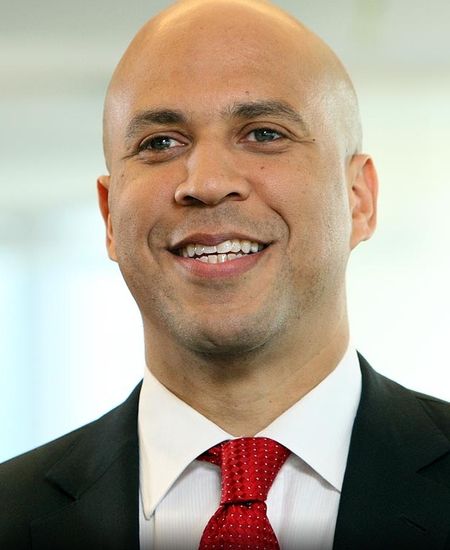
Sen. Cory A. Booker
Sponsored bills
Maddy summaryThe Perinatal Workforce Act (S 1710) aims to increase diversity and improve care for pregnant and postpartum people by directing the Health and Human Services (HHS) Secretary to issue guidance for states on recruiting racially and linguistically diverse maternity care providers and establishing culturally competent care teams. It authorizes $15 million annually for 5 years to fund grants for schools training midwives, nurse practitioners, and perinatal health workers, prioritizing programs that recruit from underrepresented groups and address maternal health disparities in underserved areas. The bill requires grant recipients to track student demographics, career placements in shortage areas, and include implicit bias training in curricula. It also mandates a HHS study on best practices in equitable care and a GAO report assessing barriers to accessing maternal health education and services. The law directly affects hospitals, midwifery practices, nursing schools, and insurers by setting new standards for workforce diversity and culturally responsive care.
Maddy summaryThe EVs for All Act of 2023 establishes a Department of Energy grant program to fund electric vehicle (EV) sharing services at public housing projects. It provides grants (up to $1 million per project, with $50,000 additional per fast charger) to public housing agencies, local governments, and nonprofits for purchasing used EVs, installing charging equipment, and running community outreach. The bill requires projects to prioritize marginalized communities with high pollution or transportation barriers, mandates 40% local workforce hiring with specific demographic targets, and ensures affordable charging fees. Grants also require tracking emissions reductions, user data, and adherence to fair labor standards for EV infrastructure installation. The program is funded at $50 million annually from 2024-2033.
Maddy summaryThe Radiation Exposure Compensation Act Amendments of 2023 extends the timeframe for individuals to file claims related to radiation exposure from nuclear testing and uranium mining operations. It increases compensation amounts for certain claims from $50,000-$75,000 to $150,000, expands eligibility criteria for leukemia and other specified diseases, and adds medical benefits for claimants. The bill extends the fund's operational period from 2 years to 19 years after enactment, allows affidavits to support claims, and creates a new $3 million annual grant program to study uranium mining's health impacts. These changes primarily affect individuals exposed to radiation during atmospheric nuclear testing (1944-1962) or who worked in uranium mines/mills (1942-1990), including miners, millers, core drillers, and their family members.
Maddy summaryThis bill directs federal health programs to prioritize services for racial and ethnic minority groups experiencing mental health disparities. It creates a new grant program (amending the Public Health Service Act) requiring special consideration for community health centers serving these populations, and mandates a National Institutes of Health study on disparities in mental health outcomes, including impacts of trauma and bias. The bill also requires training standards for health professionals in culturally appropriate care and funds a national outreach strategy to reduce stigma and improve access to evidence-based treatments. Key funding includes $750 million annually for the National Institute on Minority Health and $150 million for NIH mental health research through 2029.
Maddy summaryThe Neighbors Not Enemies Act (S 1747) repeals sections 50 U.S.C. 21-24, which formed the Alien Enemies Act - a law permitting the president to detain or deport non-citizens from enemy nations during wartime. This repeal removes a specific wartime authority from U.S. law, directly affecting the executive branch's legal powers during conflicts and non-citizens potentially subject to such actions. The bill does not create new policies but eliminates an existing legal provision without altering other immigration or national security statutes. It focuses solely on repealing this historical wartime measure, with no new requirements or affected groups beyond the scope of the repealed law.
Maddy summaryThe Responsible Firearms Marketing Act requires the Federal Trade Commission (FTC) to study firearm advertising practices, specifically examining ads that may target minors, imply illegal use, or promote semiautomatic assault weapons. Within two years, the FTC must report findings and recommend regulations to ban such deceptive practices. If enacted, the FTC would create rules prohibiting firearm manufacturers, dealers, and importers from using ads that appeal to children, suggest illegal activity, or market assault weapons. The law would apply existing FTC enforcement authority under the Federal Trade Commission Act to these new regulations. This directly affects gun industry businesses by restricting certain advertising tactics.
Maddy summaryThe HELP Act of 2023 allocates federal funding to strengthen 211 information and referral services and 988 mental health crisis services nationwide. It requires states to coordinate these services to ensure 24/7 availability, improve accessibility for people with disabilities, and reduce inappropriate 911 calls by connecting individuals with human services instead of law enforcement. The bill authorizes $550 million annually for 2024-2025 (split between 211 and 988 services) and $450 million annually for 2026-2030, with states required to establish oversight bodies to monitor service quality and racial equity. States must use funds to expand access to mental health and human services, particularly in underserved communities, while tracking how many 911 calls are diverted to appropriate services.
Maddy summaryThe Tech to Save Moms Act expands access to telehealth for pregnant and postpartum individuals by allowing remote monitoring of pregnancy complications through federal health programs. It creates two new grant programs: one to train healthcare providers on maternal health using digital tools (including bias training and remote monitoring), and another to fund digital tools that reduce maternal health disparities in high-risk areas like rural communities, underserved populations, and communities with elevated maternal mortality rates. The grants specifically target providers serving American Indian and Alaska Native communities, medically underserved areas, and populations experiencing racial/ethnic health disparities. The bill also mandates a study on technology bias in maternal care, with a report to Congress within 24 months.
Maddy summaryThe Affordability is Access Act of 2023 requires health insurance plans to cover over-the-counter contraceptives approved by the FDA without cost-sharing (such as copays or deductibles). It directly affects millions of people, especially those who rely on birth control but face cost barriers, including low-income individuals and people in contraceptive deserts. The bill clarifies that insurance coverage must include FDA-approved OTC contraceptives even without a prescription, and it mandates retailers to provide accurate information about these products without interfering with access. Retailers may refuse to sell the product if payment cannot be made, but they cannot block access or spread misinformation.