

Maddy summaryThis bill amends the Gus Schumacher Nutrition Incentive Program under the Food, Conservation, and Energy Act of 2008 to increase funding for incentives that help SNAP recipients buy fruits and vegetables. It raises annual funding from $100 million to $500 million for fiscal year 2024, then increases to $750 million for 2026-2027, and $1 billion annually starting in 2028. The program directly affects SNAP participants by providing them with extra benefits - such as doubling their purchase value - for buying fresh produce at grocery stores or farmers' markets. The key change is the significant, multi-year funding boost to expand access to healthy food for low-income households using SNAP.
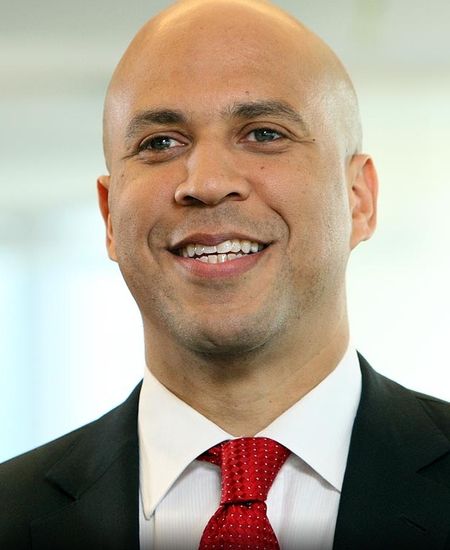
Sen. Cory A. Booker
Sponsored bills
Maddy summaryThis bill requires group health plans (like employer-sponsored insurance) to provide equal cost-sharing (such as copays and deductibles) for oral anticancer medications as for intravenous or injected versions, provided a doctor deems the oral drug medically necessary. It prohibits plans from changing coverage to increase out-of-pocket costs for oral drugs or impose stricter limits on them compared to IV drugs. The requirement applies to FDA-approved anticancer drugs used to treat cancer, with plans still allowed to use prior authorization. The law takes effect for 2024 plan years.
Maddy summaryThe CONNECT for Health Act of 2023 expands Medicare telehealth coverage by removing geographic restrictions, allowing services to be provided from home and other locations, and expanding who can offer telehealth services. The bill repeals the six-month in-person visit requirement for telemental health and allows telehealth use in hospice care recertification. It also includes program integrity measures to address inappropriate billing patterns and requires posting of telehealth service data to improve transparency. This legislation directly affects Medicare beneficiaries, healthcare providers, and telehealth technology vendors by making telehealth more accessible, particularly for rural and underserved populations, those with mobility challenges, and individuals in areas with healthcare workforce shortages.
Maddy summaryThe SAFE Act of 2023 amends a federal law to prohibit the slaughter of horses and other equines (such as donkeys) for human consumption. It extends an existing ban on slaughtering dogs and cats for food to include equines, closing a gap in current law. The key change modifies Section 12515 of the 2018 Agriculture Improvement Act to replace "dog or cat" with "dog, cat, or equine" in the prohibition language. This directly affects meat processors and businesses that might have engaged in slaughtering equines for human consumption, making such activity illegal under federal law.
Maddy summaryThis bill proposes a constitutional amendment to remove the Thirteenth Amendment's exception that permits slavery and involuntary servitude as criminal punishment. It would directly affect all individuals within the U.S. criminal justice system by banning any form of forced labor for crimes, addressing a historical loophole that enabled mass incarceration of Black Americans post-Civil War. Key provisions explicitly state: "Neither slavery nor involuntary servitude may be imposed as a punishment for a crime," while clarifying it does not interfere with voluntary prison work programs, community service alternatives, or existing employment protections for incarcerated people. The amendment aims to align U.S. law with constitutional principles by eliminating this exception without altering current sentencing options.
Maddy summaryThe Working Families Tax Relief Act of 2023 expands tax benefits for low-to-moderate income workers and families with children. It lowers the minimum age for the Earned Income Credit from 25 to 19 (with exceptions for students, former foster youth, and homeless youth), removes the age 65 maximum, and increases credit amounts and income thresholds. The bill also establishes a permanent system for monthly advance payments of the Child Tax Credit, with higher payments ($300 monthly) for children under age 6 compared to $250 for older children. It includes inflation adjustments to maintain the value of these credits over time and creates mechanisms for determining eligibility and recapturing payments in certain circumstances. The provisions apply to all states and U.S. territories, including Puerto Rico and American Samoa.
Maddy summaryThis bill requires federal agencies that use private or state/local facilities to house federal prisoners to treat records about those facilities as government records under the Freedom of Information Act (FOIA). It directly affects federal agencies (like the Department of Justice), private prison operators, and state/local facilities under contract with the federal government. Key provisions mandate that these entities maintain records in searchable formats, allow public access to information (unless specific legal exemptions apply), and include disclosure requirements in all relevant contracts. The law aims to increase transparency around conditions and operations in non-federal correctional facilities used by the federal government.
Maddy summaryThe Right to Contraception Act (S 1999) establishes a federal statutory right for individuals to access contraceptives and related information without government interference, directly affecting all people seeking reproductive care and health care providers who offer these services. Key provisions prohibit state or federal laws that restrict contraceptive access, single out contraceptive services, or allow provider refusals based on personal beliefs, while requiring any restrictions to be narrowly tailored to advance access. The bill preempts conflicting state laws, allows enforcement through lawsuits by affected individuals or the Attorney General, and explicitly protects access for historically marginalized groups facing barriers. It does not alter existing insurance coverage requirements under the Affordable Care Act but ensures contraceptive access remains protected from restrictive state policies.
Maddy summaryThe College for All Act of 2023 would establish a federal-state partnership to eliminate tuition and required fees for eligible students at public community colleges and 4-year institutions. It would cover students from families earning under $125,000 (single) or $250,000 (married) annually, with the federal share of costs decreasing from 100% to 80% over five years. The bill also includes separate provisions to eliminate tuition at historically Black colleges and minority-serving institutions through dedicated grant programs, while requiring states to maintain higher education funding levels and improve student support services.
Patients Before Middlemen Act or the PBM Act This bill prohibits pharmacy benefit managers (PBMs) under the Medicare prescription drug benefit or Medicare Advantage from receiving any income for their services other than bona fide service fees. Specifically, PBMs may not receive any income other than flat, bona fide service fees that are specified in their contracts with prescription drug plan (PDP) sponsors. Such fees may not be based on drug prices, discounts, rebates, or any other remuneration. PBMs must turn over any excess amounts they receive to the Centers for Medicare & Medicaid Services. PDP sponsors and PBMs must annually certify their compliance with these requirements.