

Maddy summaryThis Senate resolution (SRES 258) reaffirms the U.S. commitment to supporting refugees and displaced persons globally and domestically. It urges the administration to meet robust refugee admissions goals (noting only 31,797 arrived in the U.S. by May 2023, far below the 125,000 target), uphold asylum protections under the Refugee Act of 1980, and strengthen partnerships with the UNHCR. The resolution specifically calls for increased U.S. leadership in humanitarian aid, addressing root causes of displacement, and ensuring refugees have access to education and livelihoods. It directly affects refugees seeking resettlement in the U.S. and global host countries bearing the burden of displacement crises.
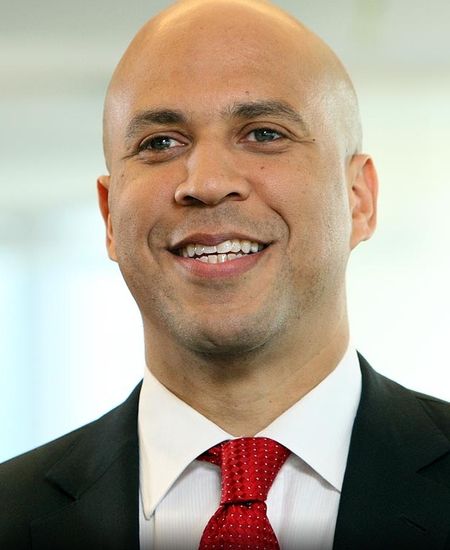
Sen. Cory A. Booker
Sponsored bills
Maddy summaryS 2054, the "Audit the Pentagon Act of 2023," requires the Department of Defense (DoD) to obtain an unqualified audit opinion on its full financial statements by 2024. If a DoD component (like a military branch or agency) fails to achieve this by the end of the calendar year for any fiscal year after 2024, it faces a 1% reduction in its next fiscal year's funding. The withheld funds are distributed proportionally across all programs within that component and then deposited into the Treasury's general fund for deficit reduction. This bill directly affects all DoD financial components by linking their budget authority to audit compliance.
Maddy summaryThis bill requires the EPA to create a public online compendium of air quality monitoring technologies and their uses, including costs, accuracy, and data accessibility. It establishes a working group to develop templates for integrated community-scale monitoring systems and recommend support for environmental justice communities seeking hyperlocal air quality data. The EPA must also conduct a national inventory of existing air quality monitoring infrastructure and submit a report identifying high-priority areas for improved monitoring, especially near communities disproportionately affected by pollution. The bill authorizes $11 million annually to fund these activities and create 8 new EPA positions, without altering existing air pollution protections. It directly affects EPA operations, state/local/Tribal agencies, and communities facing elevated air pollution exposure.
Maddy summaryThe Freedom to Travel for Health Care Act of 2023 prohibits states from restricting or penalizing individuals for traveling to another state to access legal reproductive health care, including abortion services. It also bans discrimination against those who assist with such travel or provide the care, and overrides conflicting state laws that interfere with these rights. The bill allows individuals, healthcare providers, and the federal government to sue to enforce these protections in court, with remedies including injunctions and attorney fees. It directly affects patients seeking care across state lines, healthcare providers, and organizations facilitating such travel.
Maddy summaryThis bill repeals legal protections that previously shielded gun manufacturers from civil lawsuits related to gun violence. It allows gun violence victims to use firearm trace data from the ATF's database as evidence in civil court cases (including state, federal, and administrative proceedings). The key change makes gun trace information admissible and subject to discovery, meaning victims' legal teams can subpoena this data to prove how guns were obtained. This directly affects victims pursuing civil claims against gun manufacturers or dealers.
Maddy summarySRES 255 is a non-binding Senate resolution designating June 19, 2023, as "World Sickle Cell Awareness Day" to boost public understanding of sickle cell disease (SCD) globally. It calls for increased awareness about SCD's impact, the need for research, early detection, and equitable access to treatments - including emerging therapies - while urging the Department of Health and Human Services to develop global policies supporting newborn screening and care programs. The resolution also recommends forming an interagency group to address barriers in accessing innovative SCD therapies and reduce healthcare disparities affecting those most impacted by the disease. It directly affects people living with SCD, their families, and healthcare systems worldwide by promoting coordinated action through symbolic recognition and policy recommendations.
Maddy summaryThis bill requires public companies (issuers) to disclose voluntary self-reported diversity data for their board members, board nominees, and executives, including race, ethnicity, gender, and veteran status. It also mandates disclosure of whether the company has diversity policies for these groups. The SEC must annually analyze this data and publish reports on diversity trends, while establishing a Diversity Advisory Group to study and recommend strategies for improving diversity on corporate boards. The bill affects all publicly traded companies required to file SEC reports, focusing on transparency rather than mandating specific diversity outcomes.
Maddy summaryThe American Innovation and Choice Online Act targets large online platforms (termed "covered platforms") with significant user bases or revenue, specifically those meeting thresholds like 50 million US monthly active users or $550 billion in annual sales. It prohibits covered platforms from favoring their own products/services over others, using business users' nonpublic data to compete with them, or restricting business users' access to data or platform features. The law would be enforced by the FTC and Department of Justice, with potential civil penalties up to 10% of a platform's US revenue for violations. The law would take effect one year after enactment, with agencies required to issue enforcement guidelines to clarify implementation. This legislation aims to promote competition by preventing anticompetitive conduct by dominant digital platforms.
Maddy summaryThe LIFT the BAR Act of 2023 would expand access to basic public benefits for lawfully present noncitizens by removing restrictions established by the 1996 welfare law. It repeals specific provisions of the Personal Responsibility and Work Opportunity Reconciliation Act of 1996 that limited access to programs like food assistance, Medicaid, housing, and child nutrition benefits based on immigration status. The bill redefines "qualified alien" as "qualified noncitizen" and specifically includes categories of noncitizens who were previously excluded, such as those with special immigrant juvenile status, pending nonimmigrant visa applications, and those who qualified under the Deferred Action for Childhood Arrivals (DACA) program. This would allow states to not deny benefits based on immigration status for these programs, ensuring more lawfully present noncitizens can access essential services.
Maddy summaryThe Economic Inclusion Civil Rights Act of 2023 amends federal law to expand protections against racial discrimination in economic activities. It prohibits both intentional discrimination and policies with disparate impact, requiring businesses to justify practices that disadvantage non-White individuals. The bill defines "economic activity" broadly to include online and in-person transactions, hiring, contracting, and access to financial services. It lowers the burden of proof for plaintiffs by allowing claims based on race being a "motivating factor," not solely the cause, and ensures the right to jury trials for violations.