

Maddy summaryThe VICTIM Act of 2024 establishes a federal grant program to help state, tribal, and local law enforcement agencies improve clearance rates for homicides and firearm-related violent crimes. It provides $60 million annually for fiscal years 2024-2029 to fund specific activities like hiring and training specialized investigators, acquiring forensic technology, developing community engagement strategies, and expanding victim services. Grant recipients must report on outcomes - including clearance rates by arrest or exception - and ensure funds supplement, not replace, existing resources. The bill directly affects law enforcement agencies handling violent crimes and aims to support evidence-based practices that enhance investigation effectiveness and victim support.
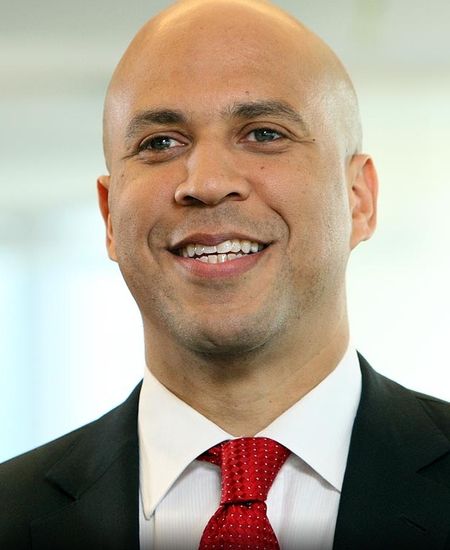
Sen. Cory A. Booker
Sponsored bills
Maddy summaryS 3736, the Strengthening Educator Workforce Data Act, requires the U.S. Department of Education to collect and publish detailed data about teachers and principals in public schools. It mandates reporting on years of experience (broken into specific categories), certification status, subject-area qualifications (like math or special education), and demographic breakdowns by race, ethnicity, and sex. This data will be collected from all local educational agencies and public schools participating in civil rights data collection. The goal is to create public reports and accessible online data showing workforce composition and experience levels across states, with privacy protections for individual educators.
Maddy summaryThe NCAA Accountability Act of 2024 establishes new due process rules for the NCAA (referred to as a "covered athletic association") when investigating member colleges or student athletes for rule violations. It requires the NCAA to provide detailed written notices to institutions before investigations begin, limit investigations to violations within the past two years, and hold formal hearings within one year of notice. The bill also mandates independent arbitration for disputes over penalties and requires the NCAA to submit annual reports on enforcement actions to the Attorney General. These changes directly affect all NCAA member colleges and the NCAA itself, ensuring fairer investigations and appeals processes.
Maddy summarySRES 529 is a symbolic Senate resolution recognizing January 2024 as "National Mentoring Month." It does not create new laws or allocate funds, but formally acknowledges the value of mentoring relationships for youth development. The resolution highlights mentoring's benefits - including improved academic outcomes, mental health, and career readiness - while noting that one-third of U.S. youth lack a mentor. It urges support for mentoring programs but has no direct effect on individuals or policy implementation.
Maddy summaryThis bill directs the EPA, Energy Department, and other agencies to study AI's full environmental lifecycle impacts - including energy use, water consumption, e-waste, and pollution from hardware and data centers - within two years. It establishes a voluntary reporting system for AI developers and operators to share data on their environmental footprint, along with a stakeholder consortium to create standardized measurement tools. The bill requires a public report to Congress within four years detailing study findings, the reporting system, and recommendations for reducing negative impacts or promoting positive ones. It affects companies developing or operating AI systems (designated as "voluntary reporting entities") but does not mandate specific actions or penalties.
Maddy summaryThis bill expands access to methadone treatment for opioid use disorder by allowing more healthcare providers to prescribe it for unsupervised use through pharmacies. Specifically, it waives federal restrictions to permit addiction medicine specialists, program employees, and certified physicians to prescribe methadone electronically for 30-day supplies, with patients receiving it directly from pharmacies instead of only through specialized clinics. The bill requires annual reporting to Congress on the number of registered providers, patients served, and participating states. It directly affects patients with opioid use disorder seeking treatment and healthcare providers currently authorized to prescribe methadone.
Maddy summaryThe GRACE Act establishes a minimum annual refugee admission level of 125,000, requiring the U.S. to admit at least that many refugees each fiscal year unless the President sets a higher number (with 125,000 automatically applying if no determination is made). It mandates that the President consider the United Nations High Commissioner for Refugees' global resettlement needs when setting annual numbers and allocate refugees regionally, including an unallocated reserve for unexpected regional needs after notifying Congress. The bill also requires quarterly reports to Congress on refugee admissions, including regional breakdowns, security clearance rates, processing times, and plans to meet annual goals, enhancing transparency in the refugee admissions process.
Maddy summaryThis bill amends the National Voter Registration Act to allow U.S. Citizenship and Immigration Services (USCIS) field offices to serve as official voter registration agencies for new naturalized citizens. It requires USCIS offices to facilitate voter registration applications during naturalization processes and mandates that courts conducting naturalization ceremonies permit USCIS to provide registration assistance. The bill directly affects newly naturalized citizens who complete their citizenship process at USCIS offices or through court ceremonies. Key provisions establish joint procedures between states and USCIS for registration and clarify that existing immigration fees and grant programs may fund these voter registration services.
Maddy summaryThe Human Rights Defenders Protection Act of 2024 establishes a comprehensive U.S. strategy to protect global human rights defenders facing violence, threats, and reprisals for their work. It creates a new visa category (101(a)(15)(W)) allowing human rights defenders at urgent risk to enter the U.S. for safety, while requiring the President to develop an annual strategy for U.S. embassies to monitor threats, train diplomats, and coordinate protection efforts. The bill mandates U.S. embassies to identify designated points of contact for human rights defenders, track patterns of reprisals, and integrate protection measures into diplomatic and development activities. It also expands the Reagan-Fascell Democracy Fellows Program to support democracy advocates at risk and requires annual country reports detailing treatment of human rights defenders worldwide. The legislation directly affects human rights defenders advocating for environmental protection, democracy, women's rights, minority rights, and LGBTQI+ rights who face threats from governments or non-state actors.
Maddy summaryS 3694 (SWIMS Act of 2024) bans the public display of orcas, beluga whales, false killer whales, and pilot whales by prohibiting their export, import, taking, and breeding for such purposes under federal law. It directly affects marine parks, aquariums, and facilities that currently display these species, requiring any movement to be for sanctuary placement (non-profit, natural-environment settings) or wild release. The bill amends the Marine Mammal Protection Act and Animal Welfare Act to make it unlawful to permit these whales for public display or breeding for display, while allowing limited exceptions for individual animal well-being in designated sanctuaries.