

Maddy summaryThe Justice for Breonna Taylor Act requires law enforcement officers to inform residents of their identity and purpose before entering a home, banning no-knock warrants for federal officers immediately and for state/local agencies receiving Department of Justice funds starting one year after enactment. Federal officers must provide this notice before entry, while state/local agencies using federal funding must implement the requirement in the first fiscal year following the bill’s passage. This law directly affects all federal law enforcement and state/local agencies that receive DOJ funding, changing how search warrants are executed. The key provision mandates notice before forced entry, ending the use of no-knock warrants for covered agencies.
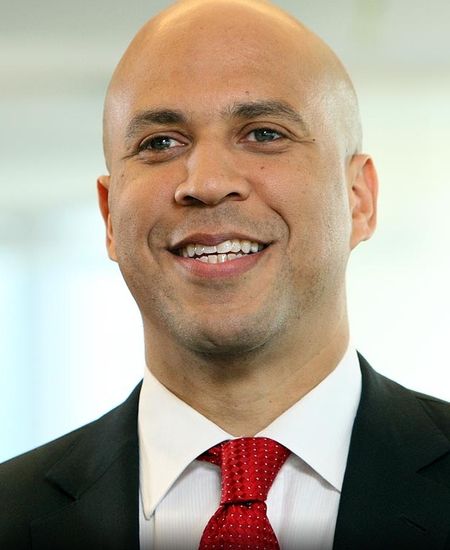
Sen. Cory A. Booker
Sponsored bills
Maddy summaryThis concurrent resolution (SCONRES 30) expresses Congress's support for designating March 10, 2024, as "Abortion Provider Appreciation Day." It acknowledges the critical role of abortion providers and staff in delivering essential reproductive health care, particularly amid increased restrictions following the Supreme Court's Dobbs decision, which overturned Roe v. Wade. The resolution condemns the impact of abortion bans on providers and patients while affirming Congress's commitment to protecting access to abortion care and provider safety. As a symbolic gesture with no legal effect, it does not change policy or directly affect any individuals or entities.
Maddy summarySRES 575 is a Senate resolution that declares racism a public health crisis in the United States. It cites extensive evidence of racial health disparities, including lower life expectancy for Black, American Indian, and Alaska Native populations, higher maternal mortality rates, and disproportionate impacts of conditions like diabetes and cancer across racial and ethnic groups. The resolution commits the Senate to supporting local declarations of racism as a public health crisis and establishing a nationwide strategy to address health disparities and dismantle systemic racism. While this resolution doesn't create new laws or programs, it aims to raise awareness about how racism functions as a social determinant of health affecting access to care, housing, and opportunities.
Maddy summaryThis non-binding Senate resolution (SRES 576) expresses support for designating March 4-8, 2024, as "National Social and Emotional Learning Week." It recognizes the role of social and emotional learning (SEL) programs - which focus on skills like self-awareness, relationship building, and responsible decision-making - in improving students' academic performance, mental wellness, and long-term success. The resolution encourages expanded access to SEL for students and educators but does not create new laws, funding, or mandates. It directly acknowledges the efforts of schools and communities already implementing SEL, without imposing requirements on any entity.
Maddy summaryThis bill authorizes Congress to award Muhammad Ali a Congressional Gold Medal in recognition of his lifetime achievements as a boxer, humanitarian, and civil rights advocate. The medal, designed by the Treasury Secretary, will be presented to Ali's wife, Lonnie Ali, following his death in 2016. Duplicate bronze medals may be sold to cover costs, with proceeds going to the U.S. Mint fund. The bill has no policy impact - it is purely commemorative, honoring Ali's contributions to sports, human rights, and Parkinson's disease advocacy.
Maddy summaryThe John R. Lewis Voting Rights Advancement Act of 2024 updates the Voting Rights Act of 1965 to strengthen protections against voting discrimination. It clarifies how to prove vote dilution, denial, or abridgement claims and expands the types of voting changes requiring federal preclearance, including changes to election methods, boundaries, voter ID requirements, and polling locations. The bill requires states to provide public notice of voting changes at least 48 hours in advance and mandates transparency about demographic data related to polling places. This legislation directly affects states and political subdivisions with a history of voting rights violations, aiming to protect minority voters from discriminatory voting practices.
Maddy summaryThis bill establishes a federal grant program to address heart disease disparities in South Asian communities, which face higher rates of heart disease and type 2 diabetes. It authorizes $2 million annually (2025-2029) for states to develop culturally tailored heart health materials, support community organizations serving these populations, improve research inclusivity, and conduct targeted cardiovascular research. States must use funds for evidence-based activities like nutrition education, exercise programs, and adapting research methods to better include South Asian communities. The program requires a congressional report within two years detailing funded activities and heart disease data in affected communities. The bill directly affects South Asian communities disproportionately impacted by heart disease and the states administering the grants.
Maddy summaryThe LEAD Act of 2024 prohibits the use of lead ammunition on all land and water managed by the U.S. Fish and Wildlife Service (USFWS) within one year of enactment. It requires the Secretary of the Interior to establish regulations banning lead ammunition, except for specific exceptions like law enforcement, military personnel, and government officials performing non-wildlife duties. The bill mandates that only nonlead ammunition (containing 1% or less lead by weight) may be used, with civil penalties of up to $5,000 for violations. This directly affects hunters and recreational shooters using lead ammunition on federal lands under USFWS jurisdiction, such as national wildlife refuges. The law focuses on replacing lead ammunition with safer alternatives to protect wildlife, human health, and food supplies from lead contamination.
Maddy summaryThis bill (S 3832) creates new Medicare Part D coverage rules for specific non-opioid pain management drugs starting in 2025. It requires Medicare plans to waive deductibles and place these drugs on the lowest copay tier for beneficiaries, while banning step therapy (forcing opioid use first) and prior authorization for them. The bill applies to Medicare Part D beneficiaries seeking pain treatment and directly affects Medicare plans' coverage rules. To qualify, drugs must be FDA-approved for pain, non-opioid, have no equally effective alternative drug available, and meet cost limits set by the government.
Maddy summaryThis bill adds a new tax deduction for households to reduce their taxable income based on monthly student loan payments. It defines "student loan" to include both federal loans under the Higher Education Act and private education loans meeting specific Truth in Lending Act criteria. Households may deduct payments made by any household member, excluding amounts paid by third parties, starting 180 days after enactment. The deduction applies to expenses certified or recertified as part of household financial reporting.