

Maddy summaryS 346, the Meat and Poultry Special Investigator Act of 2023, creates a new Office of the Special Investigator within the U.S. Department of Agriculture to investigate competition violations by meat and poultry packers and live poultry dealers under the Packers and Stockyards Act. The Special Investigator, appointed by the Secretary, will use subpoenas to probe anticompetitive practices, bring civil actions, and coordinate with the Department of Justice, Federal Trade Commission, and Homeland Security. This bill directly affects large meat and poultry companies regulated under the Packers and Stockyards Act, granting the Special Investigator authority to pursue enforcement actions without altering the Secretary’s existing subpoena powers. The law requires coordination with existing USDA offices and prohibits actions against entities not covered by the Packers and Stockyards Act.
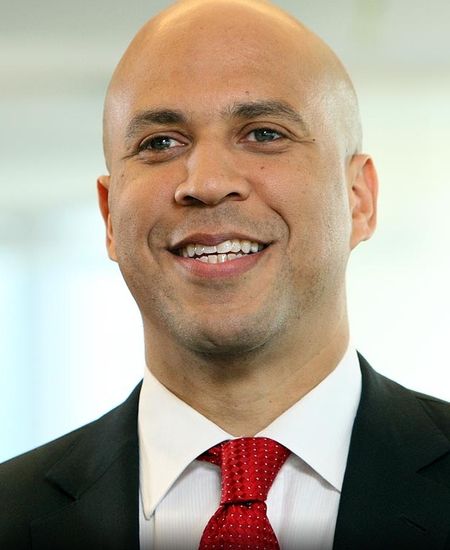
Sen. Cory A. Booker
Sponsored bills
Maddy summarySRES 666 is a symbolic Senate resolution congratulating the Gay, Lesbian, and Allies Senate Staff Caucus (GLASS Caucus) on its 20th anniversary. It acknowledges the caucus’s founding in 2004, commends Senator Frank Lautenberg for his role, and recognizes key members who established and sustained the group. The resolution has no policy impact - it is purely ceremonial, expressing appreciation for the caucus’s work in fostering inclusivity and support for LGBTQ+ Senate staff over two decades.
Maddy summaryS 4223, the Access to Birth Control Act, requires pharmacies that stock contraception to provide it without delay when requested, or immediately offer referral/transfer options if unavailable. It prohibits pharmacies from intimidating customers, misrepresenting availability, or refusing service based on personal beliefs, while allowing exceptions for no prescription, inability to pay, or professional clinical judgment. The bill targets pharmacies serving patients seeking FDA-approved contraceptives or related medications, aiming to address barriers like refusals reported post-Dobbs v. Jackson. Violations carry $1,000 daily civil penalties or allow private lawsuits for affected patients.
Maddy summaryThe CROWN Act of 2024 prohibits discrimination based on hair texture or style commonly associated with race or national origin, specifically protecting natural or protective hairstyles like locs, cornrows, braids, and Afros. It directly affects Black individuals who face discrimination in schools, workplaces, housing, and federally funded programs due to these hairstyles. The bill amends existing civil rights laws (like Title VI, the Fair Housing Act, and Title VII) to explicitly include hair-based discrimination as a form of race or national origin bias. It requires federally assisted programs, housing providers, public accommodations, and employers to comply with these protections under the same enforcement mechanisms as current civil rights laws. The law aims to eliminate policies that disproportionately target Black people through grooming requirements.
Maddy summary# Summary of the Cannabis Administration and Opportunity Act This comprehensive legislation establishes a federal regulatory framework for cannabis in the United States, creating a legal, taxed, and regulated market while addressing social equity, public health, and workplace safety concerns. ## Key Provisions ### Federal Regulation & Taxation - Creates Chapter 56 of the Internal Revenue Code for cannabis taxation - Establishes a federal permit system for cannabis businesses (cultivation, production, distribution, retail) - Implements a tiered tax structure with special provisions for small businesses and social equity applicants - Requires compliance with federal labor laws (Fair Labor Standards Act, OSHA, National Labor Relations Act) ### Public Health & Safety - Integrates cannabis regulation under the Federal Food, Drug, and Cosmetic Act - Establishes specific rules for CBD products and dietary supplements - Creates transition periods (18 months for products, 3 years for drugs) for existing state-legal products - Requires safety data for new cannabis products before market entry ### Workplace Safety - Mandates compliance with OSHA standards for cannabis employers - Requires the Department of Labor to issue guidance on workplace safety practices - Funds research on workplace impacts of cannabis legalization - Includes provisions for worker training and hazard mitigation ### Social Equity & Community Investment - Creates a social equity program for cannabis business permits - Establishes a Cannabis Products Advisory Committee with diverse representation - Allocates $200 million annually for Community Development Financial Institutions - Provides $300 million annually for housing and community development in communities impacted by the "war on drugs" ### Banking Access - Updates anti-money laundering guidance to support cannabis-related businesses - Requires the Financial Crimes Enforcement Network to update guidance on reporting requirements - Prohibits financial institutions from denying services based on nonviolent cannabis offenses ### Enforcement & Compliance - Creates new enforcement mechanisms for violations of cannabis regulations - Establishes a process for addressing labor law violations in the cannabis industry - Includes provisions for criminal penalties for violations of the regulatory framework This legislation represents a comprehensive approach to federal cannabis regulation, balancing market creation with public health protections, social equity considerations, and workplace safety requirements, while addressing longstanding barriers to financial services for cannabis businesses.
Maddy summaryThe Choose Medicare Act (S 4231) would create "Medicare part E" plans available in individual, small group, and large group insurance markets. These plans would provide comprehensive coverage including essential health benefits, gold-level coverage, all reproductive services, and abortion coverage, with premiums adjusted by market type and location. The bill would establish $2 billion in startup funding for 2025, require employers to refer employees to health insurance navigators, and implement protections against high out-of-pocket costs for Medicare beneficiaries. It would also expand premium assistance for lower-income individuals and establish new mechanisms to protect consumers from excessive insurance rates.
Maddy summaryThe AI Grand Challenges Act of 2024 directs the National Science Foundation (NSF) to establish prize competitions awarding cash prizes for AI research solving specific, measurable problems in areas like health, national security, energy, and cancer breakthroughs. It requires the NSF to publish clear problem statements and success metrics for each challenge, with a mandatory $10 million prize for a cancer-focused competition targeting detection, diagnostics, or treatments. Eligible participants must be U.S.-based entities or citizens, and the NSF must report annual results to Congress, including competition outcomes and public accessibility of prize details on Challenge.gov. The bill aims to accelerate AI innovation by incentivizing practical solutions across critical sectors through competitive funding.
Maddy summaryThe Captive Primate Safety Act prohibits the trade, breeding, and possession of certain nonhuman primates - including chimpanzees, gorillas, lemurs, and other species - in interstate or foreign commerce. It directly affects private owners, breeders, and businesses involved in the primate trade, with exceptions for those who owned primates before the law's enactment (requiring 180-day registration with the U.S. Fish and Wildlife Service and restrictions on breeding/selling) and for registered research facilities. The law also exempts entities transporting primates to approved facilities. The U.S. Secretary of the Interior must issue implementing regulations within 180 days, but the prohibitions take effect immediately without them.
Maddy summaryThe High School Voter Empowerment Act of 2024 requires public high schools to serve as voter registration agencies and conduct at least one voter registration drive each academic year. It targets eligible students enrolled in American Government or Economics classes who are 17 years old by April 10 and eligible to vote in federal elections. The bill establishes a grant program to reimburse schools for costs related to these drives, requiring schools to submit applications detailing expenses and registration activities. It also allows schools to use voting machines for student elections with election official support, under agreed terms.
Maddy summaryThe Next Step Home Act restores voting rights in federal elections for U.S. citizens who have completed sentences for federal felony convictions after December 21, 2018. It directly affects people released from federal custody who have served their sentences, requiring federal agencies to notify them of their voting rights upon release. Key provisions include mandating notification by the Bureau of Prisons or probation officers, establishing legal remedies for voting denial, and tying federal prison funding to compliance with the law. The bill applies only to federal elections (not state/local), does not override state voting laws, and takes effect for elections after its enactment.