

Maddy summaryThis bill aims to strengthen antitrust enforcement by revising key provisions of the Clayton Act to better address anticompetitive mergers and market power. It establishes new requirements for large acquisitions, creates an Office of Competition Advocate within the FTC to monitor and report on competition issues, and authorizes civil penalties of up to 30% of a company's U.S. revenues for antitrust violations. The bill also includes whistleblower protections and rewards, requires companies to report on post-merger competitive effects for five years, and increases funding for antitrust enforcement agencies. These changes are intended to protect consumers, workers, and small businesses by promoting competition and preventing harmful consolidation in markets.
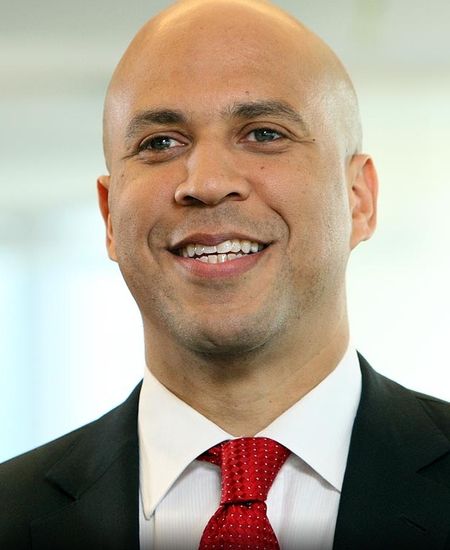
Sen. Cory A. Booker
Sponsored bills
Maddy summaryThis resolution (SRES 677) is a symbolic gesture recognizing U.S. teachers' contributions to civic, cultural, and economic well-being. It thanks teachers for their work, especially amid challenges like pandemic learning loss and student mental health support, and encourages students, parents, and officials to observe National Teacher Appreciation Week (May 6-10, 2024). The resolution has no binding effect or policy changes - it solely promotes public acknowledgment of teachers during this annual observance. It directly affects teachers nationwide by affirming their role in national well-being through a non-binding Senate statement.
Maddy summary# Summary of the Proposed Substance Use Disorder Treatment and Prevention Bill This document is a comprehensive legislative proposal focused on addressing substance use disorder through a public health approach rather than a criminal justice approach. The key elements include: ## Main Components (Title XXXIV of the Public Health Service Act) **Subtitle A: Local and State Grants** - Establishes a grant program for local and state entities to provide substance use disorder treatment - Requires establishment of a "planning council" for each locality - Specifies funding requirements and administrative structures **Subtitle B: State and Tribal Grants** - Creates a grant program for states and tribes to address substance use disorder - Includes requirements for planning councils and other administrative structures - Provides significant funding for these programs **Subtitle C: Other Grant Program** - Establishes a grant program for public entities, nonprofits, Indian entities, and Medicaid providers - Prioritizes organizations serving underserved populations - Includes specific requirements for applications and service delivery **Subtitle D: Innovation, Training, and Health Systems Strengthening** - Creates "Special projects of national significance" for innovative treatment models - Establishes education and training centers for health professionals - Provides funding to increase substance use disorder treatment provider capacity - Includes programs to support workers with substance use disorder ## Key Funding Authorizations The bill authorizes substantial annual funding across all subtitles: - **Subtitle A:** $4.6 billion annually (2024-2033) - **Subtitle B:** $4.6 billion annually (2024-2033) - **Subtitle C:** $1 billion annually (2024-2033) - **Subtitle D:** - Special projects: $500 million annually - Education/training: $500 million annually - Provider capacity: $50 million annually - Employee support: $40 million annually - Research: $10 million annually ## Additional Key Provisions 1. **Amendments to Controlled Substances Act:** - Requires "covered persons" (dispensers, distributors, manufacturers of schedule II controlled substances) to submit annual certifications regarding diversion controls and misbranding - Establishes civil and criminal penalties for failure to submit or submitting false certifications - Creates a "Comprehensive Addiction Resources Fund" to collect penalties and supplement substance use disorder treatment funding 2. **General Limitations on Fund Use:** - Funds can only be used for public health purposes - Prohibits use of funds for incarceration, institutionalization, or involuntary treatment of individuals with substance use disorder - Prohibits use of funds for activities inconsistent with public health purposes 3. **Federal Drug Demand Reduction Activities:** - Requires the Director of National Drug Control Policy to publish an online list of all drug control program grant programs - Mandates annual review of federally funded demand reduction activities for effectiveness and efficiency ## Overall Approach The bill represents a significant shift toward a public health model for addressing substance use disorder, emphasizing: - Treatment rather than punishment - Prevention and early intervention - Training for health professionals - Support for underserved populations - Evidence-based treatment models - Comprehensive data collection and research This legislation is designed to provide substantial, sustained funding for a comprehensive approach to the opioid crisis and broader substance use disorder treatment, with specific requirements to ensure accountability, effectiveness, and public health focus.
Maddy summarySRES 676 is a symbolic Senate resolution supporting National Nurses Week, observed annually from May 6 to May 12. It recognizes nurses' contributions to healthcare, highlights their role in patient advocacy and public health, and acknowledges their status as the largest healthcare profession in the U.S. The resolution does not create new policies or funding but encourages the public to observe the week with recognition and activities. It was introduced by 25 Senators and refers to nurses' historical significance, including Florence Nightingale's birthday.
Maddy summaryThe BUILD GREEN Infrastructure and Jobs Act creates a $50 billion annual grant program (2025-2034) to fund transportation infrastructure projects that reduce greenhouse gas emissions and use renewable energy. It prioritizes projects in frontline, vulnerable, or disadvantaged communities (at least 40% of funds), rural areas (30-40% of funds), and requires projects to be "green" (deeply reducing emissions and using renewable energy). The program mandates 5% of grant funds for workforce development, sets $17/hour minimum wages with annual increases tied to wage growth, and requires LEED environmental standards. Projects must also include a zero-emission transition plan and demonstrate how they will reduce vehicle miles traveled in single-occupancy vehicles.
Maddy summarySRES 673 is a commemorative Senate resolution honoring the late David Hampton Pryor, who served as a U.S. Senator for Arkansas from 1978 to 1997. The resolution expresses the Senate’s "profound sorrow" at his death and directs the Secretary of the Senate to share the resolution with the House and deliver a copy to his family. It does not create new laws or policies - it is purely ceremonial, recognizing Pryor’s career as a legislator, governor, and public servant. The resolution concludes with the Senate adjourning as a mark of respect for his legacy.
Maddy summaryThis resolution (SRES 668) is a ceremonial Senate measure honoring the late Senator Daniel Robert "Bob" Graham of Florida, who died on November 9, 2023. It formally expresses the Senate's "profound sorrow" over his death and directs the Secretary of the Senate to share the resolution with the House of Representatives and deliver a copy to his family. The resolution commemorates Graham's career as a Florida senator (1987-2005), governor (1979-1987), and his work on the 9/11 intelligence inquiry, but does not create any new laws or affect constituents. As a commemorative resolution, it serves solely to memorialize his service.
Maddy summarySRES 671 is a ceremonial Senate resolution supporting the designation of April 28-May 4, 2024, as "National Small Business Week." It honors small businesses and entrepreneurs across the U.S. for their economic contributions, noting they support over 62 million jobs through 33 million businesses. The resolution expresses the Senate's recognition of small businesses' resilience and role in strengthening local economies. As a symbolic gesture with no new policies or funding, it does not impose requirements or directly affect specific entities.
Maddy summaryS. Res. 675 is a Senate resolution supporting National Minority Health Month in April 2024, which aims to raise awareness about health disparities faced by specific minority groups including American Indians, Alaska Natives, Asian Americans, African Americans, Hispanics, and Native Hawaiians and other Pacific Islanders. It does not create new laws or funding but formally recognizes these disparities through a symbolic legislative gesture. The resolution cites statistics on unequal health outcomes, such as higher rates of diabetes, heart disease, and infant mortality in these communities compared to non-Hispanic White populations. This resolution directly affects public awareness and policy discussions, not individual health services or regulations.
Maddy summaryThis bill establishes a comprehensive federal approach to improving care for women experiencing menopause and mid-life health challenges. It authorizes $25 million annually for NIH research on menopause symptoms and health impacts, $10 million for public health promotion activities, $10 million for awareness and education programs, and $10 million for training health professionals. The legislation creates Centers of Excellence in menopause care, funds evidence-based resources for health providers, and requires annual reports to Congress on progress and barriers to care. These provisions directly affect mid-life women, health care providers, medical training programs, and public health departments across the country. The bill aims to improve early detection, treatment, and management of menopausal symptoms and related chronic conditions through coordinated research, education, and care initiatives.