

This resolution expresses that the Senate has heard of the death of the Honorable Orrin G. Hatch, former U.S. Senator for the state of Utah. The resolution also expresses that the Senate honors the life and legacy of the late Senator Hatch for his unwavering dedication to Utah as a Senator and a public servant and accomplishments in legislating with principle and dedication for the good of the people of the United States. The resolution states when the Senate adjourns today, it stands adjourned as a further mark of respect to the memory of Senator Hatch.
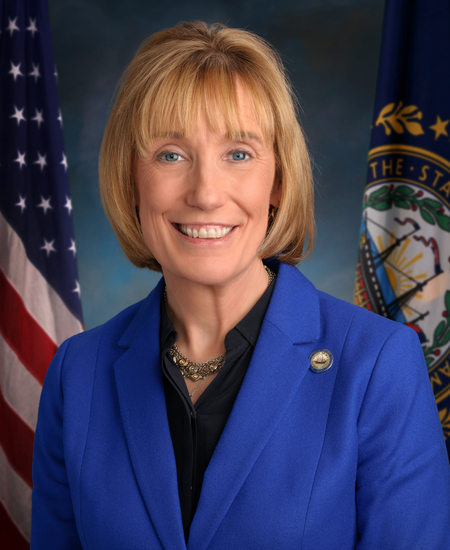
Sen. Margaret Wood Hassan
Sponsored bills
Ukraine Democracy Defense Lend-Lease Act of 2022 This bill temporarily waives certain requirements related to the President's authority to lend or lease defense articles if the defense articles are intended for Ukraine's government or the governments of other Eastern European countries affected by Russia's invasion of Ukraine. For FY2022 and FY2023, an agreement to lend or lease defense articles under this bill shall not be subject to certain requirements and provisions that typically apply to such lend-lease agreements, including a requirement that generally prohibits a loan or lease period from exceeding five years. The President must establish expedited procedures to ensure the timely delivery of defense articles loaned or leased to Ukraine under this bill.
This resolution thanks the teachers of the United States and promotes the teaching profession by encouraging students, parents, school administrators, and public officials to recognize National Teacher Appreciation Week.
This resolution supports the designation of May 1, 2022, through May 7, 2022, as Public Service Recognition Week and commends public servants for their contributions.
Stop Pills That Kill Act This bill increases criminal penalties for offenses relating to the manufacture of fentanyl or counterfeit substances. It also establishes requirements for federal agencies to address the use of counterfeit substances. Specifically, the bill applies an increased criminal penalty for possessing, manufacturing, or distributing certain equipment or materials that are used to illegally manufacture fentanyl, an analogue of fentanyl, or a counterfeit substance (the increased penalty is currently limited to offenses involving methamphetamine). The bill also requires the United States Sentencing Commission to review sentencing guidelines and amend them, if appropriate, to include an enhanced penalty for those who knowingly misrepresent counterfeit pills that have fentanyl, a fentanyl analogue, or methamphetamine as legitimate pills. The Drug Enforcement Administration must establish and implement a plan to address counterfeit fentanyl or methamphetamine substances through law enforcement action and education and prevention efforts. In addition, the Department of Justice must annually report on the collection of counterfeit fentanyl or methamphetamine substances by law enforcement and on related prosecutions.
Access to Congressionally Mandated Reports Act This bill requires the Government Publishing Office (GPO) to establish and maintain a publicly available online portal containing copies of all congressionally mandated reports other than those required to be submitted to the House or Senate Committees on Intelligence, Armed Services, Appropriations, or Foreign Relations. A federal agency must submit a congressionally mandated report and specified information about the report to the GPO between 30 and 45 days after submission of the report to either chamber or to any congressional committee or subcommittee. Upon the written request of the chair of a congressional committee or subcommittee to the GPO, a report submitted to that committee or subcommittee shall not be submitted or published on the portal. Federally chartered corporations, the Government Accountability Office, and any elements of the intelligence community are excluded from the requirements of this bill. The Office of Management and Budget must issue guidance to federal agencies on the bill's requirement for agencies to submit copies of congressionally mandated reports and related information to the GPO.
Expedited Disability Insurance Payments for Terminally Ill Individuals Act of 2022 This bill temporarily allows an individual diagnosed with a terminal illness with a life expectancy of six months or less to receive Social Security disability benefits during the waiting period for such benefits (which typically lasts five months). It also establishes a phased-in payment schedule for the benefits.
Maddy summarySRES 604 is a Senate resolution designating the week of April 25-29, 2022, as "National Specialized Instructional Support Personnel Appreciation Week." The resolution recognizes over 1 million specialized instructional support personnel, including school counselors, psychologists, nurses, and therapists, who provide critical academic, social, emotional, and physical support to students. It emphasizes their role in reducing learning barriers, fostering safe school environments, and promoting student well-being, without creating new laws or funding. The resolution serves as a symbolic acknowledgment of their contributions to education.
Maddy summaryThis resolution (SRES 603) recognizes April 2022 as National Sexual Assault Awareness and Prevention Month. It expresses the Senate's support for efforts to educate the public about sexual violence, improve treatment for survivors, and prosecute perpetrators. The resolution acknowledges the work of organizations like RAINN and the Department of Defense's Safe Helpline, but does not create new laws or funding. As a symbolic gesture, it has no direct policy impact on affected individuals or services.
Maddy summarySRES 600 is a Senate resolution supporting Workers' Memorial Day to honor workers killed or injured on the job. It cites statistics showing 4,764 workplace fatalities in 2020 and emphasizes the need to strengthen health and safety protections, particularly highlighting OSHA's limited resources (only inspecting workplaces once every 236 years). The resolution encourages OSHA, employers, and community organizations to increase awareness about preventing workplace injuries and illnesses. It does not create new laws but serves as a symbolic call to action for safer working conditions.