Foster Youth and Driving Act This bill expands state foster care and adoption assistance programs to provide driving preparation assistance to foster youth and related training for foster parents. The bill further directs assistance to states and tribal organizations for age-appropriate foster youth to, among other things, obtain automobile insurance, complete driver's education, obtain a driver's license, and purchase a vehicle.
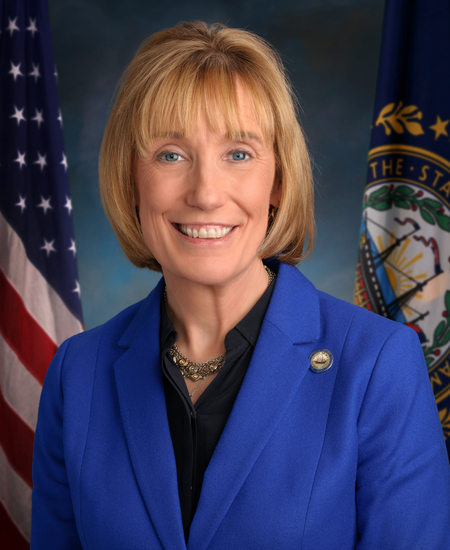
Sen. Margaret Wood Hassan
Sponsored bills
National Computer Forensics Institute Reauthorization Act of 2022 This bill reauthorizes through FY2028 the National Computer Forensics Institute within the U.S. Secret Service.
Maddy summarySRES 799 is a non-binding Senate resolution designating October 5, 2022, as "Energy Efficiency Day." It commemorates the economic and environmental benefits of energy efficiency, citing historical achievements like $800 billion in annual energy cost savings and 2 million jobs in the sector. The resolution does not create new policies or affect any group; it solely encourages public recognition through events and awareness activities. It references past bipartisan energy efficiency legislation but does not alter existing laws. This is a symbolic gesture celebrating existing progress, not a policy change.
Increasing Prescription Drug Competition Act This bill provides that certifications in generic drug applications of certain patents involved in Risk Evaluation and Mitigation Strategy (REMS) programs have no effect upon the drug's approval. (The Food and Drug Administration sometimes requires a REMS program for certain drugs with safety risks, which may include restrictions on a drug's distribution through elements to ensure safe use (ETASU), such as special requirements for pharmacies that dispense the drug.) Specifically, certifications in generic drug applications with respect to patents that involve an ETASU for REMS requirements have no effect on the effective date of the drug's approval, notwithstanding any other provisions that allow for a stay of approval pending litigation outcomes (i.e., 30-month stay). The bill also specifies that in a civil action alleging patent infringement with respect to REMS requirements, the sponsor of the approved brand-name drug may only seek damages from (rather than an injunction against) the generic drug applicant.
Democracy Is Strengthened by Casting Light On Spending in Elections Act of 2022 or the DISCLOSE Act of 2022 This bill addresses campaign finance, including by expanding the prohibition on campaign spending by foreign nationals, requiring additional disclosures of campaign expenditures, and requiring additional disclosures regarding certain political advertisements. Specifically, the bill expands existing foreign money prohibitions to include disbursements for paid web-based or digital communications and federal judicial nomination communications. It also prohibits foreign nationals from contributing to campaigns related to ballot initiatives and referenda. The Government Accountability Office must, for each four-year election cycle, study and report on the incidence of illicit foreign money in federal elections. Next, the bill makes it unlawful to establish or use a corporation, company, or other entity with the intent to conceal an election contribution or donation by a foreign national. A violator is subject to criminal penalties—a fine, a prison term of up to five years, or both. Covered organizations (e.g., corporations, labor organizations, and political organizations) must, within 24 hours, file reports with the Federal Election Commission to disclose campaign expenditures of more than $10,000 during an election cycle. The bill also requires organizations to provide additional disclosures regarding political advertisements, including the donors who contributed the most money to that organization in the last year.

Maddy summaryThis resolution designates the week of September 19-23, 2022, as "Malnutrition Awareness Week" to highlight malnutrition as a significant health issue affecting vulnerable populations, including children, older adults, and communities of color disproportionately impacted by food insecurity. It acknowledges the role of existing federal nutrition programs, recognizes healthcare professionals working on malnutrition prevention, and supports continued funding for initiatives like the Older Americans Act and child nutrition programs. The resolution does not create new laws or funding but serves as a symbolic recognition to raise public awareness.
This resolution recognizes (1) the celebration of Hispanic Heritage Month from September 15-October 15, 2022; and (2) the integral role of Latinos and their manifold heritage in the economy, culture, and identity of the United States.
Maddy summarySRES 780 is a Senate resolution designating September 2022 as "National Workforce Development Month." It does not create new laws or funding but formally acknowledges the importance of workforce development programs. The resolution supports existing federal initiatives like the Workforce Innovation and Opportunity Act, which helps workers gain skills through training, career pathways, and job placement services. It recognizes that these programs assist millions of people, including those with low incomes, veterans, and individuals with disabilities, by connecting them to employment opportunities.
Maddy summarySRES 779 is a Senate resolution designating September 17-24, 2022, as "National Estuaries Week." It aims to raise public awareness about the ecological and economic importance of estuaries, which support jobs, fisheries, and coastal protection. The resolution highlights estuaries' role in sustaining 3.5 million jobs and $351 billion in economic output while recognizing threats like pollution and habitat loss. As a procedural resolution, it does not create new laws or policies but encourages public recognition of estuary conservation.
Protections for Student Veterans Act of 2022 This bill authorizes covered individuals who are utilizing Department of Veterans Affairs educational assistance benefits to withdraw or take a leave of absence after they receive orders for active service, inactive-duty training, or state active duty. A covered individual means a member of the Armed Forces (including reserve components) or the spouse of such a member. Institutions of higher education are prohibited from taking adverse actions against such individuals for withdrawing or taking a leave of absence, including assigning a failing grade, reducing the individual's grade point average, characterizing any absence as unexcused, or assessing financial penalties. The bill requires institutions of higher education to refund all tuition and fees (including for housing) for the academic term for which the individual withdraws. In situations where the individual takes a leave of absence, the institution of higher education must assign a grade of incomplete for the applicable term and permit the individual to complete the academic term after the period of service.