

Countering Human Trafficking Act of 2021 This act provides statutory authority for the Center for Countering Human Trafficking (CCHT) within the Department of Homeland Security (DHS). The CCHT coordinates DHS efforts to combat human trafficking and the importation of goods produced with forced labor. The act requires the CCHT to develop a strategy to improve the systems and processes used throughout DHS to combat human trafficking and the importation of goods produced with forced labor. The act transfers the functions and resources of the Blue Campaign (i.e., the national public awareness effort to combat human trafficking) to the CCHT. DHS may also transfer to the CCHT any other component, directorate, or office of the department related to combating human trafficking.
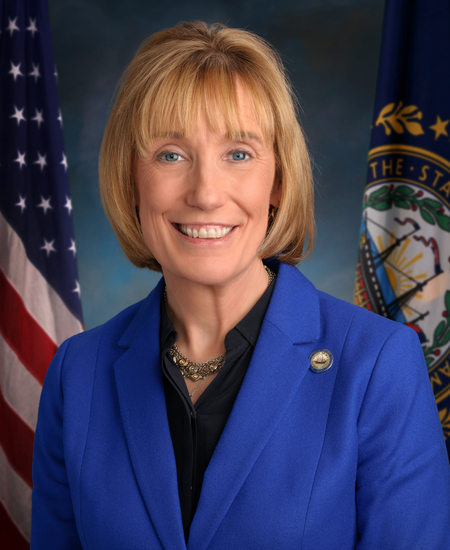
Sen. Margaret Wood Hassan
Sponsored bills
Iran Hostages Congressional Gold Medal Act This bill provides for the award of a Congressional Gold Medal to the 53 hostages of the Iran Hostage Crisis (November 4, 1979-January 21, 1981) in recognition of their bravery and endurance throughout their captivity.
Small Business Cyber Training Act of 2022 This bill requires the Small Business Administration to establish a program for certifying at least 5 or 10% of the total number of employees of a small business development center to provide cybersecurity planning assistance to small businesses.
Justice for the Living Victims of Lockerbie Act This bill establishes a mechanism for compensating certain victims of the bombing of Pan American Flight 103 over Lockerbie, Scotland, on December 21, 1988. Specifically, the Department of the Treasury must establish a fund to compensate qualifying victims of the bombing (generally, former employees of Pan American who were part of an earlier lawsuit seeking compensation from Libya for the bombing). The Foreign Claims Settlement Commission must establish a process for claimants to apply for compensation from the fund.
Supply Chain Disruptions Relief Act This bill modifies the treatment of liquidations of new motor vehicle inventory as qualified LIFO (last in first out accounting method) inventory. It allows new motor vehicle dealers to elect to wait until the end of 2025 to replace their inventory for purposes of determining income attributable to the sale of such inventory during 2020 and 2021.
Eliminate Network Distribution of Child Exploitation Act or the END Child Exploitation Act This bill modifies the reporting requirements for electronic communication service providers and remote computing service providers (providers) that report information to the CyberTipline of the National Center for Missing and Exploited Children on crimes involving the sexual exploitation of children. Specifically, the bill increases the amount of time—from 90 days to 180 days—that a provider must preserve the contents of a report. Additionally, the bill permits a provider to voluntarily retain the contents for longer than 180 days to reduce the proliferation of or to prevent the online sexual exploitation of children.
Early Hearing Detection and Intervention Act of 2022 This act reauthorizes through FY2027 various activities carried out by the Health Resources and Services Administration, the Centers for Disease Control and Prevention, and the National Institute on Deafness and Other Communication Disorders that support screening and early intervention services for newborns, infants, and young children who are deaf or hard of hearing. The Government Accountability Office must also conduct a study of state early hearing detection and intervention programs, including with respect to disparities in accessing the programs.
Pro bono Work to Empower and Represent Act of 2021 or the POWER 2.0 Act This act makes permanent the requirement for the chief judge of each federal judicial district to lead, at least annually, a public event to promote pro bono legal services for survivors of domestic violence, dating violence, sexual assault, and stalking. The requirement was enacted in 2018; it is scheduled to sunset after a four-year period.
Disaster Assistance for Rural Communities Act This bill authorizes the Small Business Administration (SBA) to declare a disaster in rural areas where significant damage has been incurred for the purpose of providing certain assistance. A rural area is a county or political subdivision designated as such by the Census Bureau. Significant damage means uninsured losses of not less than 40% of the fair replacement value or pre-disaster fair market value of the damaged property (whichever is less). For a rural area where the President has declared a major disaster, the SBA may declare a disaster for the purpose of providing economic injury disaster loans if (1) the state or tribal government wherein the rural area is located requests the declaration; and (2) any home, small business, private nonprofit organization, or small agricultural cooperative has incurred significant damage. The Government Accountability Office must report on (1) any unique challenges to communities in rural areas compared to communities in urbanized areas when seeking economic injury disaster assistance, and (2) any legislative recommendations for improving access to disaster assistance for communities in rural areas.
Protecting Firefighters from Adverse Substances Act or the PFAS Act This act requires the Department of Homeland Security (DHS) to develop guidance for firefighters and other emergency response personnel on training, education programs, and best practices to protect them from exposure to perfluoroalkyl and polyfluoroalkyl substances, commonly referred to as PFASs, from firefighting foam and to prevent the release of PFASs into the environment. These substances are man-made and may have adverse human health effects. A variety of products contain the compounds, such as nonstick cookware or weatherproof clothing. DHS shall make available a curriculum designed to reduce and eliminate exposure to PFAS from firefighting foam and personal protective equipment (PPE); prevent the release of PFAS from firefighting foam into the environment; and educate firefighters and other emergency response personnel on foams and non-foam alternatives, PPE, and other firefighting tools and equipment that do not contain PFAS. The U.S. Fire Administration shall make recommendations to DHS as to the content of the curriculum. DHS must create an online public repository on tools and best practices to reduce, limit, and prevent the release of and exposure to PFASs.