

Maddy summaryS 292 reauthorizes the Northern Border Regional Commission (NBRC) through 2032 with updated governance rules and new grant programs for the Northern Forest region (Maine, New Hampshire, New York, and Vermont). The bill creates a new $5 million annual State Capacity Building Grant Program to support economic development, infrastructure, broadband access, and workforce initiatives in eligible counties. It also establishes demonstration health projects with special emphasis on substance use disorder treatment, including opioid and methamphetamine programs, and allows NBRC to accept funds from other federal agencies. The NBRC’s annual funding is set at $50 million (2023-2027) and $60 million (2028-2032) for these programs.
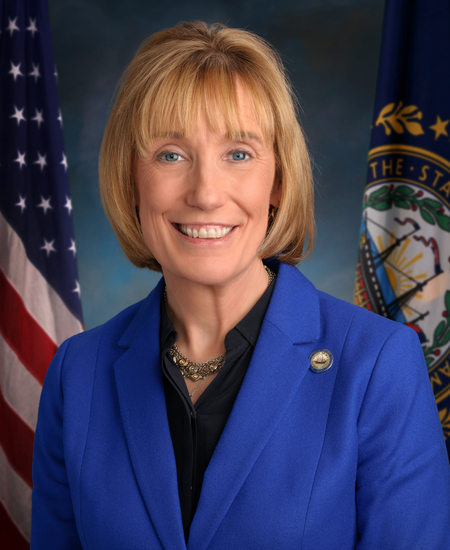
Sen. Margaret Wood Hassan
Sponsored bills
Maddy summaryThe Rachael Booth Act amends military compensation rules to expand eligibility for transitional pay to dependents of service members separated due to dependent abuse allegations. It adds two new categories: (1) members convicted of dependent abuse in federal/state court who are separated for other offenses, and (2) members accused but not convicted of abuse who are found to have committed it via commander review (based on preponderance of evidence) and forfeit pay for other offenses. Payments now begin at specific, defined points for accused members - either after a 7-day pretrial review or when a commander determines probable cause of abuse. This directly affects military dependents whose service member faces separation tied to abuse allegations, updating eligibility criteria and payment timing without altering benefit amounts.
Maddy summaryThe No Budget, No Pay Act requires Congress to pass a budget resolution and all regular spending bills by October 1 each fiscal year. If Congress misses this deadline, Members of Congress (including Senators and Representatives) will not receive pay for the period after October 1 until the budget is approved, and they will not receive retroactive pay for that time. The chairs of the budget and appropriations committees in each chamber will determine compliance and certify the pay suspension period. The law takes effect on September 29, 2025.
Maddy summarySRES 24 is a symbolic Senate resolution supporting the annual observance of "National Girls & Women in Sports Day" on February 1, 2023. It aims to raise public awareness and celebrate the achievements of girls and women in sports, referencing ongoing efforts to address gender disparities in athletic participation and coaching. The resolution highlights statistics showing persistent inequities, such as female athletes comprising only 44% of college athletes and BIPOC women representing just 7% of head coaches. It specifically calls for continued support of Title IX and the Equal Pay for Team USA Act to advance gender equity in sports. As a resolution, it does not create new laws or policies but formally recognizes the importance of this observance.
Maddy summaryThis bill prohibits the U.S. Department of Energy from selling petroleum products from the Strategic Petroleum Reserve to any entity owned or controlled by China, or to entities that might later export those products to China. It directly affects the Department of Energy’s management of the reserve and Chinese entities seeking to purchase U.S. oil. The key mechanism requires the Secretary of Energy to block sales to China-linked entities and to ensure any sale does not result in the petroleum being exported to China. This is a direct restriction on existing reserve operations, not a new policy. The bill applies to all current and future sales from the reserve.
Maddy summaryThe Public Health and Border Security Act of 2023 ends a pandemic-era suspension on certain international entries and imports. It requires the Surgeon General to notify Congress when the public health emergency declaration (including its continuation) ends, then mandates a 60-day waiting period before lifting the suspension. During this period, the Surgeon General must collaborate with agencies like Homeland Security to develop and submit a plan for managing potential increases in travel or goods, which must be provided to Congress within 30 days. If the plan isn’t submitted on time, the suspension’s termination is delayed until 30 days after the plan is delivered.
Maddy summaryThe JOBS Act of 2023 expands Federal Pell Grant eligibility to short-term job training programs that provide 150-600 clock hours (8-15 weeks) of instruction aligned with in-demand local industries. It directly affects students enrolled in eligible career-focused programs at institutions of higher education, requiring programs to offer industry-recognized credentials and meet validation standards from employers or sector partnerships. Key provisions include mandatory industry validation of program quality, institutional credit articulation for noncredit programs, and lowering the minimum Pell Grant percentage from 10% to 5% for qualifying students. The bill ensures these programs count toward students’ total Pell Grant eligibility period while maintaining standard Pell Grant terms and conditions.
Maddy summaryThe Drone Act of 2023 amends federal law to criminalize specific dangerous drone uses, directly affecting individuals and organizations operating drones in prohibited ways. It creates new offenses for weaponizing drones (e.g., attaching firearms or explosives), using drones to transport contraband into prisons or across borders, interfering with emergency operations, and flying drones in restricted airspace near airports or critical infrastructure. Violations carry penalties of up to 20 years in prison or fines, with death penalty eligibility for cases causing fatalities. The law targets documented threats like drone-assisted smuggling at borders, contraband delivery to prisons, and safety hazards near airports, as noted in the bill’s findings.
Maddy summaryThis bill would prevent government shutdowns by automatically continuing funding for most federal programs at the previous fiscal year's level if Congress fails to pass a full budget by the start of the new fiscal year. The automatic funding would continue in 14-day increments until a budget is enacted, with the government returning to normal funding levels once a budget is passed. During these automatic funding periods, government employees (including congressional staff) would face restrictions on travel, with limited exceptions for returning to Washington, D.C. or responding to national security events. The bill also establishes specific procedures for Congress to prioritize budget negotiations during these periods. This would affect the entire federal government and its operations during budget stalemates.
Maddy summaryThis bill authorizes the posthumous award of a Congressional Gold Medal to Fred Korematsu, a Japanese American civil rights advocate who challenged the WWII internment of Japanese Americans. It directs the Treasury Secretary to create a single gold medal bearing Korematsu's image and name, which will be displayed at the Smithsonian Institution. The bill also permits the sale of bronze duplicates to cover production costs. The medal recognizes Korematsu's lifelong advocacy for civil liberties and his role in exposing the government's misleading claims that led to the Supreme Court's 1944 Korematsu v. United States decision. This is a commemorative measure with no new legal requirements or policy changes.