

Maddy summaryThis Senate resolution formally acknowledges the strategic value of the Arctic region for U.S. national security and economic interests. It calls for ongoing cooperation with Arctic allies, such as Canada and Nordic nations, to promote stability, sustainable development, and regional security. The measure also highlights the importance of working with Indigenous peoples and maintaining a rules-based order in the face of international competition. While it does not create new laws or funding, it encourages Congress to actively engage with international partners on shared Arctic priorities through diplomatic exchanges and joint initiatives.
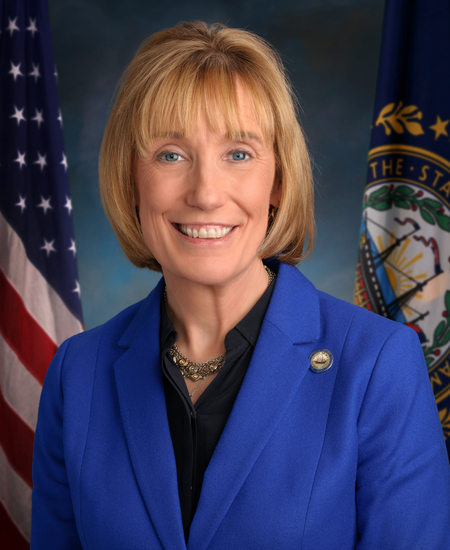
Sen. Margaret Wood Hassan
Sponsored bills
North Platte Canteen Congressional Gold Medal Act This bill provides for the award of a Congressional Gold Medal to recognize the individuals and communities that provided financial and other support for the North Platte Canteen in North Platte, Nebraska, during World War II.
Maddy summaryThis bill creates a program to correct burial markers for American-Jewish servicemembers who died in World War I or II and were mistakenly buried under Latin crosses (a Christian symbol) in overseas U.S. military cemeteries. The American Battle Monuments Commission will run this 10-year program, authorizing $500,000 annually to contract with qualified nonprofit organizations to identify affected veterans and contact their families. It directly affects Jewish veterans buried overseas with incorrect markers and their descendants, ensuring their religious heritage is properly recognized. The program requires nonprofits to verify burial records and facilitate marker corrections, with priority given to organizations experienced in Jewish military history.
Maddy summaryThe CHEERS Act of 2026 allows restaurants, bars, and entertainment venues to depreciate energy-efficient draft alcohol equipment, such as stainless steel or aluminum beer taps, over a 15-year period instead of the standard schedule. This tax incentive applies to new equipment installed in U.S. businesses after December 31, 2025, aiming to encourage the adoption of more efficient alcohol distribution systems. The legislation also directs the Treasury Department to create rules covering how this benefit applies to businesses that rent or lease this specialized equipment.
Maddy summaryThis Senate resolution honors the life and legacy of Donald W. Riegle, Jr., a former U.S. Senator from Michigan who passed away in April 2026. The bill formally acknowledges his nearly three decades of public service, including his roles as a Representative and Senator, and highlights his significant contributions to legislation on banking, housing, and veterans' health. It also expresses the Senate's condolences to his family and directs officials to share the resolution with the House of Representatives and send a copy to Riegle's family. Finally, the Senate will stand in adjournment as a mark of respect for the former senator when the session concludes.
Maddy summaryThe Prevent Government Shutdowns Act of 2026 automatically provides federal funding for government programs if Congress fails to pass a budget by the start of a new fiscal year. This mechanism supplies money for 14-day periods that can be extended as long as the shutdown continues, ensuring essential services like food assistance and loan programs keep running without interruption. To prevent political games during these shutdowns, the bill restricts official travel for government officials and limits what Congress can debate or vote on, except for passing a new budget or addressing the national debt limit.
Maddy summaryThis bill, known as the IRS Whistleblower Program Improvement Act, strengthens protections and incentives for individuals who report tax violations to the Internal Revenue Service. It ensures that whistleblower award decisions are reviewed de novo by the Tax Court based on the original administrative record and any new evidence, while also granting whistleblowers the right to remain anonymous unless a specific societal interest outweighs the potential harm to them. The legislation further safeguards these awards from budget cuts and mandates that interest be paid on awards if the IRS delays notifying the whistleblower of a preliminary recommendation. Additionally, it requires annual reports to list top tax avoidance schemes revealed by whistleblowers and corrects a technical error regarding attorney fee deductions.
Maddy summaryThis bill directs the Secretary of Agriculture to create a program called the Expanding Childcare in Rural America Initiative to improve childcare availability, quality, and affordability in rural areas. Starting in fiscal year 2027, the initiative will prioritize loans and grants for projects that support childcare services, including those run by licensed providers, schools, or Head Start programs. Funding will be distributed across rural regions to ensure a balanced geographical impact, and the Secretary must conduct an evaluation and submit a report on the program's outcomes within four years of enactment.
Maddy summaryThe Gateway to Careers Act of 2026 creates a new grant program to help states fund partnerships between workforce agencies, schools, and employers designed to guide individuals through specific career paths. These partnerships will receive federal funding to develop programs that connect education and training with in-demand jobs, while also providing essential support services like childcare, transportation, and mental health care to help participants complete their training. The bill prioritizes partnerships involving community colleges and those serving people facing barriers to employment, requiring applicants to use evidence-based strategies to improve student outcomes. To ensure accountability, the program mandates regular reporting on participant progress, job placement rates, and earnings, with a portion of funds reserved for independent evaluations of the initiative's effectiveness.
Maddy summaryThis joint resolution seeks to reject a specific rule issued by the Department of Education concerning the William D. Ford Federal Direct Loan Program. If passed, it would nullify the rule and prevent it from taking effect, directly impacting federal student loan policies. The measure uses a congressional disapproval process under Title 5 of the United States Code to override the department's regulatory decision. It does not create new policies but instead stops an existing proposed regulation from being implemented.