

Maddy summarySRES 312 is a non-binding Senate resolution recognizing the role of the Americans with Disabilities Act (ADA) in enabling independent living for people with disabilities and highlighting ongoing challenges like institutional segregation and disparities in healthcare, employment, and accessibility. It calls on federal agencies - including the Departments of Labor, Health and Human Services, Housing, and Transportation - to take specific actions to improve home- and community-based services, accessibility, and economic opportunities for people with disabilities. The resolution emphasizes addressing barriers identified 33 years after the ADA's passage, including pandemic impacts and racial disparities affecting disabled communities. As a symbolic resolution, it does not create new laws or funding but urges bipartisan collaboration and agency action to advance ADA goals.
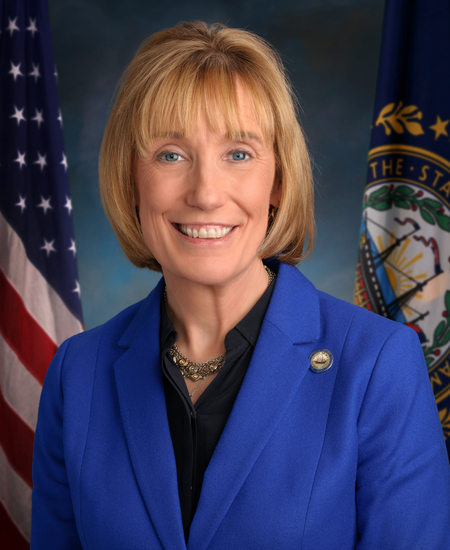
Sen. Margaret Wood Hassan
Sponsored bills
Maddy summaryThis resolution designates September 2023 as "National Child Awareness Month" to promote public awareness of charities and youth-serving organizations working to support children across the United States. It specifically recognizes efforts to aid at-risk children, including those experiencing homelessness, in foster care, affected by trafficking or violence, or facing serious health needs. The resolution does not create new programs or funding but serves as a symbolic recognition of these organizations' work. It aims to encourage broader community support for children's services during the school year's start.
Strengthen American Competitiveness Against Harmful Subsidies Act of 2023 This bill requires the Office of the U.S. Trade Representative (USTR) to regularly monitor and report on industrial subsidies provided by the Chinese government. First, the USTR must coordinate with specified federal agencies to regularly monitor (1) industrial subsidies provided by the Chinese government; and (2) plans by the Chinese government to implement new, or expand existing, industrial subsidies. Second, the USTR must coordinate with specified federal agencies to submit an annual report to Congress that identifies current and expected industrial subsidies provided by the Chinese government that pose a significant risk to (1) employment in the United States, including employment in strategically critical industries; and (2) manufacturing in the United States, including production of strategically critical goods. This report must also include recommendations for legislative, administrative, or other actions that could mitigate the risks posed by industrial subsidies.
Maddy summaryThe Promotion and Expansion of Private Employee Ownership Act of 2023 aims to increase employee ownership in S corporations by making it easier for companies to adopt Employee Stock Ownership Plans (ESOPs). Key provisions include extending tax deferral for sales of company stock to ESOPs, creating a Treasury Department office to provide technical assistance for ESOPs, and amending small business laws to ensure ESOP-owned businesses remain eligible for small business programs. The bill also establishes a dedicated Advocate for Employee Ownership within the Department of Labor to promote ESOP adoption, provide education, and help resolve disputes related to ESOPs. This legislation directly affects S corporations considering employee ownership transitions, their employees who would become partial owners, and small businesses that want to maintain eligibility for small business programs after an ESOP transition. The bill seeks to expand a model that studies show provides employees with retirement savings and greater job stability compared to traditional companies.
Maddy summaryThe Reproductive Health Care Accessibility Act (S 2544) creates federal programs to improve reproductive health care access for people with disabilities by establishing training for health care professionals, expanding educational opportunities for people with disabilities pursuing reproductive health careers, and funding accessible reproductive health education. The bill authorizes $10-15 million annually through 2028 to support workforce development programs, a National Technical Assistance Center, and research on effective reproductive health care models for people with disabilities. Key provisions require culturally competent care training, accessibility improvements for medical equipment, and coordination of services including mental health, social services, and transportation. These programs directly affect people with disabilities seeking reproductive health care, health care providers, and educational institutions training health care professionals. The bill supplements existing funding rather than replacing it, with reports to Congress required annually on program implementation and outcomes.
Maddy summaryThis bill increases the Commodity Futures Trading Commission's (CFTC) whistleblower fund from $100 million to $300 million and creates a separate account within the fund. The new account, capped at $10 million, specifically covers education initiatives and administrative costs for the CFTC's whistleblower program staff. It modifies the program's funding to be "until expended" instead of "until the fund is exhausted" and removes an outdated funding paragraph. The bill directly affects the CFTC's ability to manage its whistleblower program and support staff handling fraud reports in commodity markets.
Maddy summarySCONRES 2 is a symbolic congressional resolution commending Iranian protesters who risked their safety to demonstrate against the Iranian regime's human rights abuses, particularly following the death of Mahsa Amini after her arrest by morality police for alleged hijab violations. It specifically highlights protests in over 133 cities where demonstrators, including women removing headscarves, have faced violent crackdowns, with reports of over 500 deaths and 19,000 arrests. The resolution condemns the regime's brutality, supports internet freedom tools to bypass censorship, and urges the administration to impose human rights sanctions on officials responsible for repression. As a non-binding resolution, it expresses congressional support for protesters but does not enact new laws or policies.
This resolution recognizes the 30th anniversary of the founding of the Department of Defense State Partnership Program and its outsized influence in developing and supporting enduring relationships around the world. The resolution also expresses deep gratitude for the service of members of the National Guard to the program.
Maddy summaryS 2469, the ACADEMIC Act of 2023, directs the U.S. Department of Education to add a long-term study on how the pandemic affected students. This study will track academic progress, mental health, and well-being for all K-12 students, with specific focus on vulnerable groups like homeless youth, foster children, military-connected students, and those in rural/urban areas. The study must comply with privacy laws (like FERPA) and release public findings within one year of data collection. It does not fund new programs but mandates federal data collection to understand pandemic impacts on education.
Maddy summary# Summary of Proposed Election Reform Legislation This comprehensive legislative document outlines a wide-ranging election reform bill with multiple titles addressing various aspects of voting rights, election administration, and election integrity. Key provisions include: 1. **Democracy Restoration** (Title I): - Restores voting rights for citizens with criminal convictions (except those serving felony sentences in correctional institutions) - Requires states to notify individuals of restored voting rights upon completion of sentence or release from custody - Includes enforcement mechanisms for states to comply with the restoration provisions 2. **Voter Identification Requirements** (Title II): - Establishes a standardized system for voter identification requirements - Specifies acceptable forms of identification (including many government-issued documents) - Requires states to provide free identification documents to eligible voters - Includes funding ($5 million annually for 5 years) to cover costs 3. **Voter List Maintenance** (Title III): - Prohibits "voter caging" (using undeliverable mail to challenge voter eligibility) - Requires states to verify voter ineligibility using objective and reliable evidence - Limits removal of voters from registration lists to specific circumstances (death, permanent move) - Mandates notice requirements for voters removed from lists 4. **Election Integrity** (Title IV): - Prohibits interference with voter registration (Section 612) - Restricts removal of local election administrators to cases of inefficiency, neglect, or malfeasance - Prohibits harassment and intimidation of election workers - Bans deceptive practices in elections (false information about voting procedures, qualifications, or endorsements) The legislation aims to expand voting access while maintaining election integrity, with specific focus on eliminating barriers for people with criminal convictions, ensuring fair voter list maintenance, and protecting election workers from harassment and intimidation. It also includes provisions for enforcement through civil actions, criminal penalties, and reporting requirements.