

Maddy summaryS 2933, the Safe Response Act, increases annual funding for a specific public health program. It amends Section 546(h) of the Public Health Service Act to raise the funding level from $36 million annually (fiscal years 2019-2023) to $57 million annually (fiscal years 2024-2028). This reauthorization directly affects the program funded under this section, providing higher financial support for its operations. The bill makes no changes to program requirements or eligibility, only adjusting the authorized funding amount. The change applies to the specified future funding period without altering existing program structure.
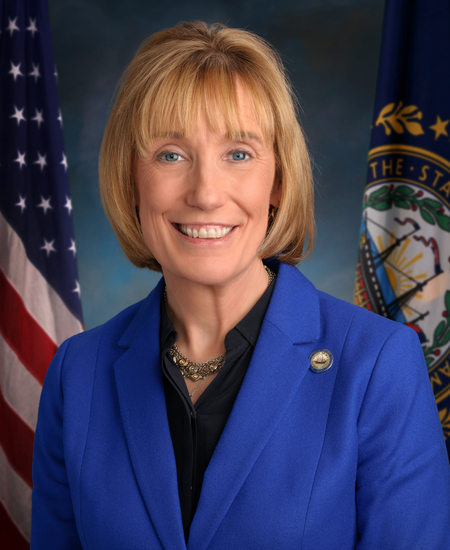
Sen. Margaret Wood Hassan
Sponsored bills
Maddy summaryThis bill, the ALERT Communities Act (S 2919), aims to reduce opioid-related overdoses by expanding access to fentanyl and xylazine test strips. It directly affects communities impacted by the opioid crisis, first responders, and manufacturers of drug-testing technology. Key provisions include requiring first responders to receive training on using test strips, directing federal agencies to create research and marketing frameworks for improving test strip technology, and mandating a two-year study on how test strip availability affects overdose rates and treatment engagement. The bill focuses on practical policy changes to support community safety through better testing tools and data collection.
Maddy summaryThis bill requires U.S. colleges and universities participating in federal student aid programs to create clear anti-harassment policies covering harassment based on race, sex, disability, religion, and other protected characteristics. These policies must specifically prohibit harassment occurring online (via emails, social media, or institutional networks), on campus, in dorms, and during school-sponsored activities. It also establishes a $50 million annual grant program to fund campus prevention programs, counseling services, and training for students, faculty, and staff on recognizing and addressing harassment. The law adds these requirements to existing federal protections under Title IX and the Civil Rights Act, without replacing them.
Maddy summarySRES 353 is a symbolic Senate resolution designating the week of September 16-23, 2023, as "National Estuaries Week." It expresses the Senate’s support for raising public awareness about the ecological and economic importance of estuaries. The resolution highlights estuaries’ role in supporting jobs, economic output, and critical habitats, while acknowledging threats like pollution and habitat loss. This procedural resolution has no direct regulatory or funding impact - it serves solely as a formal acknowledgment of estuaries’ value.
Maddy summarySRES 351 is a ceremonial Senate resolution designating September 25, 2023, as "National Lobster Day." It formally recognizes the cultural, economic, and culinary significance of lobster in the United States, highlighting its role in coastal communities, sustainability efforts, and traditions. The resolution encourages the public to observe the day through activities but does not create new laws, funding, or obligations. It directly affects no specific group or industry, serving only as a symbolic acknowledgment. This procedural resolution was introduced by Senators King, Collins, Shaheen, and others and adopted by the Senate on September 19, 2023.
Maddy summaryThis proposed constitutional amendment would give Congress and states the authority to regulate campaign contributions and spending, including setting limits and prohibiting corporations from spending money to influence elections. It explicitly protects freedom of the press by stating the amendment cannot be used to abridge it. If ratified by three-fourths of state legislatures, it would establish a new constitutional standard for campaign finance regulation.
Maddy summaryThis Senate resolution (SRES 345) designates September 15, 2023, as "National Concussion Awareness Day" to highlight the health impact of concussions. It cites CDC data showing millions of annual sports-related concussions, particularly among youth, and emphasizes the need for better diagnosis, management, and awareness. The resolution encourages federal, state, and local policymakers to collaborate on raising public awareness and improving concussion care protocols. It does not create new laws or allocate funds but serves as a symbolic effort to promote education and prevention. The resolution was introduced by Senators Hassan, Capito, and Casey and unanimously adopted on September 14, 2023.
Maddy summaryS 2809, the HEAL Act of 2023, requires the Department of Health and Human Services (HHS) to update federal grant program regulations related to opioid misuse. It mandates that references to "opioid overdose reversal agents" in HHS guidance and grants - specifically for State Opioid Response and Tribal Opioid Response Grants - must include *any* FDA-approved drug or device for emergency opioid overdose treatment, not just naloxone. This change, effective by December 31, 2023, ensures states and tribes can use federal funds for a broader range of approved overdose reversal products. The bill directly affects HHS grant programs administered under the 21st Century Cures Act and the Public Health Service Act.
Maddy summaryS 2780, the Medication Affordability and Patent Integrity Act, requires drug and biologic manufacturers to certify to both the FDA and U.S. Patent and Trademark Office (USPTO) that patent information submitted to the FDA matches what was provided to the USPTO. This applies to sponsors of new drug applications (under FD&C Act §505) and biological product licenses (under PHS Act §351), directly affecting pharmaceutical companies seeking FDA approval. The key mechanism mandates that manufacturers submit patent-related information to the USPTO when sharing it with the FDA and certify its consistency between agencies. If manufacturers fail to disclose required patent information, the FDA may deny approval, and generic manufacturers can use this non-disclosure as a defense in patent infringement lawsuits. The bill aims to improve transparency in drug patent processes without directly altering drug pricing or approval standards.
Maddy summaryThe Increasing Access to Dental Insurance Act (S 2771) would amend the Affordable Care Act to allow individuals to enroll in standalone dental insurance plans through health insurance marketplaces without needing to also have a health insurance plan. This change removes a current barrier that previously prevented people from accessing dental coverage if they weren't enrolled in a health plan. The bill directly affects people seeking dental insurance who do not have or do not want a comprehensive health insurance plan. By prohibiting restrictions based on health insurance status, the law aims to make dental coverage more accessible for these individuals.