

Maddy summaryS 2492, the "Ending Improper Payments to Deceased People Act," requires the Social Security Administration to share death records with the federal "Do Not Pay" system by December 2026. This system will then compare these records against government payment databases to prevent ongoing payments to deceased individuals. The bill amends existing law to create a formal coordination mechanism between Social Security and the Do Not Pay system, using existing federal data-sharing processes. It directly affects federal and state agencies that process benefit payments, aiming to stop improper payments to people who have died. The changes take effect on December 28, 2026.
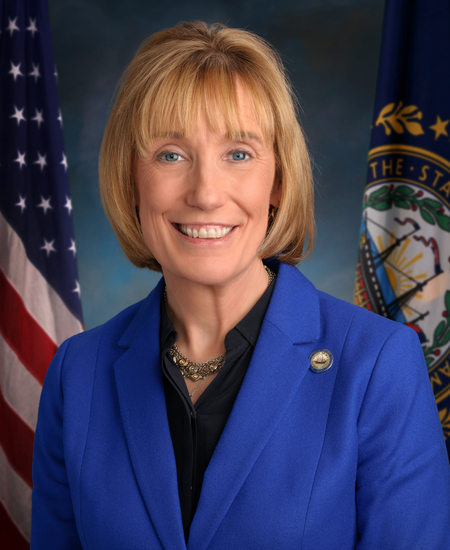
Sen. Margaret Wood Hassan
Sponsored bills
Maddy summarySRES 914 is a symbolic Senate resolution expressing support for National Adoption Day (November 23, 2024) and National Adoption Month (November 2024). It promotes public awareness of children awaiting adoption in foster care, celebrates adoption families, and encourages Americans to support child safety and permanency. The resolution does not create new policies or alter existing laws; it is a non-binding statement of support. It directly affects public awareness and national recognition of adoption efforts, not specific individuals or programs.
Maddy summaryThis is a ceremonial Senate resolution (SRES 902) honoring the late Senator Timothy Peter Johnson of South Dakota, who died after a long career in public service. The resolution expresses the Senate's "profound sorrow" over his death, directs the Secretary of the Senate to share the resolution with the House and send a copy to his family, and calls for the Senate to adjourn in his memory. It does not create new laws or affect any policies, as it is purely a formal expression of respect for a former senator. The resolution commemorates his decades of service, including his time as Chairman of the Banking Committee and his return to work after a serious health setback.
Maddy summaryThis bill increases the Work Opportunity Tax Credit (WOTC) for employers hiring from targeted groups like veterans, SNAP recipients, and long-term job seekers. It changes the credit to 50% of first-year wages up to $6,000, plus 50% of wages between $6,000 and $12,000 (for workers with at least 400 hours). The bill also raises wage limits for veterans (e.g., up to $24,000 for some) and removes an age cap for SNAP recipients, allowing all ages to qualify. These changes apply to workers hired after December 31, 2024.
Maddy summaryThis bill amends Medicare to require equal reimbursement for portable ultrasound services as for portable X-ray services. It adds "ultrasound tests" to Medicare's coverage of diagnostic imaging and mandates separate payment for portable ultrasound transportation and setup, mirroring existing rules for portable X-ray services. The policy directly affects Medicare beneficiaries needing portable ultrasound care and healthcare providers offering these services. Payment rules for ultrasound providers must align with current federal regulations for X-ray providers. The changes take effect for services provided on or after January 1, 2026.
Maddy summaryThe Health Care Cybersecurity and Resiliency Act of 2024 requires the Department of Health and Human Services (HHS) to develop a cybersecurity incident response plan within one year of enactment, including strategies for risk assessment, prevention, detection, and recovery from cyber incidents affecting healthcare systems. The bill establishes new mandatory cybersecurity standards for healthcare entities, requiring multifactor authentication, encryption of protected health information, and regular security audits. It updates breach reporting requirements to include more detailed information about breaches and corrective actions taken, and creates a new grant program to help rural healthcare facilities adopt cybersecurity best practices. The legislation also mandates training programs to strengthen the healthcare cybersecurity workforce and improves coordination between HHS and the Cybersecurity and Infrastructure Security Agency (CISA). These provisions apply to hospitals, health centers, clinics, and other healthcare entities that handle protected health information.
Maddy summaryThe Stopping Political Discrimination in Disaster Assistance Act amends federal disaster aid law to prohibit discrimination based on political affiliation. This change adds "political affiliation" to the list of protected characteristics - alongside race, sex, religion, and economic status - in all disaster assistance programs under the Robert T. Stafford Disaster Relief Act. It ensures individuals cannot be denied or delayed in receiving federal aid (such as FEMA assistance after natural disasters) due to their political views, party membership, or voting history. The bill applies directly to federal agencies administering disaster relief, requiring them to evaluate eligibility solely based on non-discriminatory factors.
Maddy summaryThis bill extends the Secure Rural Schools program, which provides payments to counties and states with federal land, through 2026. It also adjusts related deadlines for special projects on federal land and county fund expenditures, pushing them to 2028 and 2029 respectively. Additionally, the bill adds a pilot program allowing regional foresters to appoint resource advisory committee members, set to end on October 1, 2028. These changes maintain funding stability and administrative flexibility for rural communities dependent on federal land management.
Maddy summaryThis bill creates new Medicare grant programs to support rural hospitals and health clinics. It directly affects critical access hospitals, rural health clinics, and rural emergency hospitals (specialized rural emergency centers) by providing funds for quality improvement, behavioral health services, and hospital conversions. Key provisions include grants to help hospitals stabilize emergency services, assistance with medical residency applications, and funding for staff training, billing software, and operational upgrades. The grants require State Offices of Rural Health to coordinate support for eligible small rural hospitals nationwide.