

Maddy summaryThis bill bans the commercial provision of conversion therapy - defined as paid attempts to change a person's sexual orientation or gender identity - as it is deemed ineffective and harmful. It directly affects therapists, clinics, and any commercial entity offering such services, while exempting gender transition support and non-discriminatory counseling. Key mechanisms include prohibiting paid conversion therapy, banning deceptive advertising (e.g., claiming it’s harmless), and empowering the Federal Trade Commission and state attorneys general to enforce penalties. The law focuses on preventing fraud by stopping profit-driven practices with no scientific basis, aligning with professional consensus on the risks.
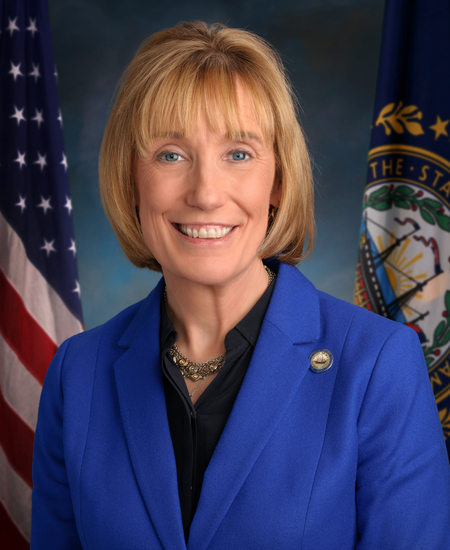
Sen. Margaret Wood Hassan
Sponsored bills
Maddy summaryS 1619, the Post-Disaster Assistance Online Accountability Act, requires federal agencies providing disaster aid (like FEMA, SBA, and HUD) to publish detailed spending data online. Agencies must report quarterly, within 30 days, including total funds disbursed, project-specific details (names, locations, completion status), and funding sources for all projects. This applies to all disaster assistance under the Stafford Act, flood insurance, and related programs. The bill mandates machine-readable data on a new subpage of the federal spending website, directly affecting how agencies disclose disaster funding to the public.
Maddy summarySRES 201 is a non-binding Senate resolution designating the week of May 4-10, 2025, as "National Small Business Week." It honors small businesses and entrepreneurs across all U.S. communities for their economic contributions, citing that small businesses support over 59 million jobs. The resolution recognizes their resilience and celebrates their role in strengthening local economies. This symbolic gesture, consistent with annual presidential proclamations since 1963, does not create new laws or affect any specific group through policy changes.
Maddy summarySRES 202 is a Senate resolution recognizing April 2025 as "Community College Month" to celebrate the role of U.S. community colleges. It highlights how over 1,000 community colleges - serving 10.2 million students - support affordable higher education, workforce training, and economic growth, citing their $898 billion annual economic impact. The resolution has no binding effect; it is a symbolic acknowledgment intended to honor these institutions' contributions to education and prosperity.
Maddy summaryThis bill requires colleges and universities to improve their net price calculators - tools that help prospective students estimate actual college costs after aid. It mandates clearer website placement, detailed cost breakdowns (including tuition, room/board, books, and available aid), and data updated within two academic years. Calculators must also prominently display privacy protections, stating no personal information is sold or stored. These changes directly affect all institutions of higher education that operate such calculators, aiming to make cost estimates more transparent and user-friendly for students and families.
Maddy summaryThis bill would require colleges and universities receiving federal financial aid to provide standardized financial aid offers using a new Department of Education-developed form. The form must clearly present costs of attendance (both direct and indirect), grants and scholarships (with disclosure they don't need repayment), net price, and loan terms including interest rates and repayment options. It would require institutions to disclose key information like the impact of private loans versus federal loans, default rates, and work-study opportunities in plain language. The bill affects all institutions of higher education that receive federal financial assistance, with the form to be developed through consumer testing with students and stakeholders.
Maddy summaryThis bill requires colleges to provide prospective federal student loan borrowers with detailed financial counseling before disbursement, including estimates of monthly payments relative to income, total projected debt (including private loans and future costs), and warnings about high debt-to-income ratios. It mandates that students manually confirm their desired loan amount before certification, emphasizing borrowing only what's necessary. During periods when repayment isn't required (e.g., while enrolled or in deferment), lenders must send quarterly statements showing loan balances, interest rates, accumulated interest, and explanations about how unpaid interest capitalizes upon repayment. These provisions directly affect all federal student loan borrowers by increasing transparency about loan terms and long-term financial impact before and during repayment.
Maddy summaryThis Senate resolution (SRES 193) designates April 2025 as "Financial Literacy Month" to raise public awareness about the importance of personal financial education and the consequences of financial illiteracy. It does not create new laws or directly affect specific groups; instead, it calls on federal, state, local, school, nonprofit, and business entities to observe the month with educational programs. The resolution cites statistics on unbanked households, student debt, and the benefits of financial education as context, but the only action taken is the symbolic designation. This is a procedural resolution with no binding requirements.
This bill increases the annual limit on the tax credit for qualified railroad track maintenance expenses (also referred to as the short line railroad tax credit) and expands eligibility for claiming the credit. Under current law, the tax credit is limited each tax year to $3,500 multiplied by the sum of the number of miles of railroad track owned or leased by the taxpayer (miles owned or leased) and the number of railroad track miles assigned to the taxpayer by a Class II or III railroad (miles assigned). This bill increases the annual limit to $6,100 multiplied by the sum of miles owned or leased and miles assigned. The $6,100 amount used in the calculation of the tax credit limit is adjusted for inflation for tax years beginning after 2025. The bill also expands eligibility for the tax credit to include gross expenses for maintaining railroad tracks owned or leased as of January 1, 2024. Under current law, the tax credit is limited to gross expenses for maintaining railroad tracks owned or leased as of January 1, 2015.
Assault Weapons Ban of 2025 This bill makes it a crime to knowingly import, sell, manufacture, transfer, or possess a semiautomatic assault weapon (SAW) or large capacity ammunition feeding device (LCAFD). The prohibition does not apply to a firearm that is (1) manually operated by bolt, pump, lever, or slide action, except for certain shotguns; (2) permanently inoperable; (3) an antique; (4) only capable of firing rimfire ammunition; or (5) a rifle or shotgun specifically identified by make and model. The bill also exempts from the prohibition the following, with respect to a SAW or LCAFD: importation, sale, manufacture, transfer, or possession related to certain law enforcement efforts, or authorized tests or experiments; importation, sale, transfer, or possession related to securing nuclear materials; and possession by a retired law enforcement officer. The bill permits continued possession, sale, or transfer of a grandfathered SAW, which must be securely stored. A licensed gun dealer must conduct a background check prior to the sale or transfer of a grandfathered SAW between private parties. The bill permits continued possession of, but prohibits sale or transfer of, a grandfathered LCAFD. Newly manufactured LCAFDs must display serial number identification. Newly manufactured SAWs and LCAFDs must display the date of manufacture. The bill also allows a state or local government to use Edward Byrne Memorial Justice Assistance Grant Program funds to compensate individuals who surrender a SAW or LCAFD under a buy-back program.