

Maddy summaryThe SAVES Act of 2025 establishes a five-year pilot program at the Department of Veterans Affairs (VA) to fund nonprofit organizations that provide service dogs to eligible veterans with specific disabilities, such as blindness, mobility issues, PTSD, or traumatic brain injury. Nonprofits must apply competitively, meet training and animal welfare standards (including ADA compliance), and provide service dogs at no cost to veterans, with the VA covering all program expenses. The VA will also provide ongoing veterinary insurance for the dogs, which continues even after the pilot ends. This program is funded with $10 million annually for five years, targeting veterans as defined by VA medical criteria.
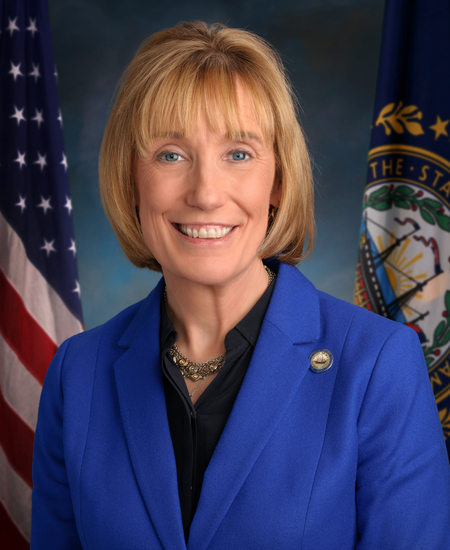
Sen. Margaret Wood Hassan
Sponsored bills
Maddy summaryThis bill requires the Department of Homeland Security (DHS) to obtain explicit approval from local governments before building or operating new ICE detention centers or processing facilities. It mandates a 30-day public comment period, a signed written agreement with local officials and the state governor, and a congressional report before any new facility can proceed. The law directly affects DHS, local elected leaders (mayors, councils), and state governors by requiring their consent prior to facility construction or operation. Key provisions include public notice with detailed impact analysis, local government agreement, and mandatory reporting to specific congressional committees. This creates a formal process for community input on new immigration detention infrastructure.
Maddy summaryThis concurrent resolution (SCONRES 25) commemorates the 15th anniversary of the January 8, 2011, Tucson shooting that killed six people and injured 13, including former Congresswoman Gabby Giffords. It honors the victims (such as Judge John Roll, Gabriel Zimmerman, and 9-year-old Christina-Taylor Green), survivors like Giffords and Ron Barber (who later became a U.S. Representative), and the community's response. The resolution expresses support for survivors, recognizes Giffords’ advocacy against gun violence, and reaffirms commitment to respectful dialogue and opposing political violence. As a symbolic gesture, it does not enact new laws or policy changes.
Maddy summaryThe After Hours Child Care Act creates a new federal grant program to expand child care access for parents working nontraditional hours (like evenings, nights, or weekends). It provides competitive grants of $25,000-$500,000 to eligible child care providers or partnerships to fund activities such as expanding existing programs, establishing workplace child care, or improving facility safety and staffing. The grants, awarded for five years with a 25% non-Federal match, specifically target families where parents work outside standard 9-to-5 schedules. This directly helps working parents with young children who face limited care options, aiming to support their continued workforce participation and career advancement.
Ski Hill Resources for Economic Development Act This bill allows National Forest System (NFS) units to keep the majority of ski area permit rental fees that were generated within their boundaries and outlines how revenues from those fees may be used. Such fees are collected by the Department of Agriculture (USDA) from ski area operators on NFS land. Within the NFS unit where the fees were generated, USDA must expend (1) 60%-48% of the collected fees for activities such as administration of the ski area permit program, visitor information, or reducing the likelihood of wildfire in or adjacent to a recreation site; and (2) 20% of the collected fees for activities such as repair of a Forest Service-owned facility, habitat restoration, or search and rescue activities. The remainder of the collected fees must be expended by USDA at any NFS unit for any of the activities specified in this bill.
Maddy summaryThe RAMP Act amends the Social Security Act to clarify that group health plans (such as employer-sponsored insurance) must be treated as the primary payer for medical services when Medicare is secondary, replacing the ambiguous term "primary plan" with "group health plan" (as defined in law). This change ensures group health plans cover costs first, preventing Medicare from paying incorrectly for services they should cover. The bill directly affects group health plans and Medicare by reducing payment errors that strain Medicare's finances. It corrects confusion in current law without creating new legal claims or altering existing Medicare coverage rules.
Maddy summaryThe SHADOW Fleet Sanctions Act of 2026 imposes sanctions on vessels and foreign entities supporting Russia's shadow fleet - vessels used to circumvent sanctions on Russian oil exports. It targets foreign vessels engaging in unsafe maritime behavior, lacking proper insurance, or evading the crude oil price cap, as well as foreign persons facilitating such activities through ship-to-ship transfers, insurance, or port services. The bill requires sanctions on port terminals in China or India accepting oil from sanctioned vessels and establishes a public database of vessels suspected of sabotage activities. It also creates reporting requirements and a strategy to counter China's role in evading sanctions on Russian energy products.
Ending Improper Payments to Deceased People Act This act permanently allows the Department of the Treasury to access certain death records maintained by the Social Security Administration (SSA) to help prevent and recover improper payments (e.g., payments to deceased individuals). The act also establishes evidentiary requirements the SSA must meet before identifying an individual as deceased. Current law requires the SSA to share its Death Master File with the Do Not Pay system maintained by Treasury for three years. The act makes this requirement permanent. Treasury must enter into an agreement with the SSA related to Treasury's share of the cost of state death data. The act also prohibits the SSA from recording a death in the master file unless the SSA has clear and convincing evidence that the individual should be presumed deceased. If an individual is incorrectly identified as deceased and provides the SSA with supporting documentation, the SSA may notify certain agencies that have access to the master file, including Treasury and federal or state agencies that provide or disburse federally funded benefits.
Maddy summaryThe GUARD Act allows state, local, and tribal law enforcement agencies to use existing federal grant funds to investigate elder financial fraud (targeting elderly or disabled individuals), "pig butchering" scams (where victims are tricked into investing in fake crypto schemes), and general financial fraud. It requires agencies to hire specialized staff, use technology tools for tracking scams, and report annually on how funds were used and their impact on fraud statistics. The bill also mandates two key federal reports: one to Congress on scam trends and enforcement actions, and another detailing annual consumer losses and government spending on fraud prevention. These provisions aim to improve coordination between law enforcement, financial institutions, and federal agencies to combat evolving fraud schemes.
Maddy summaryThis resolution designates January 2026 as "National Mentoring Month" to raise public awareness about mentoring programs. It recognizes the benefits of mentoring for youth - including improved academic performance, mental health, career development, and reduced risk of delinquency - and highlights that 40% of U.S. youth lack a mentor. The Senate encourages community, school, and workplace efforts to expand existing mentoring programs and recruit volunteers to support young people. It does not create new laws or funding but aims to promote existing mentoring initiatives across the country.