

Bicameral Congressional Trade Authority Act of 2021 This bill requires congressional approval for a presidential import adjustment due to a national security threat from an import related to military equipment, energy resources, or critical infrastructure essential to national security. Specifically, the bill requires the President to submit a proposal to Congress, which Congress may approve by a joint resolution. Under current law, the President determines whether any adjustment of an import is necessary and must submit to Congress the reasons for any action taken or not taken. The Department of Defense (currently, the Department of Commerce) must investigate the effect of these imports on national security. The bill retroactively applies to any proposed action made four years before enactment of this bill. In general, any rate of duty modification occurring in the time period beginning four years before and ending the day before enactment of this bill must revert to the previous rate unless it receives congressional approval.
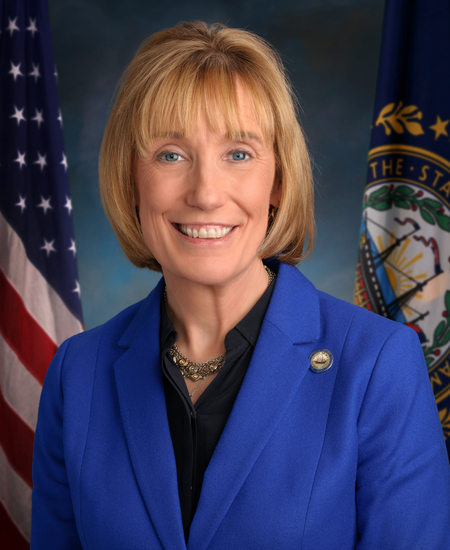
Sen. Margaret Wood Hassan
Sponsored bills
This resolution expresses support for the goals and ideals of National Retirement Security Month and acknowledges the need to raise public awareness of a variety of tax-preferred retirement vehicles.
This resolution designates September 2021 as National Kinship Care Month and encourages community stakeholders to work together to improve well-being for vulnerable children and families.
This resolution designates September 2021 as National Democracy Month.
University Cybersecurity Consortia Improvement Act of 2021 This bill provides that a consortium of universities, instead of one or more consortia, must be established by the Department of Defense (DOD) to advise DOD on specified cybersecurity matters.
Emerging Technologies Professional Military Education Act of 2021 This bill requires the Department of Defense (DOD) to establish executive education activities on emerging technologies for appropriate general and flag officers and senior executive-level civilian leaders that are designed to prepare such persons on how the technologies may be applied to military and business activities in DOD. Within five years, the executive education activities must be required training for general and flag officers and senior executive-level civilian leaders.
Pregnant Workers Fairness Act This bill prohibits employment practices that discriminate against making reasonable accommodations for qualified employees affected by pregnancy, childbirth, or related medical conditions. A qualified employee is an employee or applicant who, with or without reasonable accommodation, can perform the essential functions of the position, with specified exceptions. Specifically, the bill declares that it is an unlawful employment practice to fail to make reasonable accommodations to known limitations of such employees unless the accommodation would impose an undue hardship on an entity's business operation; require a qualified employee affected by such condition to accept an accommodation other than any reasonable accommodation arrived at through an interactive process; deny employment opportunities based on the need of the entity to make such reasonable accommodations to a qualified employee; require such employees to take paid or unpaid leave if another reasonable accommodation can be provided; or take adverse action in terms, conditions, or privileges of employment against a qualified employee requesting or using such reasonable accommodations. The bill sets forth enforcement procedures and remedies that cover different types of employees in relation to such unlawful employment practices. The Equal Employment Opportunity Commission must provide examples of reasonable accommodations that shall be provided to affected employees unless the employer can demonstrate that doing so would impose an undue hardship. The bill prohibits state immunity under the Eleventh Amendment to the Constitution from an action for a violation of this bill.
Guardianship Accountability Act of 20 21 This bill requires the Department of Health and Human Services (HHS) to create a National Resource Center on Guardianship for the publication of resources and data relating to court-determined adult guardianships. Further, HHS must award at least 5% of certain grant funds for state programs related to overseeing the administration of court-appointed guardian arrangements.
Performing Artist Tax Parity Act of 2021 This bill modifies the tax deduction for the expenses of performing artists (including commissions paid to managers or agents) to provide for a phaseout of such deduction for taxpayers whose adjusted gross income exceeds $100,000 ($200,000 for joint return filers). The $100,000 phaseout threshold is adjusted for inflation annually for taxable years beginning after 2021.
This bill directs the Department of the Treasury to submit a report to Congress on virtual currencies and their global use. The report must (1) assess how foreign countries use and mine virtual currencies; (2) identify, to the greatest extent practicable, the types and dollar value of virtual currency mined for FY2016-FY2022 within the United States and globally; and (3) identify vulnerabilities and opportunities with respect to virtual currency mining operations.