

Maddy summaryThis resolution designates April 2026 as Financial Literacy Month to raise public awareness about the importance of personal finance education. The bill calls on the federal government, states, schools, businesses, and other organizations to hold programs and activities during this month. It is based on data showing high levels of financial stress, debt, and a lack of financial education among many Americans.
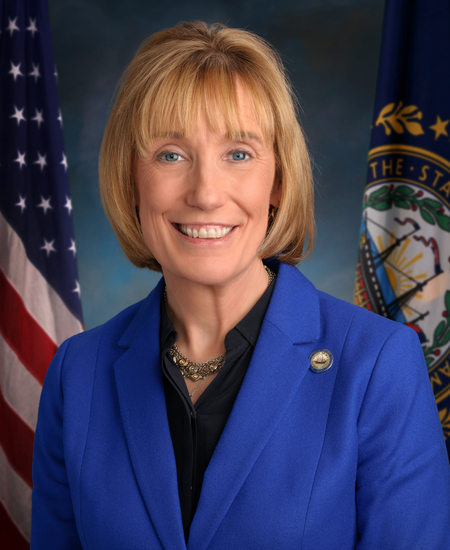
Sen. Margaret Wood Hassan
Sponsored bills
Maddy summaryThis Senate resolution designates the week of April 27 through May 1, 2026, as National Specialized Instructional Support Personnel Appreciation Week. It formally acknowledges the work of school staff such as counselors, social workers, and psychologists who support student learning and well-being.
Maddy summaryThis Senate resolution formally acknowledges April as Community College Month to honor the role of over 1,000 institutions in providing affordable higher education and workforce training. The bill does not change any laws or allocate funding; instead, it serves as a symbolic statement recognizing how these colleges support economic prosperity and serve diverse student populations. By highlighting statistics on enrollment, tuition costs, and economic impact, the resolution aims to raise public awareness about the value of community colleges without imposing new requirements.
Maddy summaryThe Know Your Labor Rights Act amends the National Labor Relations Act to require employers to post and electronically display notices explaining employees' labor rights in conspicuous locations. Under this bill, employers must also inform each new hire about the information contained in these notices, with the National Labor Relations Board providing the notice text to the public at no cost. The legislation establishes a penalty system where the Board can issue compliance orders and impose civil fines of up to $500 for each violation of the new posting requirements. These changes directly affect employers by mandating specific transparency measures and creating financial consequences for failing to meet them.
Maddy summaryThe Drug Deal Disclosure Act requires the Department of Health and Human Services to publicly release specific records regarding agreements between the federal government and major drug manufacturers starting in 2025. This law mandates the disclosure of contracts that include provisions such as reduced drug prices based on international rates, direct-to-consumer sales discounts, duty exemptions, and special treatment for Medicare programs. While the bill allows for the redaction of confidential pricing details, it prohibits withholding information based on political sensitivity or reputational harm and requires a detailed justification for any redactions. Additionally, the act mandates reports to Congress and independent analysis from the Congressional Budget Office and the Government Accountability Office to evaluate the economic and budgetary impacts of these agreements.
Maddy summaryThis Senate Resolution recognizes April 14, 2026, as "World Quantum Day." It supports the day's goals of celebrating the role of quantum physics in daily life and encourages schools and educators to observe it with activities that teach students about quantum physics and engage them in STEM fields.
Maddy summaryThe Medication Competition Act requires the Food and Drug Administration to publish specific expiration dates for legal protections on biological drugs. This rule applies to both new drugs approved after the law passes and older drugs that received protection before the law was enacted. By making these timelines public, the bill aims to help generic drug makers know exactly when they can start selling their own versions of these medicines. The change does not alter the length of the protection periods themselves but increases transparency regarding when those periods end.
Ensuring Access to Lower-Cost Medicines for Seniors Act This bill requires prescription drug plans under the Medicare prescription drug benefit to include generic drugs and biosimilars on their formularies. Specifically, the bill requires plans that use formularies to include generic drugs and biosimilars on the formularies and without any requirements (e.g., prior authorization requirements) that are more restrictive as compared to those for brand-name drugs and biologics. Plans that use cost-sharing tiers must also have specific tiers for generic drugs and biosimilars, in accordance with certain limitations.
Maddy summaryThe Foster Youth Education and Workforce Opportunity Act of 2026 expands federal support for young people who have experienced foster care by lowering the age eligibility for education and training vouchers from 16 to 14 years old. The bill increases the maximum voucher amount from $5,000 to $12,000 and extends the total time a youth can use these funds to six years, including time spent on remedial education. It also broadens the types of programs that can be funded to include registered apprenticeships, short-term training, and general equivalency degrees, while requiring states to simplify the application process and help youth overcome transportation barriers.
Maddy summaryThe Combating Illicit Xylazine Act places xylazine - a veterinary sedative increasingly found in illicit drug mixtures - into Schedule III of the Controlled Substances Act, subjecting it to federal regulation as a controlled substance. It specifically allows veterinary use without requiring registration of the ultimate user (e.g., pet owners or veterinarians) if xylazine is dispensed by a registered veterinarian or pharmacy with a vet prescription and used for animals owned by the user, under their care, or in authorized animal programs. The bill provides a one-year delay for labeling and packaging requirements and a 60-day delay for registration and recordkeeping for veterinary use to ease implementation. Additionally, it adds xylazine to the Arcos tracking system for controlled substances and mandates two congressional reports on illicit use prevalence within 18 months and 4 years of enactment.