Rachel Booth Act This bill provides eligibility for transitional compensation to dependents of members of the Armed Forces in situations where a member (1) has been convicted of a dependent-abuse offense in a civilian court but has been separated from duty for an offense other than the abuse offense, or (2) has been accused but not convicted of such an offense but has been determined to have committed the offense by a commander and required to forfeit pay and allowances pursuant to an offense other than the abuse offense.
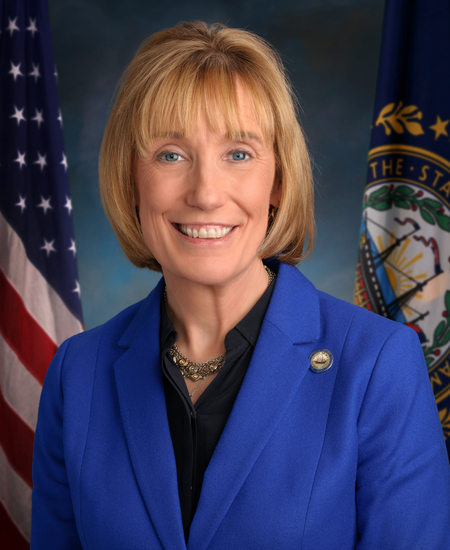
Sen. Margaret Wood Hassan
Sponsored bills
Camp Lejeune Justice Act of 2021 This bill allows certain individuals to sue and recover damages for harm from exposure to contaminated water at Camp Lejeune in North Carolina between August 1, 1953, and December 31, 1987. This action is available only to individuals who were exposed to contaminated water for at least 30 days. The bill prohibits the U.S. government from asserting specified immunity from litigation in response to such a lawsuit. The bill also prohibits an individual who brings such an action from bringing a separate tort action against the United States based on the same harm.
Maddy summaryThis bill requires the U.S. Postal Service to assign a single, unique ZIP code exclusively for the entire town of Swanzey, New Hampshire, within 180 days of the bill becoming law. It directly affects Swanzey residents and businesses by creating a dedicated ZIP code for mail delivery to the town. The key provision is the USPS mandate to establish this specific code, replacing any current multi-ZIP code system for the area.
Inspector General Reporting Modernization Act of 2021 This bill revises the required contents of semiannual reports submitted by inspectors general of certain federal departments, boards, commissions, corporations, and related entities.
John R. Lewis Voting Rights Advancement Act of 2021 This bill establishes new criteria for determining which states and political subdivisions must obtain preclearance before changes to voting practices may take effect. Preclearance is the process of receiving preapproval from the Department of Justice (DOJ) or the U.S. District Court for the District of Columbia before making legal changes that would affect voting rights. The bill also includes provisions related to federally protected activities at polling places and voting access on tribal lands. A state and all of its political subdivisions shall be subject to preclearance of voting practice changes for a 10-year period if 15 or more voting rights violations occurred in the state during the previous 25 years; or 10 or more violations occurred during the previous 25 years, at least 1 of which was committed by the state itself. A political subdivision as a separate unit shall also be subject to preclearance for a 10-year period if three or more voting rights violations occurred there during the previous 25 years. States and political subdivisions that meet certain thresholds regarding minority groups must preclear covered practices before implementation, such as changes to methods of election and redistricting. Further, states and political subdivisions must notify the public of changes to voting practices. Next, the bill authorizes DOJ to require states or political subdivisions to provide certain documents or answers to questions for enforcing voting rights. The bill also outlines factors courts must consider when hearing challenges to voting practices, such as the history of official voting discrimination in the state or political subdivision. In addition, the bill (1) includes certain protections for election workers, polling places, and election infrastructure; and (2) expands voting access on tribal lands.

Maddy summarySRES 410 is a Senate resolution recognizing October 2021 as National Cybersecurity Awareness Month. It supports efforts to educate the public on practical cybersecurity steps, such as using strong passwords, enabling multi-factor authentication, and avoiding phishing scams, while encouraging collaboration between government, businesses, and individuals to improve online safety. The resolution does not create new laws or requirements but affirms commitment to raising awareness about protecting personal data and critical infrastructure from cyber threats.
This bill requires the Office of the Under Secretary of Defense for Acquisition and Sustainment within the Department of Defense (DOD) to review unmanned aerial systems to determine and develop appropriate actions related to sourcing and industrial capacity. The bill also requires designated senior DOD officials to conduct annual assessments of workforce, infrastructure, and industrial base capabilities and capacity to support a strategy to support domestic manufacturing and industrial base capabilities to support future defense requirements. The Government Accountability Office must brief Congress and report on, among other topics, its findings related to the strategy, effectiveness, and responsibilities of the Assistant Secretary of Defense for Industrial Base Policy.
Administrative False Claims Act of 2021 This bill modifies provisions regarding fraud committed against the federal government. Specifically, the bill raises the maximum amount of a fraud claim that may be handled administratively from $150,000 to $1 million, allows responsibilities in the administrative process assigned to the Attorney General or an Assistant Attorney General to be delegated to other Department of Justice employees, and allows the government to recoup costs for investigating and prosecuting these frauds.
Emergency Relief for Servicemembers Act of 2021 This bill authorizes a servicemember to terminate specified contracts (e.g., contracts for commercial mobile service or internet service) that are entered into in relation to military orders for a permanent change of station if the member then receives a stop movement order in response to a local, national, or global emergency which prevents the member from using the services provided under the contract.
Medicare Mental Health Inpatient Equity Act of 2021 This bill removes the 190-day lifetime limit on inpatient psychiatric hospital services under Medicare.