This resolution (1) recognizes Girl Scouts of the United States of America for 110 years of providing girls with a safe, inclusive space where they can hone their skills and develop leadership abilities; and (2) congratulates all Girl Scouts who earned the Gold Award in 2021.
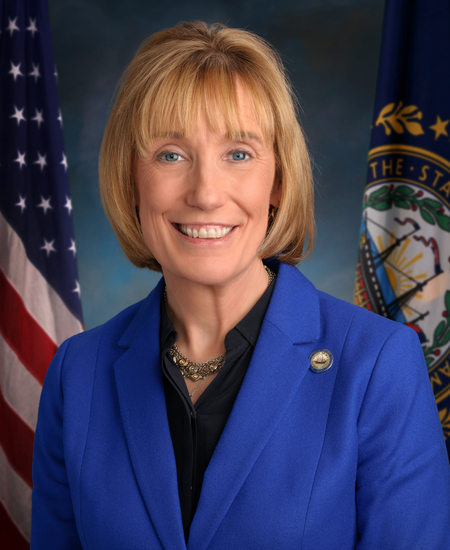
Sen. Margaret Wood Hassan
Sponsored bills
Dark Web Interdiction Act of 2022 This bill establishes enhanced criminal penalties for distributing controlled substances via the dark web. It also establishes other programs and requirements to address the use of the dark web for illicit drug activities. ( Dark web means the portions of the internet with hidden sites and services that (1) are not generally searchable, and (2) can only be accessed with specialized devices or services that conceal the identities and locations of users.) Specifically, the bill provides an enhanced criminal penalty for delivering, distributing, or dispensing controlled substances via the dark web. The bill also provides statutory authority for the Joint Criminal Opioid and Darknet Enforcement Task Force, which supports the investigation and prosecution of drug offenses committed via the dark web domestically and internationally. In addition, the Department of Justice must report on how and to what extent virtual currencies are used for opioid distribution via the dark web.
This resolution states that President Vladimir Putin of Russia has committed war crimes, as defined by the United Nations and other international bodies, by initiating an unprovoked war, repeatedly violating the sovereignty of Ukraine, and targeting civilian infrastructure and government facilities unrelated to legitimate military objectives.
This resolution designates March 2022 as National Women's History Month. The resolution also recognizes the celebration of such month as a time to reflect on the contributions that women have made to the United States.
Stop Russian Government and Oligarchs from Limiting Democracy Act of 2022 or the Stop Russian GOLD Act of 2022 This bill prohibits a U.S. person from engaging in a transaction with a foreign person who purchases, transacts in, or transports Russian gold.
Ban Russian Energy Imports Act This bill declares that a national emergency exists with respect to the aggression of Russia against Ukraine. During this emergency, the President must prohibit the importation of crude oil, petroleum, petroleum products, liquefied natural gas, and coal in which Russia or a Russian national has any interest. The bill exempts products that are already loaded or in transit at the time of this bill's enactment.
United States Enrichment Corporation Fund Termination and Transfer Act This bill terminates the U.S. Enrichment Corporation (USEC) Fund and rescinds all amounts currently in the fund. The fund was established to assist the USEC, a government corporation, with providing uranium enrichment services for the federal government and utilities that operate nuclear power plants. USEC was privatized in 1998, thus eliminating the need for the fund.
Emmett Till Antilynching Act This bill makes lynching a federal hate crime offense. Specifically, the bill imposes criminal penalties—a fine, a prison term of up to 30 years, or both—on an individual who conspires to commit a hate crime offense that results in death or serious bodily injury or that includes kidnapping or an attempt to kidnap, aggravated sexual abuse or an attempt to commit aggravated sexual abuse, or an attempt to kill.
Modernizing Access to our Public Land Act This bill directs the Department of the Interior, the Forest Service, and the U.S. Army Corps of Engineers to jointly develop and adopt interagency standards to ensure compatibility and interoperability among federal databases for the collection and dissemination of certain data. Specifically, these requirements shall apply to outdoor recreation data related to federal lands and used to depict locations at which recreation uses are available to the public. Each such department shall digitize and make publicly available on their websites, as applicable, geographic information system mapping data that specifies, with respect to the relevant department, all federal interests in private land, including easements, reservations, and rights-of-way to which the federal government does not have a fee title interest, and that may be used to provide recreational access to the federal land. Interior, the Forest Service, and the Corps of Engineers must digitize and publish geographic information system mapping data that includes status information as to whether roads and trails are open or closed, the dates on which roads and trails are seasonally opened and closed, the types of vehicles that are allowed on each segment of roads and trails, and the boundaries of areas where hunting or recreational shooting is regulated or closed.

Health Care for Burn Pit Veterans Act This bill updates policies and procedures related to Department of Veterans Affairs (VA) health care and benefits for veterans who have been exposed to toxic substances. Specifically, the bill extends the eligibility period for VA hospital care, medical services, and nursing home care for combat veterans who served after September 11, 2001, and were exposed to toxic substances, radiation, or other conditions, including those who did not enroll to receive VA care during the eligibility period. The VA must incorporate into its existing health care screening a screening to help determine potential exposures to toxic substances during military service. Among other requirements, the VA must also provide annual training to health care and benefits personnel with respect to veterans who were exposed to toxic substances; analyze total and respiratory disease mortality in veterans who served in specified locations on specified dates; conduct an epidemiological study on the health trends of veterans who served in the Armed Forces after September 11, 2001; conduct a study to determine trends in the rates of the incidence of cancer in veterans; publish a list of VA resources for veterans who were exposed to toxic substances, families and caregivers of such veterans, and survivors of such veterans who are receiving death benefits; and report on the data quality of the Individual Longitudinal Exposure Record and its usefulness in supporting veterans in receiving VA health care and benefits.