

Resources to Prevent Youth Vaping Act This bill directs the Food and Drug Administration (FDA) to collect user fees on products that it deems by regulation to be tobacco products, including electronic nicotine delivery systems, and addresses related issues. Currently, the FDA is authorized to collect user fees only on specified classes of tobacco products. The bill increases the total amount of such fees to be collected for FY2022. For each fiscal year after, the total amount of such fees shall be adjusted according to changes in a price index. Starting in FY2024, the FDA must assess user fees on classes of products that it has deemed by regulation to be tobacco products, unless the FDA fails to finalize a formula for assessing such fees on time. Once it is finalized, the FDA may only revise this formula by regulation. The bill also requires each tobacco manufacturer and importer to periodically submit certain information related to the tobacco products that it sells or distributes in the United States. The FDA must annually report to Congress about its use of such tobacco product fees.
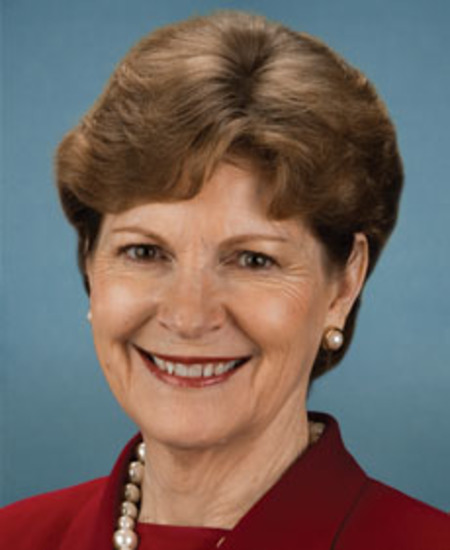
Sen. Jeanne Shaheen
Sponsored bills
Women's Retirement Protection Act This bill modifies the requirements for employer-sponsored pension plans to (1) extend spousal consent requirements that currently apply to defined benefit pension plans to defined contribution pension plans; and (2) allow certain long-term, part-time workers to participate in pension plans that include either a qualified cash or deferred arrangement or a salary reduction agreement. Financial product or service providers who sell retirement financial products or services must provide purchasers of their products or services an easily accessible link to the website of the Consumer Financial Protection Bureau to obtain information relating to retirement planning or later life economic security. The Women's Bureau of the Department of Labor shall award grants to certain community-based organizations to (1) improve the financial literacy of women who are working age or in retirement, and (2) assist low-income women and survivors of domestic violence in obtaining qualified domestic relations orders and the benefits they are entitled to through the orders.
Safe Schools Improvement Act of 2021 This bill requires states to direct their local educational agencies (LEAs) to establish policies that prevent and prohibit bullying and harassment of elementary and secondary school students. In particular, these policies must prohibit bullying and harassment based on race, color, national origin, sex, sexual orientation, gender identity, disability, or religion. Further, LEAs must provide (1) students, parents, and educational professionals with annual notice of the conduct prohibited in their disciplinary policies; (2) students and parents with grievance procedures that target such conduct; and (3) the public with annual data on the incidence and frequency of that conduct at the school and LEA level. The Department of Education must conduct and report on an independent biennial evaluation of programs and policies to combat bullying and harassment in elementary and secondary schools. The National Center for Education Statistics must collect state data to determine the incidence and frequency of the conduct prohibited by LEA disciplinary policies.
Protecting Access to Lifesaving Screenings Act of 2021 or the PALS Act This bill makes a series of changes relating to health insurance coverage of screening mammography. Specifically, the bill requires that any provision of law referring to current recommendations of the U.S. Preventive Services Task Force (USPSTF) with respect to breast cancer screening mammography be administered as if (1) the provision referred to USPSTF recommendations last issued before 2009; and (2) those recommendations applied to any screening mammography modality, including any digital modality of such a procedure. This requirement shall also apply to the Veterans Health Administration's policy on mammography screening for veterans. In addition, the bill preserves Medicare coverage for screening mammography, without a requirement for coinsurance, and expands the definition of screening mammography to include any digital modality of such a procedure. Further, the Centers for Medicare & Medicaid Services may not decrease the frequency with which screening mammography may be paid by Medicare for a woman over 39 years of age. In 2009, the USPSTF updated its guidelines to recommend against routine screening mammography for women between 40 to 49 years of age and to recommend biennial, instead of annual, screening mammography for most women between 50 to 74 years of age. In 2015, through the appropriations process, a three-year moratorium was placed on implementing the guidelines; the moratorium was subsequently renewed until January 1, 2023.
Semiquincentennial Commemorative Coin Act This bill directs the Department of the Treasury to mint and issue $25.00 gold coins, $2.50 silver coins, 25 cent clad coins, and proof silver $2.50 coins in commemoration of the 250th anniversary of the establishment of the United States. The designs of the coins shall be emblematic of the semiquincentennial anniversary of the establishment of the United States of America and celebrate 250 years of our nation. On each coin there shall be a designation of the value of the coin; an inscription of the years 1776-2026; and inscriptions of the words Liberty , In God We Trust , United States of America , and E Pluribus Unum . Treasury may issue coins under this bill only during the period beginning on January 1, 2026, and ending on December 31, 2026. All sales of coins issued shall include a surcharge as prescribed by this bill. All surcharges received by Treasury from the sale of such coins shall be paid to the America 250 Foundation to fund the restoration, rehabilitation, and interpretation of units of the U.S. National Park System and its related areas, as a legacy of the semiquincentennial commemoration.
Uyghur Forced Labor Prevention Act This bill imposes importation limits on goods produced using forced labor in China, especially the Xinjiang Uyghur Autonomous Region, and imposes sanctions related to such forced labor. The Department of Homeland Security shall report to Congress a strategy for preventing the importation of goods produced in China using forced labor. The strategy must contain certain information, including a list of entities working with the government in Xinjiang to move forced labor or Uyghurs, Kazakhs, Kyrgyz, or members of other persecuted groups out of Xinjiang. The U.S. Customs and Border Protection shall generally presume that goods produced by these entities and certain other entities, generally those sourcing material from Xinjiang or involved with Chinese government forced labor programs, are barred from importation into the United States. The bill also expands existing asset- and visa-blocking sanctions related to Xinjiang to cover foreign individuals and entities responsible for serious human rights abuses in connection with forced labor. The Department of State shall report to Congress a strategy to enhance international awareness of forced labor in Xinjiang and to address such forced labor.
Stop the Importation and Manufacturing of Synthetic Analogues Act of 2021 or the SIMSA Act of 2021 This bill establishes a process and requirements for regulating substances that have a similar chemical structure and actual or predicted effect as a controlled substance that is currently subject to such regulation because of its potential for abuse or dependence.
Fighting Homelessness Through Services and Housing Act This bill requires the Health Resources and Services Administration to award grants to local and tribal government entities for the planning and implementation of programs to address homelessness.
Golden-preneurship Act This bill establishes the Golden Entrepreneurs Training and Demonstration Curriculum within the Office of Entrepreneurial Development of the Small Business Administration to provide small businesses owned by individuals who are 60 years of age or older with tools to accelerate the growth of those businesses. The bill also rescinds unobligated balances of amounts made available for the Community Navigator Pilot Program, which was an initiative designed to reduce barriers for underrepresented and underserved entrepreneurs in accessing small business support programs.
This resolution (1) supports the designation of June 2021 as National Dairy Month, and (2) encourages the people of the United States to visit with dairy producers to learn more about agriculture and the vital role dairy producers play in our global food system.