

John R. Lewis Voting Rights Advancement Act of 2021 This bill establishes new criteria for determining which states and political subdivisions must obtain preclearance before changes to voting practices may take effect. Preclearance is the process of receiving preapproval from the Department of Justice (DOJ) or the U.S. District Court for the District of Columbia before making legal changes that would affect voting rights. The bill also includes provisions related to federally protected activities at polling places and voting access on tribal lands. A state and all of its political subdivisions shall be subject to preclearance of voting practice changes for a 10-year period if 15 or more voting rights violations occurred in the state during the previous 25 years; or 10 or more violations occurred during the previous 25 years, at least 1 of which was committed by the state itself. A political subdivision as a separate unit shall also be subject to preclearance for a 10-year period if three or more voting rights violations occurred there during the previous 25 years. States and political subdivisions that meet certain thresholds regarding minority groups must preclear covered practices before implementation, such as changes to methods of election and redistricting. Further, states and political subdivisions must notify the public of changes to voting practices. Next, the bill authorizes DOJ to require states or political subdivisions to provide certain documents or answers to questions for enforcing voting rights. The bill also outlines factors courts must consider when hearing challenges to voting practices, such as the history of official voting discrimination in the state or political subdivision. In addition, the bill (1) includes certain protections for election workers, polling places, and election infrastructure; and (2) expands voting access on tribal lands.
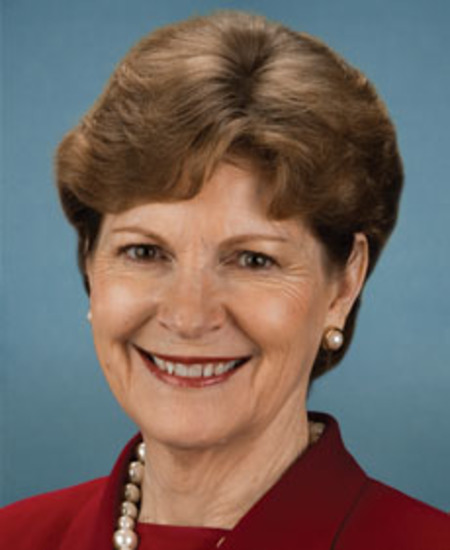
Sen. Jeanne Shaheen
Sponsored bills
Promoting American Energy Jobs Act of 2021 This bill requires the Department of Energy to establish an Energy Jobs Council to (1) conduct a survey of employers in the energy, energy efficiency, and motor vehicle sectors of the U.S. economy; (2) preform an analysis of the employment figures and demographics in those sectors; and (3) publish a U.S. Energy and Employment Report that is based on the survey and analysis.
Smart Manufacturing Leadership Act of 2021 This bill addresses the productivity and energy efficiency of the manufacturing sector as well as the development of smart manufacturing technologies (certain advanced technologies in information, automation, monitoring, computation, sensing, modeling, and networking). Specifically, the Department of Energy (DOE) may make grants to states for supporting the implementation of smart manufacturing technologies. States must use those grants to (1) provide access to shared supercomputing facilities to small- and medium-sized manufacturers, (2) fund research and development of transformational manufacturing processes and materials technology that advance smart manufacturing, and (3) provide tools and training to aid the adoption of energy management systems and implement smart manufacturing technologies in the manufacturers' facilities. In addition, DOE must expand the scope of technologies covered by its Industrial Assessment Centers to (1) include smart manufacturing technologies and practices, and (2) equip the centers' directors with the training and tools necessary to provide technical assistance in smart manufacturing technologies and practices. DOE must also (1) study how it can increase access to existing high-performance computing resources in its National Laboratories, and (2) facilitate access to the laboratories by small- and medium-sized manufacturers.
Preventing Vigilante Stalking Act of 2021 This bill increases the maximum prison term for a stalking offense, if the offense is committed with the intent to obtain health care information of an individual or to prevent the health care decisions of an individual.
Commerce, Justice, Science, and Related Agencies Appropriations Act, 2022 This bill provides FY2022 appropriations to the Department of Commerce, the Department of Justice (DOJ), the science agencies, and several related agencies. The bill provides appropriations to the Department of Commerce for the International Trade Administration, the Bureau of Industry and Security, the Economic Development Administration, the Minority Business Development Agency, Economic and Statistical Analysis, the Bureau of the Census, the National Telecommunications and Information Administration, the U.S. Patent and Trademark Office, the National Institute of Standards and Technology, the National Oceanic and Atmospheric Administration, and Departmental Management. The bill provides appropriations to DOJ for General Administration; the Executive Office for Immigration Review; the Office of Inspector General; the U.S. Parole Commission; Legal Activities; the U.S. Marshals Service; the National Security Division; Interagency Law Enforcement; the Federal Bureau of Investigation; the Drug Enforcement Administration; the Bureau of Alcohol, Tobacco, Firearms and Explosives; and the Federal Prison System. The bill also provides appropriations to DOJ for state and local law enforcement activities, including the Office on Violence Against Women, the Office of Justice Programs, and Community Oriented Policing Services (COPS). The bill provides appropriations for science agencies, including the Office of Science and Technology Policy, the National Space Council, National Aeronautics and Space Administration (NASA), and the National Science Foundation. The bill provides appropriations to related agencies, including the Commission on Civil Rights, the Equal Employment Opportunity Commission, the U.S. International Trade Commission, the Legal Services Corporation, the Marine Mammal Commission, the Office of the U.S. Trade Representative, the State Justice Institute, and the Commission on the State of U.S. Olympics and Paralympics. The bill also sets forth requirements and restrictions for using funds provided by this and other appropriations acts.
Improving Seniors' Timely Access to Care Act of 2021 This bill establishes several requirements and standards relating to prior authorization processes under Medicare Advantage (MA) plans. Specifically, MA plans must (1) establish an electronic prior authorization program that meets specified standards, including the ability to provide real-time decisions in response to requests for items and services that are routinely approved; (2) annually publish specified prior authorization information, including the percentage of requests approved and the average response time; and (3) meet other standards, as set by the Centers for Medicare & Medicaid Services, relating to the quality and timeliness of prior authorization determinations.
Comforting Our Military Families through On-base or Remote Treatment Act of 2021 or the COMFORT Act of 2021 This bill authorizes the Office of Military Family Readiness Policy within the Department of Defense (DOD) to coordinate programs and activities for the provision of nonmedical counseling services to military families through the DOD Military and Family Life Counseling Program. Under the bill, nonmedical counseling services means mental health care services that are nonclinical, short-term, and solution-focused to address topics related to personal growth, development, and positive functioning. The bill authorizes mental health professionals to provide non-medical counseling services regardless of where the provider or recipient is located so long as the provision of service is within the scope of the authorized duties of the provider. For purposes of the bill, mental health professionals include licensed or certified mental health professionals or members of the uniformed services, civilian DOD employees, or DOD contractors.
Save Our Servicemembers Act of 2021 This bill requires the Office of the Under Secretary of Defense for Personnel and Readiness within the Department of Defense (DOD) to evaluate and standardize DOD's suicide prevention efforts. Specifically, the bill directs the Defense Suicide Prevention Office to collaborate with each military department to (1) develop and implement a process to ensure that individual nonclinical suicide prevention efforts are assessed for effectiveness, and (2) develop consistent suicide-related definitions for use throughout DOD. The bill also requires the use of such suicide-related definitions in any updated policies of DOD or each military department.
State, Local, Tribal, and Territorial Fiscal Recovery, Infrastructure, and Disaster Relief Flexibility Act This bill allows states, tribes, territories, and localities to use certain COVID-19 relief funds for new categories of spending, including for natural disasters and infrastructure projects. It also makes changes to expenditure deadlines and other aspects of this funding. Specifically, recipients may use funds for emergency relief from natural disasters and associated negative economic impacts of natural disasters. In addition, recipients may use a portion of their COVID-19 relief funds for designated infrastructure projects, such as nationally significant freight and highway projects. Furthermore, the bill allows recipients to expend COVID-19 relief funds on these types of infrastructure projects until September 30, 2026. Under current law, recipients must expend the funds by December 31, 2024. Other changes in the bill include (1) modifying eligibility and allocation requirements for funding set aside for counties and Indian tribes that are near public lands, (2) allowing Indian tribes an additional year to expend their COVID-19 relief funds, and (3) establishing a process for government entities to decline COVID-19 relief funds and requiring any declined funds to be used to reduce the federal deficit.
Freedom to Vote Act This bill addresses voter registration and voting access, election integrity and security, redistricting, and campaign finance. Specifically, the bill expands voter registration (e.g., automatic and same-day registration) and voting access (e.g., vote-by-mail and early voting). It also limits removing voters from voter rolls. Next, the bill establishes Election Day as a federal holiday. The bill declares that the right of a U.S. citizen to vote in any election for federal office shall not be denied or abridged because that individual has been convicted of a criminal offense unless, at the time of the election, such individual is serving a felony sentence. The bill establishes certain federal criminal offenses related to voting. In particular, the bill establishes a new criminal offense for conduct (or attempted conduct) to corruptly hinder, interfere with, or prevent another person from registering to vote or helping someone register to vote. Additionally, the bill sets forth provisions related to election security, including by requiring states to conduct post-election audits for federal elections. The bill outlines criteria for congressional redistricting and generally prohibits mid-decade redistricting. The bill addresses campaign finance, including by expanding the prohibition on campaign spending by foreign nationals, requiring additional disclosure of campaign-related fundraising and spending, requiring additional disclaimers regarding certain political advertising, and establishing an alternative campaign funding system for certain federal offices.