

Maddy summaryThis bill repeals the EPA's 2024 emissions standards for light- and medium-duty vehicles and amends the Clean Air Act to prevent future regulations from mandating specific technologies or limiting new vehicle availability based on engine type. It directly affects the EPA's regulatory authority and vehicle manufacturers by blocking technology mandates and restrictions on engine types in new vehicles. Key provisions require the EPA to revise regulations within 24 months to align with these changes, ensuring no federal rules limit vehicle choices based on engine technology. The bill's title is misleading, as it does not address automobile retail sales or consumer choice at dealerships.
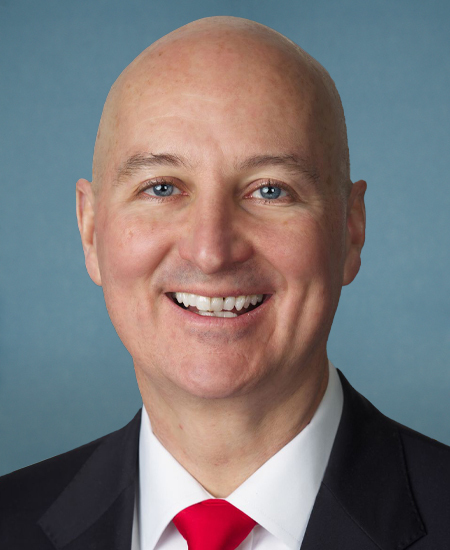
Sen. Pete Ricketts
Sponsored bills
Maddy summaryThis bill amends the Clean Air Act to prevent states from imposing standards that limit the sale or use of new internal combustion engine vehicles. It adds a new requirement that state standards must not directly or indirectly restrict such vehicles, and it prohibits the EPA from considering pre-2025 state standards as valid under existing waivers. The bill also requires the EPA to revoke certain existing waivers granted between January 2022 and the bill's enactment date if those waivers don't comply with the new standard. This directly affects states with their own vehicle emission rules (like California's ZEV program), limiting their ability to regulate internal combustion engine vehicles through EPA-approved standards.
Veterans 2nd Amendment Protection Act of 2025 This bill prohibits the Department of Veterans Affairs (VA) from transmitting certain information to the National Instant Criminal Background Check System (NICS) utilized by licensed importers or dealers of firearms. Specifically, the bill prohibits the VA from transmitting personally identifying information of a veteran or a beneficiary to the NICS solely on the basis that such veteran or beneficiary has an appointed fiduciary to manage their benefits, unless there is an order or finding of a judicial authority that such veteran or beneficiary is a danger to themselves or others.
Maddy summaryThe Restore VA Accountability Act of 2025 establishes new rules for disciplining VA supervisors and management officials (excluding senior executives and political appointees) for poor performance or misconduct. It requires the VA Secretary to use specific, written criteria - like the offense's severity, the employee's role, and past record - when deciding on removal, demotion, or suspension, and mandates decisions within 15 business days. The bill creates an internal grievance process for affected employees and strengthens whistleblower protections by requiring Special Counsel approval before disciplining someone who disclosed wrongdoing. It also limits judicial review to cases of arbitrary or capricious decisions and explicitly prohibits courts from reducing penalties. The law applies to VA employees covered under the bill's definition, effective from the 2017 VA Accountability Act's enactment date.
Maddy summaryS 912, the Securing American Agriculture Act, requires the U.S. Department of Agriculture (USDA) to annually assess U.S. dependency on critical agricultural inputs supplied by the People’s Republic of China, including fertilizers, seeds, veterinary drugs, and equipment. The bill directs the USDA to report to Congress on supply chain vulnerabilities and recommend actions to reduce reliance on Chinese sources, such as promoting domestic or nearby production. It mandates that any private data shared for this assessment be aggregated and anonymized to protect business confidentiality, prohibiting disclosure of identifiable information. This bill directly affects USDA operations and the agricultural sector by establishing a formal process to evaluate and address supply chain risks.
Maddy summaryThis bill amends the Natural Gas Act to give the Federal Energy Regulatory Commission (FERC) exclusive authority to approve or deny applications for LNG terminals (including those for export or import). It requires FERC to deem such projects "consistent with the public interest" when making decisions. The bill also clarifies that the President retains existing authority under laws like the International Emergency Economic Powers Act to block LNG exports to countries designated as "state sponsors of terrorism." This directly affects LNG terminal developers and FERC, streamlining approval processes while preserving presidential sanctions powers.
Maddy summaryThe ACRE Act of 2025 excludes interest income from certain rural and agricultural loans from taxable income for specific lenders. It directly affects qualified lenders (like banks, farm credit institutions, and insurance companies) and borrowers securing loans for rural property, including single-family homes in rural areas or agricultural land. Key provisions allow lenders to not count interest on qualifying loans as taxable income, provided the loans are secured by eligible rural/agricultural property, don’t exceed $750,000 for single-family homes, and avoid "foreign adversary entities" (like China, Russia, or Iran). The bill also requires a Treasury report on the policy’s impact after five years.
Maddy summaryThis bill increases tax benefits for working families by expanding child care tax credits. It raises the employer-provided child care credit from 25% to 50% of qualified expenses (with the maximum credit increasing from $150,000 to $500,000), and adds a new refundable household care credit allowing up to 50% of eligible expenses (capped at $5,000 for one child or $8,000 for two+ children). Small businesses receive enhanced benefits, with a 60% credit rate and higher maximum ($600,000) for qualifying employers. The changes directly affect working parents, caregivers, and small businesses that provide or support child care.
Maddy summarySCONRES 8 is a Senate concurrent resolution supporting the Local Radio Freedom Act. It urges Congress not to impose a new fee or charge on local radio stations for playing music over the air, or on businesses like bars and restaurants that play radio broadcasts publicly. The resolution argues that such a fee would disrupt the current system where radio stations provide free promotional support to the music industry and essential local services like emergency weather updates. It claims the existing model has fostered a thriving music and broadcasting sector without harming small businesses or consumers. This resolution does not create law but expresses congressional support for maintaining the current fee-free system.
Maddy summaryThis bill amends federal education law to prohibit federally funded athletic programs from allowing individuals assigned male at birth to participate in sports designated for women or girls. It defines "sex" for this purpose as biological sex at birth, based on reproductive anatomy and genetics. The law directly affects schools, colleges, and sports organizations receiving federal funding. Violations would constitute a breach of Title IX, requiring programs to exclude individuals whose sex is male from women's or girls' athletic teams.