

Maddy summaryThis bill imposes U.S. sanctions on the Popular Resistance Committees (PRC) and related entities following the October 7, 2023, attacks. It requires the President to block PRC members' U.S. assets and deny visas to individuals affiliated with the group, including officials, agents, or affiliates, starting 90 days after enactment. The bill also mandates a report within 90 days on whether the PRC and another group called "Lions' Den" meet criteria for formal terrorist designation under U.S. law. These sanctions directly affect PRC members, their affiliates, and any groups operating under the PRC's umbrella, restricting their financial access and U.S. entry.
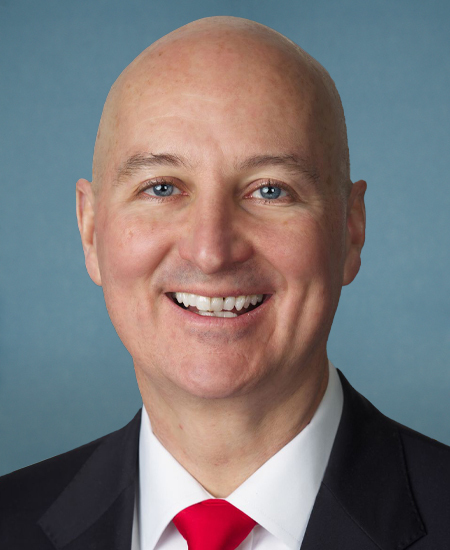
Sen. Pete Ricketts
Sponsored bills
Financial Integrity and Regulation Management Act or the FIRM Act This bill prohibits the consideration of reputational risk by federal banking agencies when regulating, examining, or supervising a depository institution or credit union. The bill defines reputational risk as the potential for negative publicity or public attention to decrease confidence in the institution, lead to litigation, reduce revenues, or result in other adverse impacts to the institution. Agencies must report on the implementation of this bill.
Maddy summaryThis bill repeals federal waivers that allow California to set its own vehicle and engine emission standards under the Clean Air Act. It directly affects California's Air Resources Board (CARB), prohibiting the state from adopting or enforcing standards for nonroad engines (like construction equipment, farm vehicles, and locomotives) or new motor vehicles. Key provisions include removing federal authorization for California's vehicle standards (Section 177) and invalidating all existing waivers for state emission rules. The bill would eliminate California's ability to enforce its own emission requirements for these categories, shifting authority entirely to federal standards.
Maddy summaryThis bill expands the Work Opportunity Tax Credit to include military spouses. It adds "qualified military spouse" as a new category eligible for the credit, meaning employers who hire spouses of active-duty service members can claim the tax benefit. To qualify, a spouse must be certified by a local agency as married to an Armed Forces member at the time of hire. The change applies to hires occurring after the law's effective date, directly affecting military spouses seeking employment and employers who hire them.
Maddy summaryThis bill, the Major Richard Star Act (S 1032), allows veterans with combat-related disabilities to receive both their military retired pay and Veterans Affairs disability compensation simultaneously. It amends U.S. Code sections to remove the automatic reduction in retired pay that previously forced these veterans to choose between the two payments. The key change ensures veterans with combat-related disabilities qualify for full retired pay without offset against their VA disability benefits, effective for payments starting after the bill's enactment date. This directly affects veterans receiving military retired pay under Chapter 61 who also qualify for VA disability compensation for combat-related injuries.
Maddy summaryThis bill amends federal law to clarify the legal definition of "firearm silencer" and "firearm muffler" under Title 18. It defines these devices as any component designed to reduce firearm noise that attaches to a firearm, including the outer tube or primary housing of such devices. The law directly affects manufacturers, dealers, and owners of silencers by establishing a specific regulatory definition for these products. This definition change, rather than creating new restrictions, ensures consistent application of existing firearm laws to silencer components.
Maddy summaryThe FIGHT China Act of 2025 restricts U.S. investments in Chinese companies with ties to China's military or surveillance sectors. It prohibits U.S. persons from engaging in transactions involving "prohibited technologies" such as advanced semiconductors (with specific technical specifications), AI systems, quantum computing, and hypersonic weapons, while requiring notification for certain "notifiable technology" investments. The bill mandates that U.S. investors divest from companies on the Non-SDN Chinese Military-Industrial Complex Companies List within one year of enactment. It establishes a process for identifying Chinese entities subject to these restrictions, with annual reports to Congress required for seven years.
Maddy summaryThis bill amends the Higher Education Act to require colleges receiving federal funds to disclose how they handle "civil disturbances" (defined as protests, riots, or strikes disrupting campus safety or learning) in their security policies. It directly affects institutions of higher education that receive federal student aid or other HEA-related funding. Key provisions include adding a specific requirement for schools to report on responding to such disruptions and mandating accreditors to monitor compliance with this new security reporting standard. The law does not prohibit protests but changes how schools must document and address campus disruptions that interfere with safety or education.
Maddy summaryThis bill prohibits U.S. energy, mining, and manufacturing companies deemed "integral to national interests" from complying with foreign environmental or social regulations (like the EU's Corporate Sustainability Due Diligence Directive). It specifically targets entities generating at least 25% of revenue from extractive activities (mining, fossil fuels) or manufacturing, blocking their adherence to foreign rules requiring impact assessments or reporting. Companies facing hardship can petition the President for exemptions within 30 days, considering economic impacts and national security. The law also prevents U.S. courts from enforcing foreign judgments against companies for non-compliance and allows civil lawsuits for adverse actions taken due to such regulations.
Maddy summaryS 990, the Freedom to Haul Act of 2025, prohibits the Environmental Protection Agency (EPA) from implementing or enforcing Phase 3 greenhouse gas emissions standards for heavy-duty vehicles (finalized in April 2024). It amends the Clean Air Act to require that future emissions rules for vehicles cannot mandate specific technologies or limit the availability of new trucks based on engine type. This directly affects EPA regulatory authority and vehicle manufacturers, ensuring a broader range of new truck options remains available. The bill focuses on preventing regulatory restrictions on vehicle choice, not on emissions outcomes.