

Maddy summaryThis bill would deny federal tax deductions for medical expenses related to gender transition procedures and prohibit federal funding through Medicaid, Medicare, and essential health benefits for such procedures. It defines gender transition procedures broadly to include various hormonal treatments and surgeries, while excluding certain medical conditions like disorders of sex development and specific medical emergencies. The bill would affect individuals seeking gender transition care who rely on federal health programs for coverage. The provisions would apply to services furnished after the bill's enactment, with specific exclusions for certain medically necessary treatments.
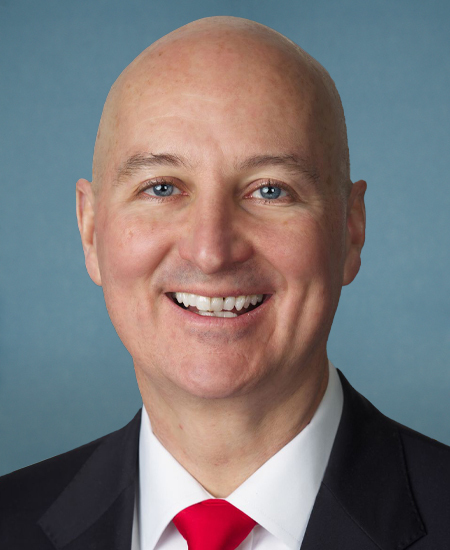
Sen. Pete Ricketts
Sponsored bills
Insurance Data Protection Act This bill limits the ability of federal entities to compel insurance companies to share information. Specifically, the bill eliminates the subpoena power of the Federal Insurance Office. Under current law, the office has the power to subpoena information from insurers to, among other purposes, identify issues that could contribute to a systemic crisis in the insurance industry or the U.S. financial system. The bill also eliminates the ability of the Office of Financial Research to subpoena insurance companies. When seeking to collect insurance company data under specified consumer protection laws, a financial regulator must obtain the data from other regulators or from publicly available sources if possible. Otherwise, the financial regulator may only collect this data directly from the insurance company if the regulator complies with the Paperwork Reduction Act.
Maddy summaryThe Stand with Israel Act would prohibit U.S. federal funds from being used to pay the U.S. share of United Nations dues or contributions to UN programs, specialized agencies, or related entities if the UN or a UN entity expels, downgrades, or suspends Israel's membership or restricts Israel's full and equal participation as a member state. This means the U.S. government would withhold payments to the UN in cases where the UN takes such actions against Israel. The bill directly affects the Department of State and other federal agencies responsible for UN funding, requiring them to block these payments under specified conditions. It does not compel the UN to act but would prevent U.S. financial support in response to UN decisions impacting Israel's membership status.
Maddy summaryThis bill directs the Department of Education to use the International Holocaust Remembrance Alliance (IHRA) definition of antisemitism when reviewing discrimination complaints under Title VI of the Civil Rights Act. It specifically applies to cases involving discrimination based on Jewish ancestry or ethnic characteristics in schools and programs receiving federal funding. The bill clarifies that this guidance does not expand the Department’s authority, alter existing discrimination standards, or affect First Amendment rights. It aims to ensure consistent enforcement against antisemitism in federally funded education settings, building on existing Department practices since 2019.
Maddy summarySRES 186 designates April 29, 2025, as National Fentanyl Awareness Day to raise public awareness about the dangers of counterfeit fentanyl pills. The resolution specifically aims to inform families and young people about how fake pills - often disguised as legitimate medications - contribute to overdose deaths, citing that illicit fentanyl was involved in 81% of drug deaths among youth aged 14-23 in 2023. It does not create new laws or funding but formally supports existing efforts to combat counterfeit pills and encourages awareness campaigns. The resolution highlights alarming statistics, including 51,010 fentanyl-related overdose deaths in 2024 and low youth awareness (only 55% of teens knew about counterfeit pills).
Maddy summaryThis is a ceremonial Senate resolution (SRES 187), not a legislative bill. It formally recognizes April 25, 2025, as National Arbor Day to celebrate the 153rd anniversary of Arbor Day's founding on April 10, 1872. The resolution encourages the public to participate in Arbor Day activities focused on tree planting and environmental stewardship, but it does not create new laws, programs, or obligations. It serves solely as a symbolic acknowledgment of Arbor Day's history and purpose, with no direct impact on individuals, communities, or policy.
Maddy summaryThe Affordable Housing Credit Improvement Act of 2025 updates the Low-Income Housing Tax Credit program to increase affordability and accessibility for low-income households. It raises state allocation amounts through revised per capita calculations, modifies income eligibility rules to better serve extremely low-income households, and adds protections for domestic violence victims in housing. The bill expands "difficult development areas" to include rural areas and Indian lands, and changes the program's name from "Low-Income Housing Credit" to "Affordable Housing Credit" to better reflect its purpose. These changes aim to make affordable housing more accessible while improving transparency and accountability in the program's implementation.
Maddy summaryThis bill amends the Immigration and Nationality Act to expand the definition of "aggravated felonies" by adding "sexual assault and aggravated sexual violence" to the list of crimes triggering mandatory deportation for non-citizens. It directly affects non-citizens convicted of these specific sexual offenses, making them subject to automatic deportation under immigration law. The key change is adding this provision to Section 101(a)(43) of the Immigration and Nationality Act, which defines aggravated felonies. This policy shift would expand the scope of offenses classified as deportation triggers without creating new enforcement procedures.
Maddy summaryThe Investment Accelerator Act of 2025 establishes a new office within the Department of Commerce called the United States Investment Accelerator. It aims to help investors navigate government regulations for major projects valued at over $1 billion, reduce unnecessary regulatory barriers, and boost collaboration with state governments and national research labs. The Accelerator will coordinate with existing programs like the CHIPS Office and must submit annual reports to Congress on its activities. This bill directly affects large-scale domestic and foreign investors, state governments, and federal agencies managing investment processes.
Maddy summaryThis bill amends federal murder law to treat fentanyl distribution causing death as first-degree murder. It specifically targets individuals who distribute fentanyl (or certain analogues) in quantities of 2 grams or more (or 0.5 grams for analogues) and who know or should know the substance contains fentanyl, resulting in death. Those convicted face the death penalty or life imprisonment. The law directly affects drug distributors whose actions cause fatal overdoses, shifting prosecution from drug trafficking charges to capital murder under federal law.