

Maddy summaryS 1705, the Chip Security Act, requires U.S. companies exporting specific advanced integrated circuits (used in AI systems and high-performance computing) to install location verification technology before shipping them abroad. It directly affects manufacturers and exporters of chips classified under U.S. export control numbers like 3A090 or 4A090. The bill mandates that these chips include security mechanisms to verify their location and prevent diversion or tampering, with companies needing to report suspicious activity like unauthorized location changes. The Commerce Secretary must implement these requirements within 180 days and conduct annual assessments to update security standards. This aims to strengthen compliance with export laws and protect national security by securing chip supply chains.
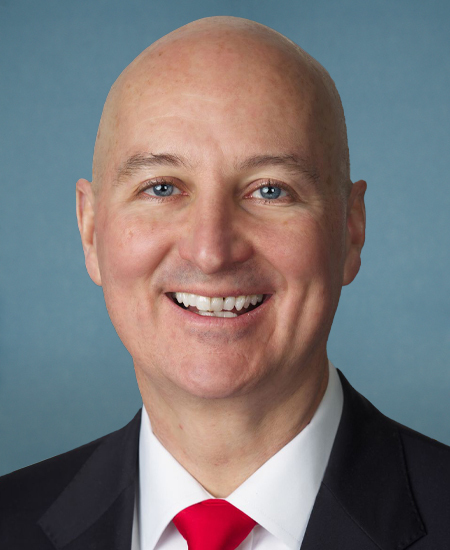
Sen. Pete Ricketts
Sponsored bills
Maddy summaryS 1675 would amend federal death penalty law to add a new aggravating factor for capital sentencing. Specifically, it would allow the death penalty to be considered if a defendant is an alien who entered or remained in the U.S. illegally and was convicted of killing, attempting to kill, or conspiring to kill a U.S. citizen. This provision directly affects defendants in federal murder cases who meet both criteria: violating immigration laws and committing violent crimes against citizens. The bill changes sentencing guidelines by expanding the circumstances under which the death penalty could be applied.
Maddy summaryThis bill creates "Workforce Pell Grants" to support students in short-term, job-focused training programs instead of traditional degree programs. It directly affects students enrolled in state-approved programs lasting 8-15 weeks (150-600 hours) that lead to portable credentials in high-demand fields, not graduate degrees or programs exceeding 600 hours. Key provisions require programs to meet state-determined job placement (70%+ within 180 days), earnings standards (median earnings exceeding 150% of poverty line), and academic credit transferability. The program starts July 1, 2026, replacing standard Pell Grants for eligible short-term training while preventing double-benefits with other aid.
Maddy summaryThis bill increases tax deductions for small businesses and manufacturers by raising limits on expensing equipment and assets. It permanently extends a business interest deduction rule and boosts the Section 179 deduction cap from $1 million to $2.5 million (with the phaseout threshold rising from $2.5 million to $4 million). The changes apply to property placed in service after December 31, 2024, and include inflation adjustments starting in 2025. These provisions directly benefit eligible small businesses and manufacturers by reducing their taxable income when purchasing qualifying equipment.
Maddy summaryThis bill allows businesses to immediately deduct research and development (R&D) costs instead of spreading them over 60 months, directly benefiting companies investing in innovation. It increases the refundable R&D credit cap for small businesses from $250,000 to $750,000 over time, with specific phase-in amounts starting in 2025. Additionally, it expands access for startups by raising the gross receipts threshold for eligibility from $5 million to $15 million and increasing credit rates for qualified small businesses. These changes aim to make R&D tax incentives more accessible and valuable for smaller companies and new ventures.
Maddy summaryThis bill (S 1612) prevents U.S. funding for United Nations agencies if Palestine gains any status beyond observer status. It amends existing laws to replace "full membership" with "any status, rights, or privileges beyond observer status" in U.S. funding rules for UN agencies. This would block U.S. financial support for UN bodies if Palestine achieves full membership or equivalent standing. The bill directly affects U.S. foreign aid policy toward UN agencies and Palestine's potential UN representation.
Maddy summaryThe MOMS Act establishes a federal website called pregnancy.gov that will connect pregnant and postpartum women with local resources for healthcare, housing, childcare, and other support services. It creates grant programs for nonprofits that assist women in carrying pregnancies to term, with restrictions prohibiting these organizations from providing or referring for abortion services. The bill also amends child support laws to allow for child support obligations to begin at conception for unborn children, with payment amounts determined by courts based on the best interests of the mother and child. Additionally, it provides grants for telehealth equipment to improve prenatal and postnatal care access in rural and medically underserved areas.
Maddy summaryThe Overtime Wages Tax Relief Act would create a new tax deduction for eligible workers, allowing them to subtract up to $10,000 of their overtime pay (or $20,000 for joint tax returns) from their taxable income. This deduction phases out for higher earners, reducing by $50 for every $1,000 their income exceeds $100,000 (or $200,000 for joint returns). To qualify, overtime pay must be at 1.5 times the regular rate for hours worked beyond 40 in a week, as defined by the Fair Labor Standards Act or a collective bargaining agreement. The bill also requires employers to report overtime pay on tax forms and adjusts withholding procedures, effective for tax years beginning after December 31, 2025.
Maddy summarySRES 203 is a symbolic Senate resolution designating May 2025 as "Renewable Fuels Month" to recognize the role of renewable fuels. It does not create new laws but formally acknowledges four specific benefits: renewable fuels' contribution to reducing carbon emissions, lowering consumer fuel prices, supporting rural economies, and decreasing reliance on foreign energy sources. The resolution was introduced by Senators Ricketts, Grassley, Ernst, and others, with supporting details highlighting ethanol and biodiesel industry impacts like job creation and emissions reductions. This resolution has no binding effect but serves as a formal statement of congressional recognition.
Maddy summaryThis bill requires the Director of the Office of Management and Budget (OMB) to review how federal agencies (including Defense and Civilian agencies like the Pentagon or Social Security Administration) select contractors using the "lowest price technically acceptable" method for purchases. The review specifically examines whether this common procurement practice creates national security risks. The OMB Director must complete the review and submit a report to Congress (specifically the House Oversight Committee and Senate Homeland Security Committee) within 180 days of the bill becoming law. The bill does not change current procurement rules but mandates this review to assess potential security impacts.