

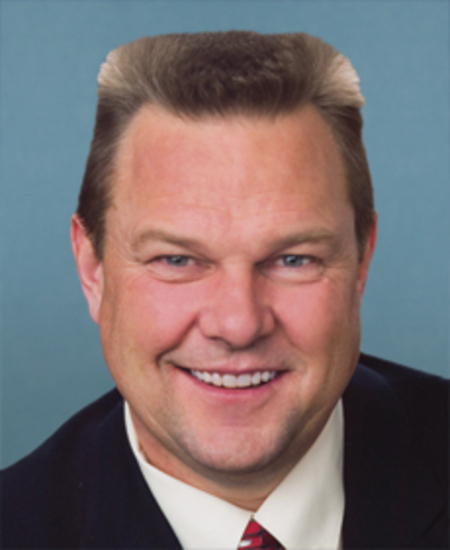
Photo of Jon Tester
D United States Senate · Montana

Sen. Jon Tester

Compare
Total votes
597
all sessions
Attendance
100%
1 missed
Higher than 77% of chamber peers
With party
90%
of cast votes
Lower than 82% of chamber peers
Bipartisan score
6%
crosses aisle rarely
Higher than 79% of chamber peers
Sponsored
694
bills & resolutions
Lower than 84% of chamber peers
Committees
0
assignments
694 bills and resolutions

Sponsored bills

Total
694
Primary
152
Co-sponsor
542
This page
694
matching current filters
Co-sponsor S 364
In committee · United States Senate · Co-sponsor
GAAME Act of 2023

Maddy summaryThe GAAME Act of 2023 (S 364) amends the Elementary and Secondary Education Act to require all public schools to provide sequential, standards-based arts and music education. It defines "arts" as dance, media arts, theater, and visual arts, and mandates that these programs be taught by certified educators. The bill directly affects K-12 public schools receiving federal funding under ESEA, ensuring students have access to these programs through specific funding mechanisms for certified staff, materials, and professional development. It does not change existing academic standards but requires schools to integrate arts and music into their curriculum as part of a well-rounded education.

In committee Feb 9, 2023 1 co-sponsor
Primary S 344
In committee · United States Senate · Lead sponsor
Major Richard Star Act

Maddy summaryThis bill allows veterans with combat-related disabilities and less than 20 years of service to receive both military retired pay and VA disability compensation simultaneously. Previously, such veterans had their retired pay reduced to avoid "concurrent receipt" of both benefits. The bill removes the 20-year service requirement for this group, applying specifically to those retired under Chapter 61 of Title 10 with a combat-related disability as defined in existing law. It does not change eligibility for veterans with non-combat disabilities or those with 20+ years of service.

In committee Feb 9, 2023 0 co-sponsors
Co-sponsor S 273
In committee · United States Senate · Co-sponsor
United States Colored Troops Congressional Gold Medal Act

Maddy summaryThis bill authorizes a Congressional Gold Medal to honor African American soldiers and sailors who served in the Union forces during the Civil War, specifically recognizing the United States Colored Troops (USCT) and African American Navy personnel. The medal will be presented posthumously by Congress, designed by the Treasury Secretary, and permanently displayed at the Smithsonian Institution. It also allows for the sale of bronze duplicates to cover costs, with proceeds going to the U.S. Mint. The bill directly commemorates the service of approximately 200,000 USCT soldiers and 19,000 African American sailors who served despite systemic discrimination.

In committee Feb 7, 2023 1 co-sponsor
Primary SRES 29
Passed · United States Senate · Lead sponsor
A resolution designating the week beginning February 5, 2023, as "National Tribal Colleges and Universities Week".

Maddy summaryThis resolution designates the week beginning February 5, 2023, as "National Tribal Colleges and Universities Week" to symbolically recognize these institutions. It directly honors the 35 accredited Tribal Colleges and Universities operating across 15 states, which serve over 230 federally recognized tribes and provide higher education access to American Indian, Alaska Native, and other students in underserved communities. The resolution calls for national recognition through appropriate activities but does not create new laws, funding, or policy changes. It is a ceremonial measure without binding legal effect.

Passed Feb 2, 2023 0 co-sponsors
Co-sponsor S 228
In committee · United States Senate · Co-sponsor
Cattle Price Discovery and Transparency Act of 2023

Maddy summaryThe Cattle Price Discovery and Transparency Act of 2023 requires large cattle packers to report detailed information about their cattle purchases and contracts to improve market transparency. The bill establishes mandatory minimums requiring packers to purchase a certain percentage of cattle through transparent pricing mechanisms like negotiated deals, rather than private contracts. Packers must also report daily slaughter schedules and carcass weights more frequently, and create a public library of all cattle purchase contracts. These requirements directly affect major cattle packers and aim to give cattle producers more information about market prices.

In committee Feb 2, 2023 1 co-sponsor
Co-sponsor S 258
In committee · United States Senate · Co-sponsor
A bill to provide clarification regarding the common or usual name for bison and compliance with section 403 of the Federal Food, Drug, and Cosmetic Act, and for other purposes.

Maddy summaryThis bill clarifies that food products made from North American bison (specifically plains bison and wood bison) may legally use "buffalo" as a common name on labels. It explicitly allows "buffalo" for Bison bison bison (plains bison) and Bison bison athabascae (wood bison), while requiring "water buffalo" for other animals in the genus Bubalus. The bill directly affects food manufacturers and distributors who label bison meat products, ensuring compliance with the Federal Food, Drug, and Cosmetic Act. It resolves labeling confusion without changing existing food safety standards.

In committee Feb 2, 2023 1 co-sponsor
Primary S 230
In committee · United States Senate · Lead sponsor
Rural Physician Workforce Production Act of 2023

Maddy summaryThe Rural Physician Workforce Production Act of 2023 creates a new Medicare payment to incentivize medical residency training in rural areas. Hospitals can receive additional funding for residents who spend at least 8 weeks in rural training locations or for residents in programs where over half of training occurs in rural settings. The payment amount is based on updated national medical residency training costs, adjusted annually for inflation. This bill aims to increase the number of physicians trained for rural practice by providing financial incentives to hospitals, critical access hospitals, and sole community hospitals.

In committee Feb 2, 2023 0 co-sponsors
Co-sponsor S 202
In committee · United States Senate · Co-sponsor
Collaborative Forest Landscape Restoration Program Reauthorization Act of 2023

Maddy summaryS 202 reauthorizes the Collaborative Forest Landscape Restoration Program through 2032, extending its current authorization period and increasing the annual funding cap from $4 million to $8 million. The bill expands eligible projects to include wildfire risk reduction across public, tribal, private, and state lands (including the wildland-urban interface), watershed health improvements, and innovative financing mechanisms like conservation agreements. It requires collaborative projects to include federal staffing plans and standardized monitoring for ecological outcomes. This directly affects forest management groups, landowners, and communities working on landscape-scale restoration across diverse land ownerships.

In committee Feb 1, 2023 1 co-sponsor
Co-sponsor S 208
In committee · United States Senate · Co-sponsor
Public Health and Border Security Act of 2023

Maddy summaryThe Public Health and Border Security Act of 2023 ends a pandemic-era suspension on certain international entries and imports. It requires the Surgeon General to notify Congress when the public health emergency declaration (including its continuation) ends, then mandates a 60-day waiting period before lifting the suspension. During this period, the Surgeon General must collaborate with agencies like Homeland Security to develop and submit a plan for managing potential increases in travel or goods, which must be provided to Congress within 30 days. If the plan isn’t submitted on time, the suspension’s termination is delayed until 30 days after the plan is delivered.

In committee Feb 1, 2023 1 co-sponsor
Co-sponsor S 161
In committee · United States Senate · Co-sponsor
JOBS Act of 2023

Maddy summaryThe JOBS Act of 2023 expands Federal Pell Grant eligibility to short-term job training programs that provide 150-600 clock hours (8-15 weeks) of instruction aligned with in-demand local industries. It directly affects students enrolled in eligible career-focused programs at institutions of higher education, requiring programs to offer industry-recognized credentials and meet validation standards from employers or sector partnerships. Key provisions include mandatory industry validation of program quality, institutional credit articulation for noncredit programs, and lowering the minimum Pell Grant percentage from 10% to 5% for qualifying students. The bill ensures these programs count toward students’ total Pell Grant eligibility period while maintaining standard Pell Grant terms and conditions.

In committee Jan 31, 2023 1 co-sponsor
Showing 301 to 310 of 694 bills
Previous 1 … 30 31 32 … 70 Next