

Maddy summaryThis non-binding Senate resolution (SRES 576) expresses support for designating March 4-8, 2024, as "National Social and Emotional Learning Week." It recognizes the role of social and emotional learning (SEL) programs - which focus on skills like self-awareness, relationship building, and responsible decision-making - in improving students' academic performance, mental wellness, and long-term success. The resolution encourages expanded access to SEL for students and educators but does not create new laws, funding, or mandates. It directly acknowledges the efforts of schools and communities already implementing SEL, without imposing requirements on any entity.
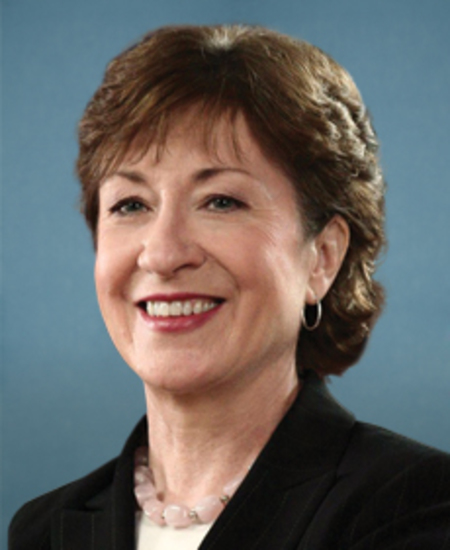
Sen. Susan M. Collins
Sponsored bills
Maddy summarySRES 568 is a symbolic Senate resolution designating the week of February 26 through March 1, 2024, as "Public Schools Week." It does not create new laws, allocate funds, or directly affect any individuals or institutions. The resolution expresses support for public education by highlighting its role in democracy, student development, and community engagement, but it has no binding effect. This is a procedural resolution with no policy changes or implementation mechanisms.
Maddy summarySRES 553 is a ceremonial Senate resolution honoring Jean A. Carnahan, who served as Missouri’s first female U.S. Senator from 2001 to 2002 after her husband’s passing. The resolution expresses the Senate’s sorrow over her death, recognizes her service as First Lady of Missouri and U.S. Senator, and her advocacy for families and veterans. It directs the Senate Secretary to share the resolution with the House and Carnahan’s family, with no substantive policy changes or affected parties. This is a standard commemorative measure with no legislative impact.
Maddy summarySRES 547 is a symbolic Senate resolution commemorating the two-year anniversary of Russia's full-scale invasion of Ukraine (launched February 24, 2022). It expresses U.S. support for Ukraine's territorial integrity and sovereignty, condemns Russian actions including war crimes (like the Bucha massacre), and reaffirms congressional backing for Ukraine's defense against aggression. The resolution has no binding effect or policy changes - it serves as a formal statement of solidarity with Ukraine, acknowledging the humanitarian crisis and international aid efforts. It was introduced by 31 Senators and does not alter laws, funding, or military commitments.
Maddy summarySRES 548 designates the week of February 5-9, 2024, as "National School Counseling Week." The resolution encourages the public to observe this week with activities that raise awareness of school counselors' roles in supporting students' academic, social, and emotional development. It highlights counselors' contributions to mental health support, career preparation, and creating safe school environments, without imposing new requirements or funding. This is a symbolic, non-binding designation to promote recognition of school counseling services.
This resolution supports the designation of February 17-February 24, 2024, as National FFA Week. It also (1) recognizes the important role of the National FFA Organization (Future Farmers of America) in developing the next generation of globally conscious leaders who will change the world; and (2) celebrates the 10th anniversary of the Give the Gift of Blue program, which has donated more than 17,000 FFA blue jackets to FFA members in need.
Maddy summarySRES 550 is a symbolic Senate resolution designating February 2024 as "Career and Technical Education (CTE) Month" to recognize the value of CTE programs. It does not create new laws or funding but formally supports CTE's role in preparing students for high-demand careers through secondary and postsecondary training. The resolution encourages educators and parents to promote CTE as a respected educational pathway, aligning with the Senate's recognition of CTE's importance for workforce development and economic competitiveness. As a procedural resolution, it has no binding effect but expresses bipartisan support for CTE initiatives.
Maddy summaryThis bill (S 3778) updates eligibility rules for state grants under the Safe Drinking Water Act's State Response to Contaminants program. It directly affects states, communities (especially those with populations under 10,000), and owners of private drinking water wells not connected to public systems. Key changes include adding new criteria: states may now grant funds to communities deemed "disadvantaged" under state affordability rules, or to small communities lacking debt capacity for cleanup, and to private well owners outside public water systems. These modifications clarify who qualifies for federal assistance to address drinking water contaminants.
Maddy summaryThe Working Waterfronts Act of 2024 provides tax credits for hydroelectric facilities with fish passage improvements, expands loan and grant programs for fishing businesses and seafood processing facilities, and establishes a grant program to protect working waterfronts. It includes provisions for rural coastal communities to develop processing infrastructure, support workforce development in maritime industries, and promote ocean innovation through clusters. The bill directly affects commercial fishing operators, seafood processors, mariculture businesses, and rural coastal communities. It authorizes funding for these programs over fiscal years 2025-2029, with specific allocations for different program components including $10 million annually for rural coastal processing grants and $20 million annually for waterfront preservation.
Maddy summaryThis bill amends the VA's transportation grant program to better serve rural veterans. It expands eligibility to include County Veterans Service Organizations and Tribal Organizations, increases the maximum grant amount to $80,000 for recipients needing to purchase ADA-compliant vehicles, and updates the definition of "rural" to align with USDA's RUCA system. The changes directly affect rural veterans by improving access to transportation for medical care and benefit appointments through local service providers. Funding is no longer capped at fixed annual amounts, instead using "such sums as may be necessary" to support these services.