

Maddy summaryThe Recycling Infrastructure and Accessibility Act of 2024 establishes a federal pilot grant program to improve recycling access in underserved communities. It authorizes $30 million annually (2023-2027) to fund competitive grants for eligible entities - including states, local governments, tribes, and public-private partnerships - to build transfer stations, expand curbside recycling, and create hub-and-spoke infrastructure networks. Grants range from $500,000 to $15 million per project, with 70% of funds reserved for single or multiple underserved communities lacking nearby recycling facilities. The program prohibits grant use for education and requires the EPA to report on outcomes, including recycling rate improvements, within two years of first grants.
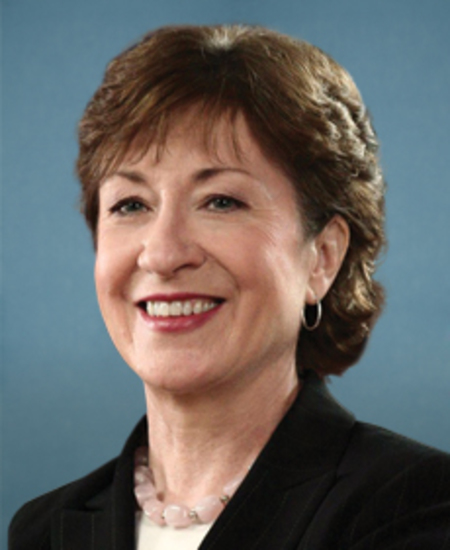
Sen. Susan M. Collins
Sponsored bills
Maddy summaryThis joint resolution (SJRES 65) seeks to disapprove an Environmental Protection Agency (EPA) rule that would have revised national air quality standards for tiny air particles (particulate matter), which are pollutants linked to health issues like asthma and heart disease. The EPA rule, published on March 6, 2024, proposed updating these standards to tighten pollution limits. By invoking the Congressional Review Act, the resolution would block the rule from taking effect, maintaining the current standards without changes. This directly affects the EPA’s ability to implement the proposed revisions to air quality regulations, impacting public health protections and industry compliance requirements.
Maddy summaryThis bill amends the Seniors Farmers' Market Nutrition Program to include maple syrup as an eligible purchase, allowing seniors using program benefits to buy maple syrup at participating farmers' markets. It directly affects seniors receiving program benefits and maple syrup vendors selling at farmers' markets. The key change is simply adding "maple syrup" to the list of approved products under the existing program.
Maddy summaryS 3933, the Laken Riley Act, amends immigration law to require mandatory detention for non-citizens charged with certain crimes like theft or burglary, rather than allowing release. It directly affects individuals facing these charges and gives state attorneys general the legal standing to sue federal agencies (like DHS or the State Department) if they claim immigration policies caused the state or residents financial harm exceeding $100. Key provisions include requiring Homeland Security to take custody of such individuals and establishing new court procedures for states to seek injunctions against federal immigration enforcement actions. The bill does not change border policies but focuses on detention requirements and state legal challenges to federal immigration enforcement.
Maddy summaryThe HELPER Act of 2023 creates a new FHA mortgage insurance program allowing eligible first responders and K-12 teachers to secure home loans with **no down payment**. It directly affects full-time law enforcement officers, firefighters, paramedics, EMTs, and public/private K-12 teachers who have worked in their roles for at least 4 of the past 5 years. Key provisions include requiring housing counseling, verifying employment status, and prohibiting monthly mortgage insurance premiums (replacing standard FHA requirements). The bill authorizes $660,000 for 2024 and $160,000 annually from 2025-2030 to fund this program, which expires after 5 years.
Maddy summaryThe Grandfamily Housing Act of 2023 establishes a federal grant program for owners of intergenerational housing units - homes where grandparents or other relatives live with grandchildren. Grants cover costs for service coordinators to provide onsite support (like tutoring, healthcare, and after-school care), community outreach, and property modifications to support these families. The program requires coordination with local kinship navigator programs and mandates a report to Congress on the program's effectiveness within two years. It directly affects property owners in qualifying intergenerational housing units and aims to strengthen support services for these families through HUD-administered grants.
Maddy summaryThis bill (S 735) modifies funding authorization for the U.S. Interagency Council on Homelessness under the McKinney-Vento Homeless Assistance Act. It removes fixed annual funding amounts (like the $3 million for 2010) and replaces them with flexible language allowing "such sums as may be necessary" for all fiscal years, ensuring funding can adjust as needed. The bill also reorganizes the law’s structure by removing Section 209 and redesignating Section 210 as Section 209, which now focuses on "Encouragement of State involvement" in homelessness efforts. These changes aim to streamline operations and strengthen state collaboration without altering core program requirements.
Maddy summarySRES 584 is a Senate resolution designating March 7, 2024, as "National Slam the Scam Day" to raise public awareness about government imposter scams. The resolution encourages education about scams where criminals impersonate agencies like the Social Security Administration or IRS to steal money or personal information. It urges the public to ignore suspicious requests, share scam awareness, and report incidents to specific agencies like the FTC or Social Security OIG. This is a symbolic awareness measure with no new legal requirements or funding.
Maddy summarySRES 582 is a symbolic Senate resolution supporting International Women’s Day, introduced by Senators Shaheen and Collins. It affirms the U.S. commitment to advancing women’s rights globally, recognizing that women’s empowerment is critical to economic growth, peace, and security. The resolution highlights ongoing challenges like gender-based violence, child marriage, and limited political participation, while referencing existing U.S. policies such as the Women, Peace, and Security Act. It does not create new laws or allocate funding but formally expresses congressional support for gender equality and women’s leadership.
Maddy summaryThis joint resolution (SJRES 63) seeks to block a specific rule issued by the Department of Labor (DOL) concerning worker classification under the Fair Labor Standards Act (FLSA). The DOL rule (published January 10, 2024) aimed to clarify how businesses must classify workers as employees or independent contractors for purposes of minimum wage and overtime pay. If passed, this resolution would formally disapprove the rule under a statutory process (Chapter 8 of Title 5, U.S. Code), preventing it from taking effect. The rule directly affects employers across industries who use independent contractors and their workers, as it would change how worker status is determined under federal labor law.