

Modernizing Access to our Public Land Act This bill directs the Department of the Interior, the Forest Service, and the U.S. Army Corps of Engineers to jointly develop and adopt interagency standards to ensure compatibility and interoperability among federal databases for the collection and dissemination of certain data. Specifically, these requirements shall apply to outdoor recreation data related to federal lands and used to depict locations at which recreation uses are available to the public. Each such department shall digitize and make publicly available on their websites, as applicable, geographic information system mapping data that specifies, with respect to the relevant department, all federal interests in private land, including easements, reservations, and rights-of-way to which the federal government does not have a fee title interest, and that may be used to provide recreational access to the federal land. Interior, the Forest Service, and the Corps of Engineers must digitize and publish geographic information system mapping data that includes status information as to whether roads and trails are open or closed, the dates on which roads and trails are seasonally opened and closed, the types of vehicles that are allowed on each segment of roads and trails, and the boundaries of areas where hunting or recreational shooting is regulated or closed.
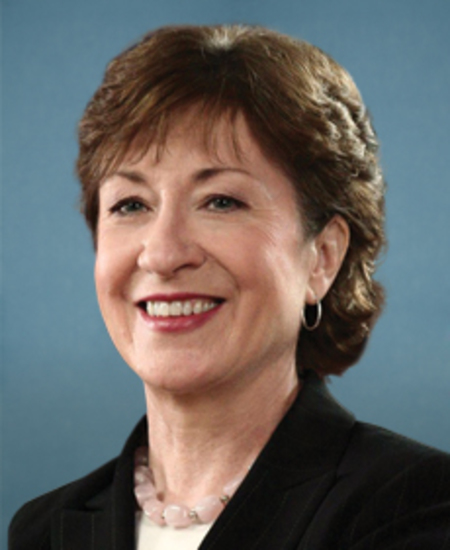
Sen. Susan M. Collins
Sponsored bills
Promoting Rigorous and Innovative Cost Efficiencies for Federal Procurement and Acquisitions Act of 2021 or the PRICE Act of 2021 This bill directs the Management Directorate of the Department of Homeland Security (DHS) to publish an annual report on a DHS website on projects that have used innovative procurement techniques within DHS to accomplish specified goals. Such goals are improving or encouraging better competition, reducing time to award, achieving cost savings, achieving better mission outcomes, or meeting the goals for contracts awarded to small business concerns. The Management Directorate shall (1) develop and disseminate guidance and offer training for specified personnel concerning when and how to use such techniques, and (2) share best practices across DHS and make available to other federal agencies information to improve procurement methods and training. The Office of Federal Procurement Policy shall convene a Chief Acquisition Officers Council to examine best practices for acquisition innovation in contracting in the federal government.
Harriet Tubman Bicentennial Commemorative Coin Act This bill directs the Department of the Treasury to mint and issue 50,000 $5 gold coins, 400,000 $1 silver coins, and 750,000 half-dollar clad coins emblematic of the legacy of Harriet Tubman as an abolitionist. The Secretary may issue coins under this bill only during the period of January 1, 2024, through December 31, 2024. All surcharges received by Treasury from the sale of such coins must be paid equally to the National Underground Railroad Freedom Center in Cincinnati, Ohio, and The Harriet Tubman Home, Inc. in Auburn, New York, for the purpose of accomplishing and advancing their missions.
This resolution supports the designation of February 19-February 26, 2022, as National FFA Week. It also (1) recognizes the important role of the National FFA Organization (Future Farmers of America) in developing the next generation of leaders who will change the world, and (2) celebrates 70 years of the National FFA Organization's membership magazine.
Maddy summaryThis Senate resolution (SRES 526) formally condemns the antisemitic terrorist attack at Congregation Beth Israel Synagogue in Colleyville, Texas, on January 15, 2022, where hostages were held at gunpoint. It expresses gratitude that no lives were lost, applauds law enforcement and emergency responders for their actions, and condemns antisemitism in the United States. The resolution does not create new policies or allocate funds; it is a symbolic expression of support for the Jewish community and law enforcement. It directly affects the congregation and local community by affirming their safety and the importance of religious freedom.
Maddy summarySRES 520 is a ceremonial Senate resolution designating the week of February 21-25, 2022, as "Public Schools Week." It does not create new laws, allocate funding, or directly affect any individuals or institutions. The resolution uses symbolic language to highlight the importance of public education in the U.S. but contains no policy changes or actionable provisions. As a procedural resolution, it serves only to recognize public schools during that specific week.
This resolution commends the courage, resolve, and restraint shown by the Ukrainian people in their pursuit of sovereignty and democracy and reaffirms unwavering U.S. support for a secure, democratic, and independent Ukraine. It also condemns Russia's attempted annexation of Crimea in 2014 and denounces Russia's military buildup of over 150,000 troops on Ukraine's border.
Made in America Manufacturing Communities Act of 2022 This bill establishes the Manufacturing Communities Support Program to provide financial and technical assistance to support investments in U.S. manufacturing.
Beneficiary Enrollment Notification and Eligibility Simplification 2.0 Act or the BENES 2.0 Act This bill requires Social Security account statements for individuals attaining ages 60 to 65 to include information about Medicare eligibility, late enrollment penalties, benefit coordination, and related resources. Statements with the required information must be mailed to individuals at least three months before they turn 65; the required information must also be mailed to those who are age 65 or over and are entitled to Social Security benefits three months before their initial Medicare enrollment period begins.
Northern Border Regional Commission Reauthorization Act of 2022 This bill makes various changes to the authorities and programs of regional economic and infrastructure development commissions. Specifically, the bill reauthorizes the Southwest Border Regional Commission, the Southeast Crescent Regional Commission, and the Northern Border Regional Commission (NBRC) and establishes and expands NBRC grant programs. The NBRC must establish a state capacity building program to provide grants to commission states (Maine, New Hampshire, New York, and Vermont) to better support business retention and expansion in eligible counties and for other specified purposes. Each commission state shall provide to the NBRC an annual work plan that includes the proposed use of the grant. Additionally, the NBRC may make grants for the planning, construction, equipment, and operation of demonstration health, nutrition, and child care projects. Such grants must give special emphasis to projects and activities to address substance use disorders, including opioid and methamphetamine use. The bill authorizes these regional commissions (as part of economic and infrastructure development grants) to (1) design, build, implement, or upgrade transportation or basic public infrastructure or workforce capacity to support the adaptation to and mitigation of climate challenges; and (2) promote the production of housing to meet economic development and workforce needs.