

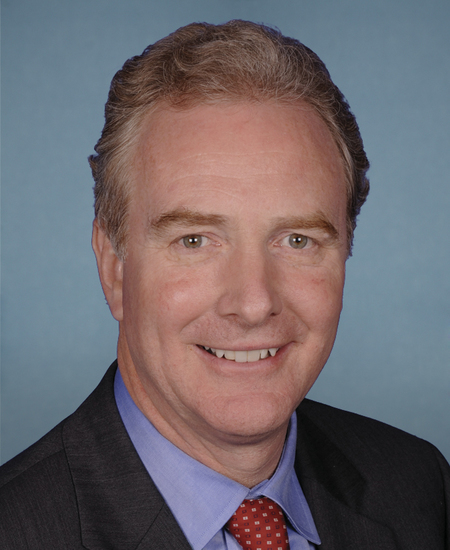
Photo of Chris Van Hollen
D United States Senate · Maryland

Sen. Chris Van Hollen

Compare
Total votes
1,054
all sessions
Attendance
99%
12 missed
Near the chamber average
With party
96%
of cast votes
Near the chamber average
Bipartisan score
2%
crosses aisle rarely
Near the chamber average
Sponsored
2,187
bills & resolutions
Higher than 94% of chamber peers
Committees
15
assignments
2,187 bills and resolutions

Sponsored bills

Total
2,187
Primary
189
Co-sponsor
1,998
This page
2,187
matching current filters
Co-sponsor S 2007
In committee · United States Senate · Co-sponsor
Improving Corporate Governance Through Diversity Act of 2023

Maddy summaryThis bill requires public companies (issuers) to disclose voluntary self-reported diversity data for their board members, board nominees, and executives, including race, ethnicity, gender, and veteran status. It also mandates disclosure of whether the company has diversity policies for these groups. The SEC must annually analyze this data and publish reports on diversity trends, while establishing a Diversity Advisory Group to study and recommend strategies for improving diversity on corporate boards. The bill affects all publicly traded companies required to file SEC reports, focusing on transparency rather than mandating specific diversity outcomes.

In committee Jun 15, 2023 1 co-sponsor
Co-sponsor S 2016
In committee · United States Senate · Co-sponsor
CONNECT for Health Act of 2023

Maddy summaryThe CONNECT for Health Act of 2023 expands Medicare telehealth coverage by removing geographic restrictions, allowing services to be provided from home and other locations, and expanding who can offer telehealth services. The bill repeals the six-month in-person visit requirement for telemental health and allows telehealth use in hospice care recertification. It also includes program integrity measures to address inappropriate billing patterns and requires posting of telehealth service data to improve transparency. This legislation directly affects Medicare beneficiaries, healthcare providers, and telehealth technology vendors by making telehealth more accessible, particularly for rural and underserved populations, those with mobility challenges, and individuals in areas with healthcare workforce shortages.

In committee Jun 15, 2023 1 co-sponsor
Co-sponsor SJRES 33
In committee · United States Senate · Co-sponsor
A joint resolution proposing an amendment to the Constitution of the United States to prohibit the use of slavery and involuntary servitude as a punishment for a crime.

Maddy summaryThis bill proposes a constitutional amendment to remove the Thirteenth Amendment's exception that permits slavery and involuntary servitude as criminal punishment. It would directly affect all individuals within the U.S. criminal justice system by banning any form of forced labor for crimes, addressing a historical loophole that enabled mass incarceration of Black Americans post-Civil War. Key provisions explicitly state: "Neither slavery nor involuntary servitude may be imposed as a punishment for a crime," while clarifying it does not interfere with voluntary prison work programs, community service alternatives, or existing employment protections for incarcerated people. The amendment aims to align U.S. law with constitutional principles by eliminating this exception without altering current sentencing options.

In committee Jun 14, 2023 1 co-sponsor
Co-sponsor S 1995
In committee · United States Senate · Co-sponsor
Public Health Infrastructure Saves Lives Act

Maddy summaryThe Public Health Infrastructure Saves Lives Act (S 1995) provides federal grants to strengthen public health systems across the U.S. It directly affects state, territorial, and local health departments serving 500,000+ people, plus tribal health departments. Key mechanisms include: 50% of funds for formula-based grants to all states/territories (prioritizing population, disease burden, and poverty), 30% for competitive grants targeting departments with highest infrastructure needs, and a requirement for grantees to achieve accreditation by 2027. The bill allocates increasing annual funding - $750 million in 2024 rising to $4.5 billion annually by 2028 - with 3% reserved specifically for tribal health departments. It defines "core public health infrastructure" to include surveillance, emergency response, equity-focused services, and workforce capacity.

In committee Jun 14, 2023 1 co-sponsor
Co-sponsor S 1992
In committee · United States Senate · Co-sponsor
Working Families Tax Relief Act of 2023

Maddy summaryThe Working Families Tax Relief Act of 2023 expands tax benefits for low-to-moderate income workers and families with children. It lowers the minimum age for the Earned Income Credit from 25 to 19 (with exceptions for students, former foster youth, and homeless youth), removes the age 65 maximum, and increases credit amounts and income thresholds. The bill also establishes a permanent system for monthly advance payments of the Child Tax Credit, with higher payments ($300 monthly) for children under age 6 compared to $250 for older children. It includes inflation adjustments to maintain the value of these credits over time and creates mechanisms for determining eligibility and recapturing payments in certain circumstances. The provisions apply to all states and U.S. territories, including Puerto Rico and American Samoa.

In committee Jun 14, 2023 1 co-sponsor
Co-sponsor S 1983
In committee · United States Senate · Co-sponsor
Private Prison Information Act of 2023

Maddy summaryThis bill requires federal agencies that use private or state/local facilities to house federal prisoners to treat records about those facilities as government records under the Freedom of Information Act (FOIA). It directly affects federal agencies (like the Department of Justice), private prison operators, and state/local facilities under contract with the federal government. Key provisions mandate that these entities maintain records in searchable formats, allow public access to information (unless specific legal exemptions apply), and include disclosure requirements in all relevant contracts. The law aims to increase transparency around conditions and operations in non-federal correctional facilities used by the federal government.

In committee Jun 14, 2023 1 co-sponsor
Co-sponsor S 1999
In committee · United States Senate · Co-sponsor
Right to Contraception Act

Maddy summaryThe Right to Contraception Act (S 1999) establishes a federal statutory right for individuals to access contraceptives and related information without government interference, directly affecting all people seeking reproductive care and health care providers who offer these services. Key provisions prohibit state or federal laws that restrict contraceptive access, single out contraceptive services, or allow provider refusals based on personal beliefs, while requiring any restrictions to be narrowly tailored to advance access. The bill preempts conflicting state laws, allows enforcement through lawsuits by affected individuals or the Attorney General, and explicitly protects access for historically marginalized groups facing barriers. It does not alter existing insurance coverage requirements under the Affordable Care Act but ensures contraceptive access remains protected from restrictive state policies.

In committee Jun 14, 2023 1 co-sponsor
Co-sponsor S 1963
In committee · United States Senate · Co-sponsor
College for All Act of 2023

Maddy summaryThe College for All Act of 2023 would establish a federal-state partnership to eliminate tuition and required fees for eligible students at public community colleges and 4-year institutions. It would cover students from families earning under $125,000 (single) or $250,000 (married) annually, with the federal share of costs decreasing from 100% to 80% over five years. The bill also includes separate provisions to eliminate tuition at historically Black colleges and minority-serving institutions through dedicated grant programs, while requiring states to maintain higher education funding levels and improve student support services.

In committee Jun 14, 2023 1 co-sponsor
Co-sponsor SRES 250
Passed · United States Senate · Co-sponsor
A resolution designating June 6, 2023, as National Naloxone Awareness Day.

Maddy summaryThis Senate resolution designates June 6, 2023, as National Naloxone Awareness Day to highlight naloxone's role in reversing opioid overdoses. It recognizes that opioid overdoses caused over 79,770 U.S. deaths in 2022 and emphasizes naloxone as a life-saving medication that can prevent fatalities when administered promptly. The resolution encourages public education about naloxone use and urges federal, state, and local entities to expand access and distribution efforts. As a symbolic resolution, it does not create new laws or funding but aims to raise awareness about overdose prevention.

Passed Jun 13, 2023 1 co-sponsor
Showing 1,201 to 1,210 of 2,187 bills