

Maddy summaryThis bill transfers command authority over the District of Columbia National Guard from the U.S. President and federal officials to the Mayor of Washington, D.C. It directly affects the DC National Guard and its operations by amending multiple laws to replace references to the President, Secretary of the Army, or "Commanding General" with the Mayor. Key provisions include changing the Mayor to the Commander-in-Chief (Section 2(a)), appointing officers under the Mayor’s authority (Section 2(c)), and updating federal statutes (Titles 10 and 32) to reflect this change. The bill ensures the Mayor, not federal officials, now oversees all aspects of the DC National Guard, aligning with the District’s home rule framework.
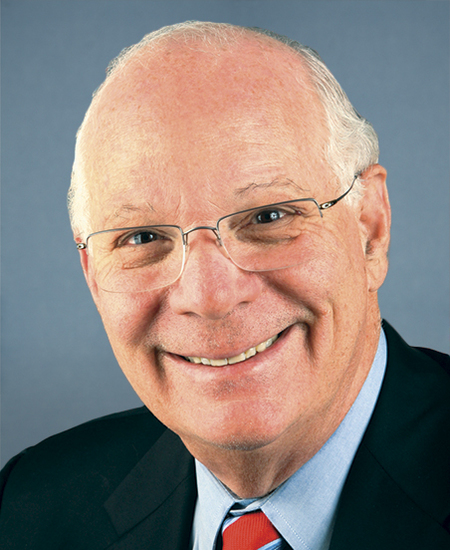
Sen. Benjamin L. Cardin
Sponsored bills
Maddy summaryThis bill establishes a 12-member National Council on African American History and Culture within the National Endowment for the Humanities. The Council, appointed by the President with Senate approval, advises the Endowment on preserving and celebrating African-American history and culture. Its key duties include evaluating existing humanities programs, gathering information on cultural trends, and making recommendations to improve support for African-American cultural preservation. The Council will operate for 10 years, reporting annually to the Endowment's Chairperson.
Maddy summaryThe JOBS Act of 2023 expands Federal Pell Grant eligibility to short-term job training programs that provide 150-600 clock hours (8-15 weeks) of instruction aligned with in-demand local industries. It directly affects students enrolled in eligible career-focused programs at institutions of higher education, requiring programs to offer industry-recognized credentials and meet validation standards from employers or sector partnerships. Key provisions include mandatory industry validation of program quality, institutional credit articulation for noncredit programs, and lowering the minimum Pell Grant percentage from 10% to 5% for qualifying students. The bill ensures these programs count toward students’ total Pell Grant eligibility period while maintaining standard Pell Grant terms and conditions.
Maddy summaryS 173, "Ethan's Law," requires firearm owners to store guns securely in homes where minors (under 18) or individuals ineligible to own firearms might access them. It amends federal law to make non-compliant storage an offense punishable by a $500 fine per violation, with enhanced penalties (up to 5 years in prison) if injury or death results. The bill creates a federal grant program to support states with laws matching its secure storage requirements, offering funding incentives for states that enact similar measures. It directly affects homeowners with firearms in households containing minors or prohibited persons, aiming to reduce accidental child access and firearm-related injuries.
Maddy summaryS 129, the Korematsu-Takai Civil Liberties Protection Act of 2023, prohibits federal authorities from detaining individuals solely based on protected characteristics. The bill amends federal law to define "protected characteristics" as race, ethnicity, national origin, religion, sex, gender identity, sexual orientation, disability, and any additional characteristics the Attorney General may designate. It explicitly bans imprisonment or detention based exclusively on these traits, with no allowance for the Attorney General to remove any listed characteristic. This directly affects anyone subject to federal detention, ensuring protections against discrimination in custody decisions under current law.
Maddy summaryThis bill, the FAIR Act (S 124), increases federal employee pay raises for calendar year 2024. It mandates a 4.7% base pay increase for all federal employees covered by statutory pay systems (most positions) and prevailing rate systems (based on local wages), effective January 2024. It also sets a 4.0% increase for locality-based pay adjustments under existing law. The bill directly affects all federal civilian employees whose pay is determined by these specific statutory systems.
Maddy summaryThe Better Care Better Jobs Act (S 100) aims to improve access to home and community-based services (HCBS) for Medicaid beneficiaries by providing federal funding to states for developing improvement plans and implementing an HCBS Infrastructure Improvement Program. The bill offers enhanced federal funding (a 10 percentage point increase in Medicaid matching rates) to states that meet requirements including maintaining or expanding HCBS access, improving direct care worker wages and training, and implementing quality measurement systems. States must develop detailed plans assessing current HCBS availability, workforce conditions, and barriers to access, and then report annually on progress toward specific benchmarks. The bill also makes permanent certain Medicaid provisions related to spousal impoverishment protection and extends the Money Follows the Person program, directly affecting Medicaid beneficiaries and direct care workers.
Maddy summaryThis bill prohibits states from imposing lifetime or annual spending limits on dental benefits for low-income children and pregnant women enrolled in the Children's Health Insurance Program (CHIP). It requires states to provide comprehensive dental coverage as part of CHIP plans instead of allowing separate dental-only options. The policy directly affects low-income families who rely on CHIP for healthcare access. Changes take effect six months after the bill's enactment.
Maddy summaryThis bill amends the Congressional Budget Act to require the Congressional Budget Office (CBO) Director to assess whether health-related proposals could reduce future federal spending through preventive health measures. It directs the CBO to document and project these potential savings in budget analyses when requested by specific congressional committees (Budget, Finance, Health, or Energy committees in either chamber). The law defines "preventive health" as evidence-based actions that prevent disease and promote wellness, and mandates the CBO to include these savings estimates in budget projections for up to 20 years beyond the current budget cycle. The bill affects how federal spending reductions from preventive health programs are scored, not the programs themselves.
Maddy summaryThis bill establishes a federal grant program to help state and local governments protect witnesses in serious crime cases. It provides competitive grants (up to 75% federal funding) to jurisdictions with high rates of witness intimidation, homicide, violent crime, drug offenses, or organized crime, prioritizing areas lacking protection infrastructure. Grantees must report on their programs, and the Justice Department will develop and share best practices for witness safety, relocation, and financial assistance. The program is authorized for $30 million annually through 2027.