

Maddy summaryThe Price Gouging Prevention Act of 2024 prohibits businesses from selling goods or services at "grossly excessive prices" during normal market conditions. During exceptional market shocks (such as natural disasters, public health emergencies, or other major disruptions), the bill creates a presumption of violation if businesses with "unfair leverage" (defined as companies with $1 billion+ annual revenue or dominant market position) increase prices disproportionately compared to their costs. Small businesses with less than $100 million in annual revenue are exempt from the core prohibition but must demonstrate price increases are due to uncontrollable costs. The bill requires publicly traded companies to disclose detailed pricing information in SEC filings during exceptional market shocks and authorizes the FTC and state attorneys general to enforce the law through civil penalties and injunctions, with the FTC receiving $1 billion in funding for enforcement.
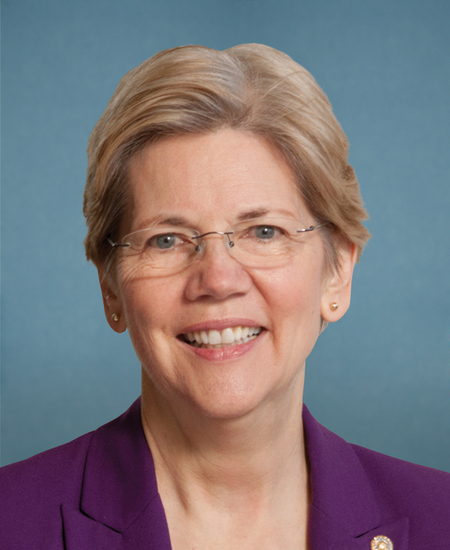
Sen. Elizabeth Warren
Sponsored bills
Maddy summaryThe Preventing and Treating Substance Use Disorders Among Older Adults Act (S 4358) creates two federal grant programs to improve access to substance use disorder treatment and prevention services for older adults aged 60 and older. It authorizes $25 million annually for five years to fund early intervention, integrated care coordination, and evidence-based treatment through community organizations, tribes, and health providers, with priorities including person-centered care and data collection on service gaps. Additionally, it establishes a demonstration program to expand evidence-based treatment in areas with high substance misuse rates (including opioids) or unmet need, requiring at least 15% of funds to support rural communities and communities of color.
Maddy summaryThis bill establishes federal minimum standards for collective bargaining rights for public employees and supervisors. It directs the Federal Labor Relations Authority (FLRA) to determine if state laws "substantially provide" for specific rights including the right to form unions, bargain collectively, and have interest impasse resolution mechanisms. If a state law doesn't meet these standards, the FLRA would administer collective bargaining for affected employees. The bill also prohibits strikes or lockouts that would disrupt emergency services and preserves existing collective bargaining agreements in place before the bill's enactment. It does not preempt state laws that already meet these minimum standards.
Maddy summaryThis resolution (SRES 692) designates May 7, 2024, as National Fentanyl Awareness Day to raise public attention about the dangers of counterfeit fentanyl pills. It highlights alarming statistics, including that illicit fentanyl was involved in 81% of drug-induced deaths among youth aged 14-23 in 2023 and that only 36% of teens were aware of fentanyl in fake pills. The resolution does not create new laws or funding but urges increased awareness and supports law enforcement efforts against counterfeit pills. It directly aims to educate families and young people about the risks of fake pills marketed as legitimate medications.
Maddy summarySRES 693 is a Senate resolution recognizing May as Asian American, Native Hawaiian, and Pacific Islander Heritage Month, celebrating the historical contributions of these communities to U.S. history. The resolution does not create new laws or funding but serves as a symbolic acknowledgment of their achievements, growth (including demographic data and key anniversaries like the 50th anniversary of *Lau v. Nichols*), and ongoing challenges like anti-Asian hate crimes. It directly honors these communities and aims to raise awareness of their diverse impacts on American society.
Maddy summaryThis Senate resolution (SRES 684) expresses support for continued U.S. financial contributions to Gavi, the Vaccine Alliance, to fund vaccines in low-income countries. It directly affects 78 Gavi-supported nations by enabling access to lifesaving immunizations for children and protecting public health globally. Key provisions highlight Gavi’s proven impact: saving over 17 million children’s lives since 2000, reducing vaccine-preventable childhood deaths by 70%, and generating $54 in economic returns for every $1 invested. The resolution urges sustained U.S. funding to maintain vaccine market stability, support health systems, and strengthen global health security, emphasizing that U.S. investment complements broader global health efforts.
Maddy summaryThe Rights for the TSA Workforce Act of 2024 requires the Transportation Security Administration to transition its workforce from its current personnel management system to the standard federal employee system under Title 5 of the U.S. Code by December 31, 2024, while protecting employees from pay or benefit reductions during the transition. The bill preserves existing leave, retirement benefits, and collective bargaining rights for screening agents, and includes specific provisions for Federal air marshals regarding pay and benefits. It mandates consultation with labor representatives during the transition and requires several reports on workforce conditions, including recruitment efforts, workplace safety, and employee satisfaction.
Maddy summaryThis resolution (SRES 681) supports designating May 10, 2024, as "National Asian American, Native Hawaiian, and Pacific Islander Mental Health Day." It does not create new laws or funding but formally recognizes the mental health disparities faced by AANHPI communities, including lower service utilization rates and higher youth suicide rates. The resolution encourages federal, state, and local agencies to improve mental health awareness and culturally appropriate care for these communities. It is a symbolic gesture aligning with May's existing Heritage Month and Mental Health Awareness Month.
Maddy summaryS 4300 restricts U.S. call center employers from moving operations overseas or outsourcing work to foreign entities without 120 days' notice to the Labor Secretary. It creates a public list of violators, barring them from federal grants or loans for 5 years, and requires federal contracts to keep call center work in the U.S. The bill also mandates that businesses disclose their physical location at the start of customer service calls (with exceptions for U.S.-based teams or emergencies) and allows customers to request transfers to U.S.-based agents. These rules apply to businesses employing 50+ call center workers (full-time equivalent) and are enforced by the Labor Secretary and Federal Trade Commission.
Mamas First Act This bill requires state Medicaid programs to cover doula and midwife services, including prenatal, delivery, and postpartum services, in a variety of settings.